
Smart data on mobility patterns in Munich

The city of Munich, with 1.5 million inhabitants, faces environmental challenges and congestion due to growing numbers of inhabitants and private vehicles causing an increase in CO2 emissions. Around 400,000 commuters travel into Munich from the surrounding areas every day. To adapt to passengers’ needs and promote environmentally friendly transport, it is crucial to know […]
Rethink your ride in Stuttgart

The region of Stuttgart hosts many major events throughout the year. Most visitors come to events by car or on overcrowded public transport (if available). Congestion caused by large events can create safety risks for drivers, pedestrians, and other road users. Large events can also have a significant environmental impact. If people are offered a […]
U-SAVE

The U-SAVE project aims to develop and demonstrate an innovative aerial transport system to quickly deliver life-saving supplies in emergency situations across urban and suburban areas. In many cities, road congestion and traffic delays hinder emergency response times, putting lives at risk. Traditional emergency vehicles face challenges navigating through densely populated or congested urban spaces, […]
UrbanVind

Data collection in public transportation is a challenge in Europe. Cities struggle to gather crucial data for operations and planning. Information such as where people board and exit and how many passengers are sitting on a bus is not readily or easily available, as was found after interviewing 40+ cities and operators. Traditional solutions to […]
URBANITE
Asistobe addresses the challenges of inefficient public transport systems caused by only relying on slow and expensive data sources like surveys and interviews when gathering information about people’s mobility habits. Urban mobility today demands dynamic solutions to tackle overcrowded buses, delayed trams, and rising environmental concerns. This project provides cities, municipalities, and public transport operators […]
SOH FLEET!
The EU Batteries Regulation on (EU) 2023/1542 establishes a comprehensive framework for monitoring the aging of batteries used in electric vehicles. In the context of urban mobilities, the average lifespan of a bus is around 15 years, whereas the expected lifespan of a battery is eight yearsas a minimum. However today, public transport operators (PTOs) […]
Smart Zone Enforcement

There is a huge potential for Smart Zones in Europe. There are more than 800 sizable cities that would benefit from this digital solution to optimise the use of urban space. For example, Smart Zones allow for a much more effective and efficient use of (un)loading bays and the prevention of misuse. However, Smart Zones […]
sHARMONY
The sHARMONY project tackles the safety issue at bus stops where cycle lanes intersect pedestrian pathways. Current solutions like shared spaces and barriers do not dynamically manage interactions between cyclists, pedestrians, and buses. sHARMONY’s innovative system integrates embedded horizontal traffic lights, synchronized with bus movements via beacons, and includes a mobile app for visually impaired […]
ROSE

Theoremus’s route optimisation module for waste is being developed to address the inefficiencies and environmental challenges associated with traditional waste collection systems. Municipalities and waste management companies often rely on fixed collection schedules that result in unnecessary trips, higher operational costs, and increased greenhouse gas (GHG) emissions. These inefficiencies, combined with the underutilisation of data […]
NG SEED
With the rapid growth of e-commerce and urban deliveries, cities across Europe face the same problem: CO2 emissions and ineffective last-mile transportation solutions. The project wants to solve the pressing challenges of traffic congestion, pollution and last mile delivery inefficiencies. E-Mobility-Rentals, in collaboration with Glovo and Wolt, began a mission to build a complete and […]
NanoHubZone
The NanoHubZone project addresses the environmental and logistical challenges of traditional urban delivery systems, which rely heavily on large vehicles that contribute to traffic congestion and high CO2 emissions. Inspired by the growing need for sustainable last-mile delivery solutions, the project introduces modular transshipment zones in Barcelona and Brussels. These zones act as micro-logistics hubs, […]
Micromobility-Infra
The Marma charging stations project is a 12-month initiative addressing operational inefficiencies in shared micromobility services. These inefficiencies, particularly related to battery-swapping logistics, contribute to increased costs, carbon emissions, and operational complexity, posing challenges to sustainable urban mobility. The project aims to create a smarter, more sustainable solution by developing and deploying innovative charging stations […]
LUCID
The LUCID – Data intelligence for cities and urban logistics project aims to transform urban logistics by creating a smart platform that optimises route planning, reduces congestion, and improves the use of loading and unloading spaces. Urban areas are increasingly congested, and logistics operations contribute significantly to this, as well as to emissions and fuel […]
Loge-Hubs
The Loge-Hubs solution enhances urban logistics strategies by focusing on the location and deployment of new or existing urban logistics hubs, delivering environmental, societal, and economic benefits. The Loge-Hubs project is active in Las Rozas de Madrid, Spain, and Braga, Portugal, each representing distinct urban environments shaped by logistics. Las Rozas, a growing city with […]
Interact
This project, named Human machine interaction for automated public transport buses (InterAct), focuses on driving with automated buses, which are conventional full-sized buses with automated driving technology. These buses have higher capacity and are further in the development towards driving without safety driver onboard. The project partners have the ambition to make urban spaces more […]
H2TOWTRACTOR
Large logistics hubs face significant challenges in transitioning to electrification due to insufficient charging infrastructure and power supply capacity. This issue risks delaying the clean energy shift in critical locations such as ports, and large markets. H2TowTractor addresses this problem by promoting the adoption of hydrogen-powered vehicles and integrating them with renewable energy sources available […]
EASE
As the EU is transitioning to a sustainable and low-carbon economy; decarbonisation of transport is at the centre of this transition, with electric vehicles (EV) leading the change. Not only is this creating a new energy dependency but it is also important to note that EV chargers require a stable power supply to function effectively, […]
BCMS
Buses often experience overcrowding and bunching along the route, leading to reduced seating chance, denied boarding, and long waiting and journey times. Currently no product exists for operators to control crowding along the route. To address this, the project aims to commercialise Theoremus’s AI passenger crowding counting technology, which is currently a primitive and specialist […]
BaselineNC
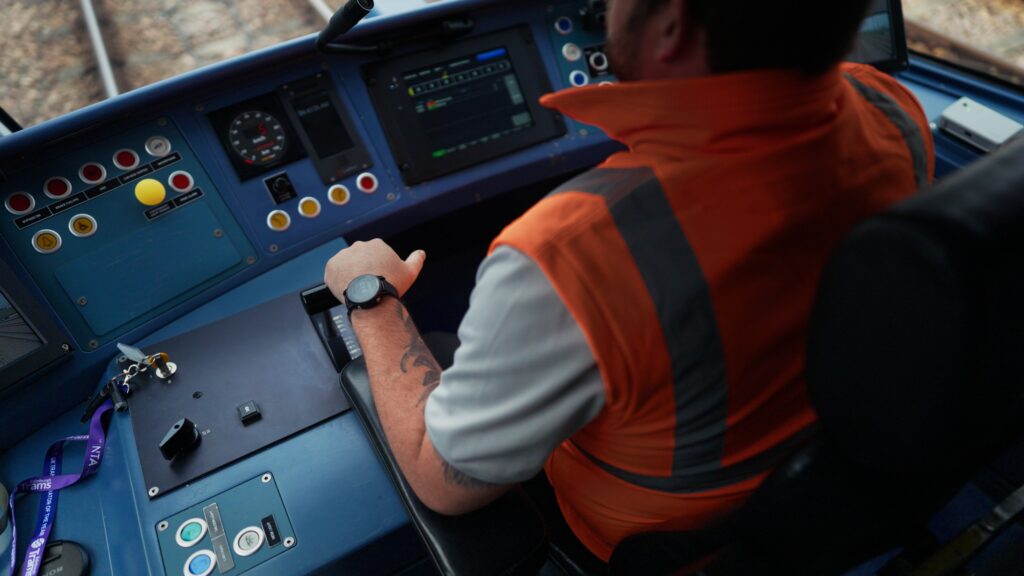
The Croydon Tram Accident killed seven people and was caused by driver incapacitation. The investigation by UK Tram identified the need for new technology that predicted and prevented depreciated physiological performance (fatigue, inattention, and incapacitation) at work. There is currently no technology in the market capable of doing this. IHF DIGITAL Ltd has developed the […]
ARISE
Tram systems are vital for sustainable urban mobility but face challenges such as accidents, inefficiencies, and staff shortages. The ARISE project addresses these issues by showcasing OTIV.TWO, an advanced driver assistance system that enhances safety, efficiency, and reliability through real-time information and intelligent decision support, reducing delays and improving operations. Rail transport, as the most […]
ARIA

ARIA addresses the need for improved energy management in urban mobility. Existing solutions do not fully optimise energy use and reduce emissions effectively. This solution integrates artificial intelligence (AI) with e-mobility, focusing on car-sharing operators and charging points, to create an innovative energy flexibility platform. This platform will optimise charging schedules, support peak shaving, and […]
AI MOVE
Current public transport prioritisation relies on vehicle-installed transponders communicating with traffic lights, a system limited to municipal transport. This project proposes an innovative solution using CCTV cameras at intersections and transit zones to recognise and prioritise all high-occupancy vehicles, expanding efficiency across diverse transport providers. Our approach leverages advanced image recognition technology, enhancing traffic flow […]
VELOSAFE
The rapid growth in e-bike adoption across Europe has created new challenges in bicycle security. As e-bikes become increasingly popular for urban mobility, their higher value makes them particularly attractive targets for theft. Traditional insurance and recovery methods have proven inadequate, with low recovery rates for stolen bikes. This not only causes financial losses but […]
TC05
Tyre wear and non-exhaust emissions (NEEs) are the dirty secret of the transport industry and a significant contributor to urban air and ocean microplastic pollution. Despite targeted policy measures in cities (Euro 7), there has been a consistent rise in NEEs caused by tyre, brake and road wear, especially in electric vehicles. The Tyre Collective […]
