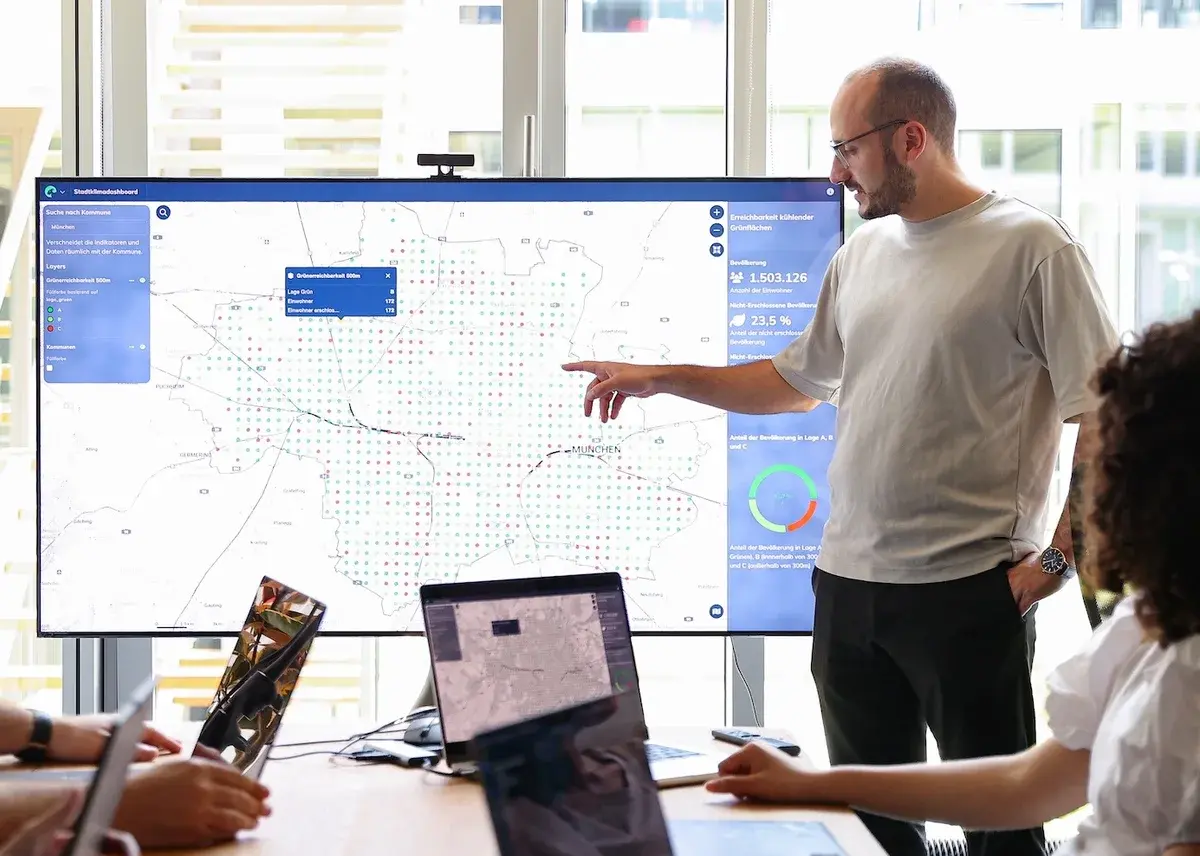
Elias Pajares grew up with his German-Peruvian family in Neuperlach, a district on the outskirts of Munich. Here Pajares learnt early on that access to green space, public transport, healthcare, schools and jobs depended on where you lived.
As a young student, Pajares became fascinated with maps, data and imagining how to redesign neighbourhoods – because to him, urban inequalities were personal, not just dry statistics. During his studies at the Technical University of Munich (TUM), he began to understand that many city authorities lacked the technical capacity to measure accessibility. This meant that public planning decisions were often made relatively blindly when it came to meeting the real needs of residents.
From insight to action
While completing his master’s at TUM, Pajares hit a turning point. He had become increasingly frustrated at the lack of planning tools available for city authorities, so decided to take matters into his own hands and focus his academic research project on what was missing.
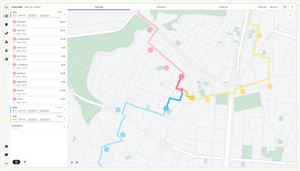
The result was the first prototype of the Geo Open Accessibility Tool (GOAT), a tool designed for city authorities to measure accessibility and identify where improvements could be made. Open source by nature, the platform was devised from the start to be easy-to-use for planners and transparent regarding how it works, closing the gap between academic research and actionable solutions.
Backed by the EIT Urban Mobility ecosystem
While further developing GOAT during his PhD, Pajares discovered the EIT Urban Mobility Doctoral Training Network, a training programme and network for doctoral researchers, supporting from lab to market. Participants can take entrepreneurship and innovation courses, connect with 12 leading universities across Europe and meet others on the same path to creating sustainable urban mobility solutions.
Pajares explained: “I joined because the EIT was that rare place that took both sides of urban innovation seriously: the rigorous science and the messy reality of cities. The Doctoral Training Network gave me a European peer network and the courage to stop being only a researcher and start building.”
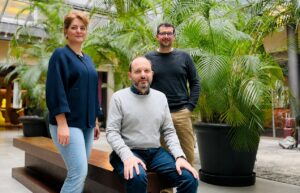
It was with this newfound confidence that Pajares founded startup Plan4Better in January 2021 as a TUM spin-off, while still completing his PhD, together with his colleagues Majk Shkurti and Ulrike Jehle.
In 2022, Pajares and his team led an EIT Urban Mobility innovation project. Under the Citizen and Data programme, the project focused on developing an urban mobility index with the City of Munich as testbed. Although the project was not scaled further, its concepts and technology live on in GOAT and in ongoing research at TUM.
Shifting the European planning landscape
Today, Plan4Better works with more than 50 city and transit planning offices, including Freiburg, Hamburg, Mannheim, Munich and Bonn. “Some of my most rewarding moments are when I see GOAT being used in real-world planning”, said Pajares. “Those moments confirm that the tool I started building in a Munich university lab as a master’s student is now genuinely changing how planners and citizens shape their cities together.”
GOAT has established itself as a platform that facilitates evidence-based and sustainable city planning decisions in seconds rather than weeks. Questions such as whether residents can access essential services on foot, by bike, or via public transport, or where current urban planning is falling short, are no longer a mystery. From a barrier-free route to the bus stop, to making a city centre easier to navigate for people who are blind or visually impaired, planners can now make decisions that better meet the needs of their populations.
In Hamburg, GOAT is helping prioritise accessibility upgrades for around 2,400 bus stops by analysing demographics, bus frequency, nearby public facilities and the needs of vulnerable groups such as elderly residents and wheelchair users. In Kaiserslautern, the team developed an app that supports people who are blind or visually impaired, and in Mannheim it improved access to parking for people with disabilities. In Munich, Bonn and Rhine-Neckar, GOAT has supported more equitable mobility, retail planning and integrated sustainable transport strategies.
A bright future
Pajares and his team are now working with Germany’s Federal Institute for Research on Building, Urban Affairs and Spatial Development on an urban climate dashboard covering every German municipality with more than 10,000 inhabitants. This will bring climate-relevant planning data to more than a thousand local administrations. A 2025 Greenpeace study also used GOAT to reveal that around 26% of Germans have poor public transport access where they live.
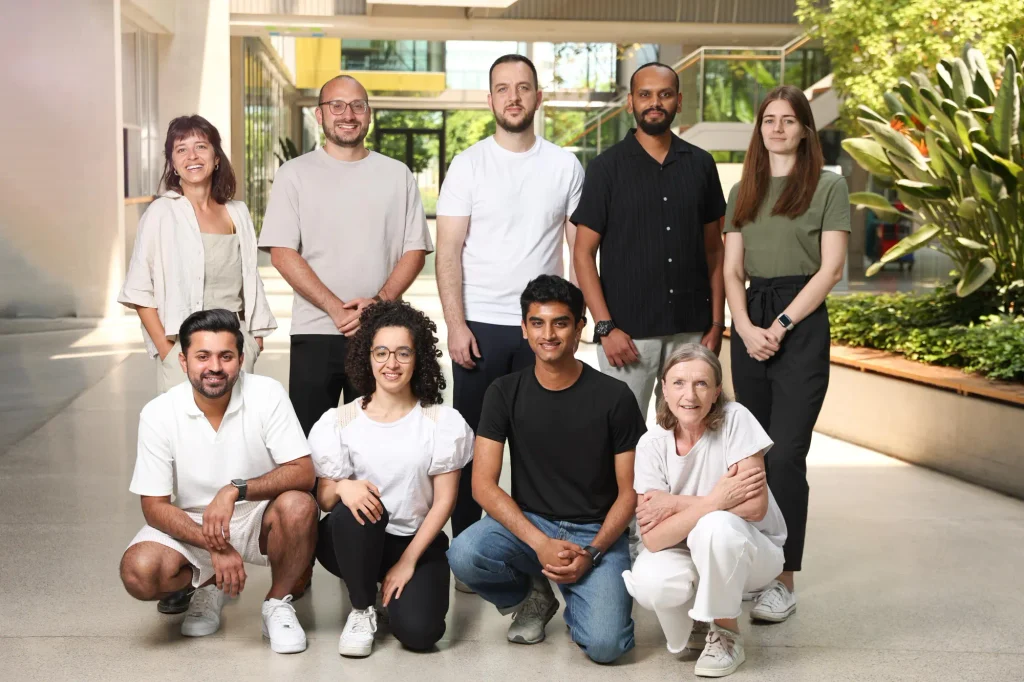
Plan4Better has grown to a team of around 10, primarily through customer revenue rather than venture capital, which has allowed it to stay independent and fully open source. The team is now exploring new areas such as energy and environmental planning. Pajares explained: “This includes projects focused on green infrastructure, urban climate adaptation, EV charging planning, municipal heating-transition strategies and digital twin platforms that help cities visualise energy use, building networks and renewable energy pathways at neighbourhood scale.”
Plan4Better’s first international clients were in Florida, USA, followed by a cross-border deployment with Agglo Basel across Switzerland, France and Germany, helping to measure how easily people could access services across national borders. In academic projects, GOAT is already used across Europe: with research partners such as TUM and the Leibniz Institute of Ecological Urban and Regional Development (IOER), it has been applied in cities like Riga, Amsterdam, Budapest, London, Bologna and Ghent.
Pajares’ original ambition now reaches far beyond the city where it all began. Ultimately, the mission of Plan4Better is about making sure that no matter where someone grows up, they have the same access to services and amenities. As Plan4Better expands across Europe and beyond, it is helping to create cities where more people can reach the opportunities they need to thrive.