Shared micromobility can help cities scale sustainable urban mobility, strengthen first- and last-mile connectivity and extend the reach of public transport. But as fleets grow, cities and operators also need the infrastructure to support them – while making correct parking easy and intuitive for users.
Despite its benefits, shared micromobility still presents a number of operational and urban challenges. These range from the logistics and inefficiencies of manually swapping batteries to managing parking behaviour and preventing vehicles from being left poorly parked in public space.
“There is still very little dedicated infrastructure for shared micromobility beyond traditional bike racks, painted parking bays or virtual parking zones. Without supportive infrastructure – or very strict geofencing – parking can quickly become one of the biggest challenges for cities,” explains Erik Bergqvist, Head of Business Development at Swedish micromobility infrastructure company Standab.
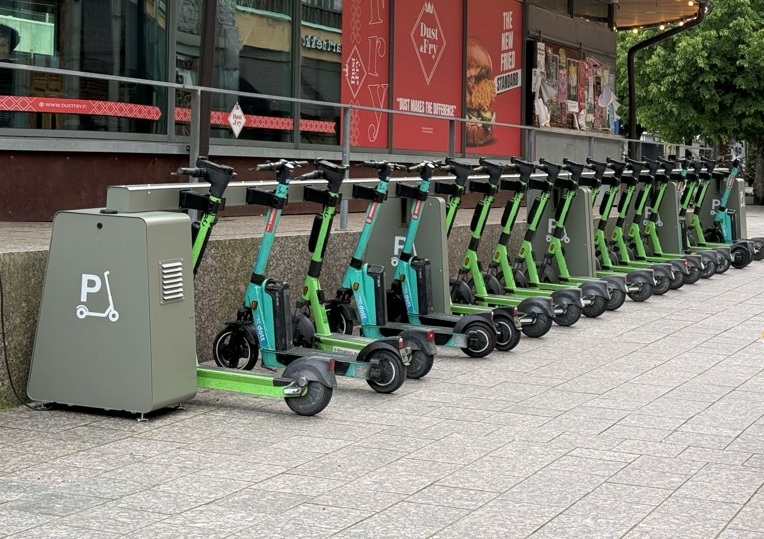
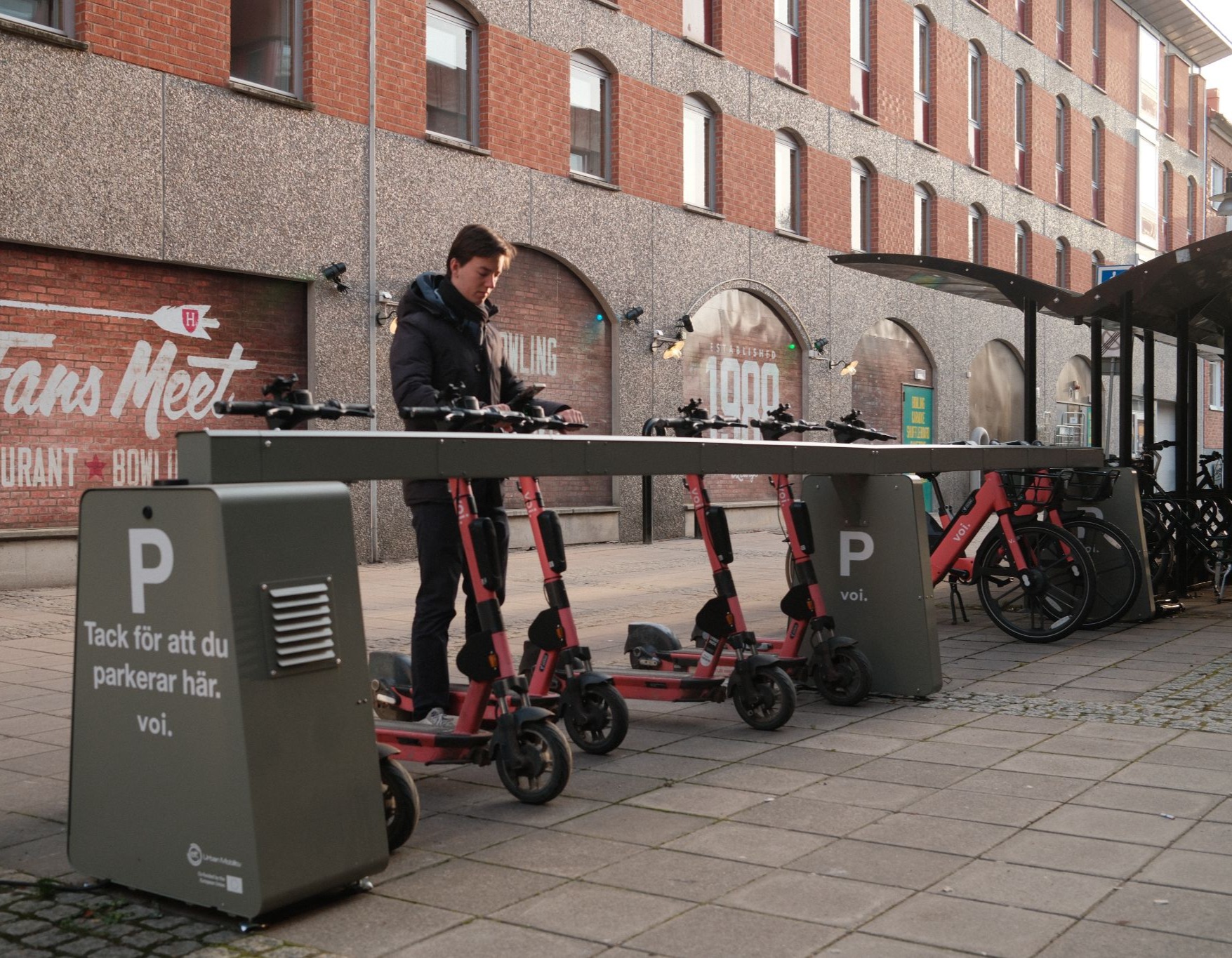
Backed by EIT Urban Mobility, Standab is addressing these challenges by developing flexible, operator-agnostic parking and charging infrastructure for shared e-scooters and e-bikes. Its infrastructure combines structured physical parking with user-powered charging, allowing vehicles to charge automatically while parked by the rider.
Rather than replacing the flexibility of free-floating services, Standab adds a physical infrastructure layer where it creates the most value throughout the entire available fleet of a city – bringing the order, predictability and reliability of docking to key locations while allowing vehicles to remain non-docked in the vast majority of existing locations.
For operators, that can translate directly into more efficient and sustainable fleet operations. At scale, Standab says its infrastructure can reduce the need for manual battery swapping by between 50 and 80%.
“If you reduce battery swaps by 50%, you also significantly reduce the kilometres driven by battery-swapping vehicles and the number of extra batteries needed in circulation. At scale, that can mean substantially less operational traffic and fewer batteries required across the fleet,” said Bergqvist.
Making good parking intuitive
With support from EIT Urban Mobility, Standab collaborated with shared micromobility operators Dott and Voi, and mobility data platform Nivel, on three pilot projects throughout 2025, hosted in Kokkola, Finland; Stjørdal/Trondheim, Norway; and Gävle, Sweden.
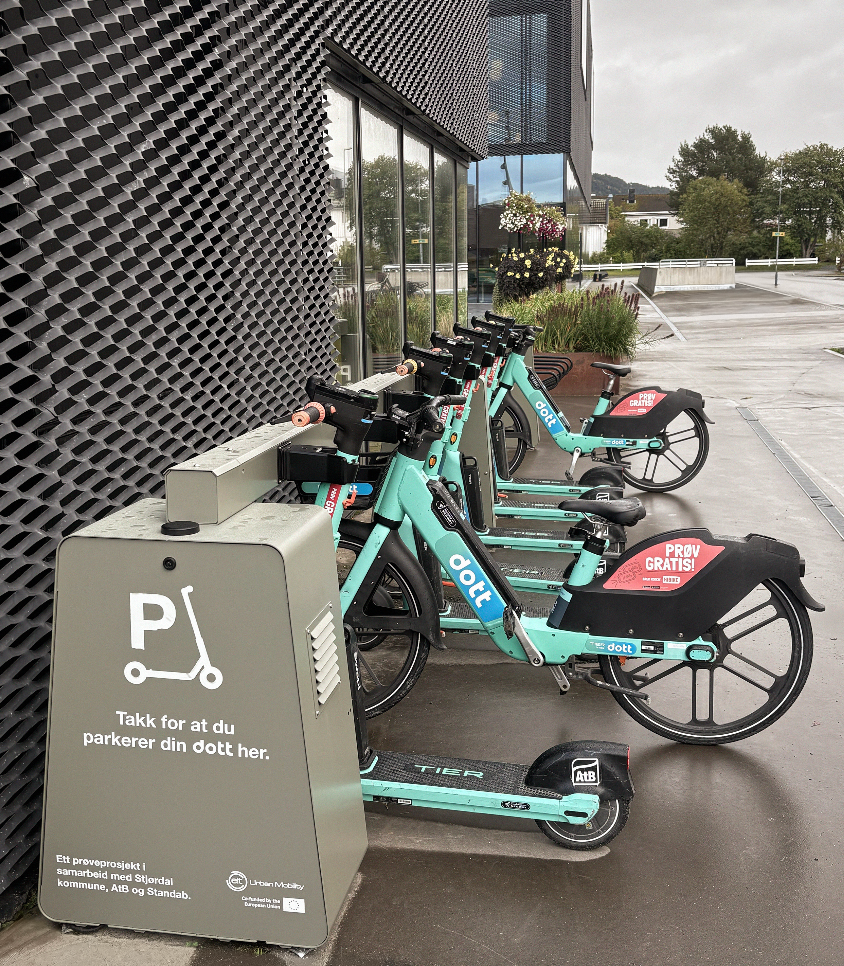
Standab described the results as exceeding expectations, particularly in terms of improved fleet operations and parking compliance. Usage increased around locations where infrastructure had been deployed compared with other areas of the cities, while local authorities reported significant reductions in parking complaints and a more orderly street environment.
In one of the cities, these improvements have also helped create the conditions for growing the service. Many of the city’s previous micromobility-related issues had been concentrated in areas where Standab stations were subsequently deployed. Following a significant reduction in reported parking problems during 2025, the city has now approved a doubling of the permitted fleet size for 2026.
For Standab, the development illustrates a broader point: when cities address the infrastructure and parking challenge, shared micromobility can become easier to scale rather than something that needs to be capped or constrained.
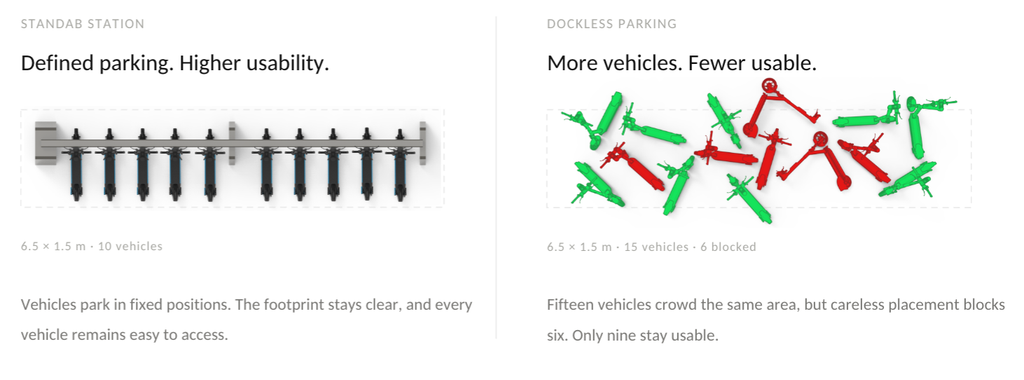
The principle behind the system is relatively simple: rather than relying only on rules and geofencing to tell riders where to park, Standab makes the preferred parking location physically visible, convenient and intuitive. Users do not need to use the kickstand and, in some cities, the ride ends automatically without requiring a validation photo – removing friction from the end-of-ride experience.
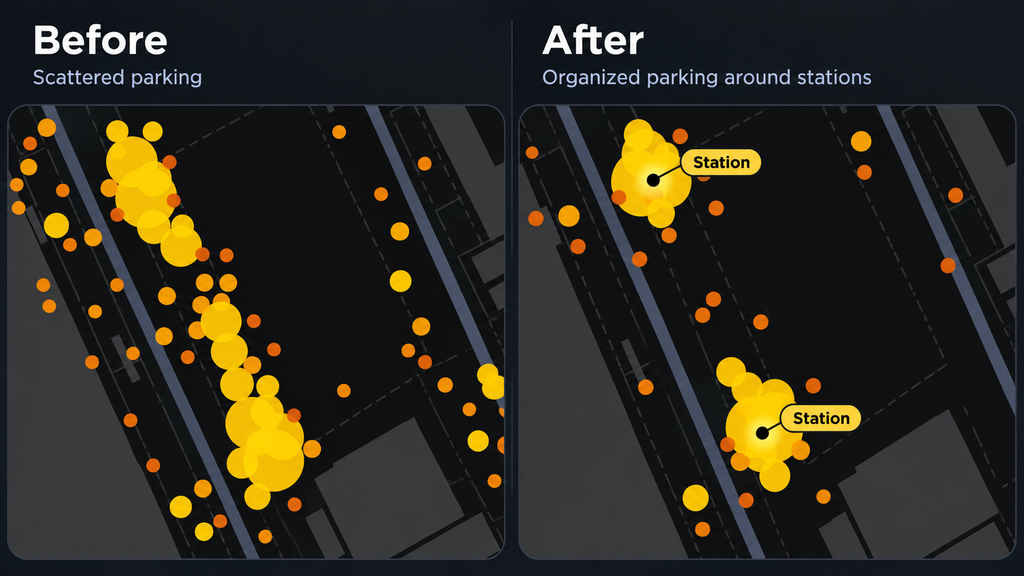
Company data visualisations showed this effect clearly. Once stations were introduced, vehicles that had previously been dispersed across an area increasingly clustered around the infrastructure as riders naturally chose the designated parking locations.
The result was less street clutter while concentrating vehicles in predictable locations, improving service reliability by making it easier for riders to know where they can find their next vehicle.
For operators, the same parking event can also become a charging event. Instead of relying entirely on workers driving through cities to locate vehicles, replace batteries and redistribute fleets, Standab enables vehicles to charge directly at the point of parking.
Operator-agnostic infrastructure
A central part of Standab’s approach is that the infrastructure is operator agnostic, scalable and easy to install. Rather than building infrastructure around one individual fleet or bike-share contract, the same infrastructure can support different operators and vehicle types. Thanks to a good industry collaboration between operators and vehicle manufacturers.
For cities, this provides a more future-proof infrastructure layer for shared mobility. Operators can change over time without requiring the city to replace the physical infrastructure around them.
Standab also finances the charging infrastructure itself and generates revenue through charging services provided to shared mobility operators. This means the charging infrastructure can be deployed at no cost to the city, giving municipalities a way to improve shared micromobility infrastructure without taking on the investment themselves.
“What cities have traditionally valued about docked bike-share systems is order, reliability and predictability: users know where to find a vehicle and where it should be returned. At the same time, free-floating shared mobility offers much greater flexibility and coverage,” Bergqvist explained.
“Standab enables the best of both worlds. We support both docking and non-docking, allowing cities and operators to create structured and defined parking where they make sense, while maintaining the flexibility of free-floating services elsewhere.”
Rather than forcing cities to choose between a fully docked or fully free-floating model, Standab’s infrastructure can support a hybrid approach. Vehicles can dock and charge at high-demand locations while remaining free to operate outside the station network where appropriate.
This gives cities greater parking order and users more predictable vehicle availability – making the service more reliable without sacrificing the accessibility, coverage and flexibility that have made modern shared micromobility successful.
The infrastructure can also accommodate both shared e-bikes and e-scooters, enabling cities to create common shared mobility infrastructure rather than separate solutions for each individual operator or vehicle category.
Flexible infrastructure for changing cities
Another important part of Standab’s approach is deployment flexibility.
Unlike conventional docking infrastructure that may require extensive civil works and permanent foundations, Standab’s stations are self-weighted and can be installed with limited impact on the surrounding streetscape.
This allows infrastructure to be deployed quickly, evaluated using real-world usage data and relocated if travel patterns indicate that another location would work better.
“We can test a location, measure how it performs and, if it turns out not to be optimal, move the station somewhere else, also to cater for seasonality effects,” Bergqvist said. “That gives cities much more flexibility than traditional fixed infrastructure.”
For Standab, this is particularly important because micromobility infrastructure does not need to be planned entirely from the top down.
Instead, the company analyses where riders already start and end their journeys, and where vehicles naturally tend to be parked, using these mobility patterns to identify where physical infrastructure can have the greatest impact.
This allows cities and operators to build infrastructure around actual travel behaviour and continuously optimise the network as demand develops.
From regulating vehicles to enabling mobility
Standab believes this reflects a broader shift in how European cities are approaching shared micromobility.
Following several years in which the debate often centred around controlling or restricting e-scooters, the company says cities are increasingly asking a different question: what infrastructure is needed to make shared micromobility work well?
“The conversation is increasingly shifting from whether cities want shared micromobility to how they can make it work in a way that benefits the city, operators and users,” Bergqvist said.
For Standab, physical parking infrastructure is an important part of that transition.
“Rather than relying exclusively on enforcement, fines or virtual parking zones, we believe the best way to shape behaviour is to make the correct behaviour the easiest behaviour,” Bergqvist said.
“If you put infrastructure where people naturally want to end their journeys and make it convenient to use, the vast majority of riders will use it – and that’s what we see in the data,” Bergqvist explained.
This infrastructure-led approach could make it easier for cities to scale shared mobility programmes while maintaining order in public space.
It also reflects Standab’s broader view that parking and charging should be treated as shared urban infrastructure – rather than a challenge that every mobility operator is expected to solve independently.
The company now aims to build on its European deployments by expanding into 10 to 15 additional cities over the coming year.
“Public transport is the backbone of urban mobility, but it cannot serve every journey from door to door,” Bergqvist said. “You need a broader mobility mix, and shared micromobility can play an important role in extending the reach of public transport and making the first and last mile work better.”