Headaches caused by inefficient and outdated waste collection systems can have a meaningful impact on residents’ quality of life and satisfaction with their cities.
The consequences go beyond having to step over uncollected rubbish bags or the frustration of finding your local bins always full when you go to recycle. Inefficient waste collection also means excess fuel use, decreased air quality and a heavier burden on local authorities’ budgets.
“Waste management is one of our biggest challenges as a city and as a country as a whole,” stressed Mayor Charalambos Prountzos of Nicosia, Cyprus.
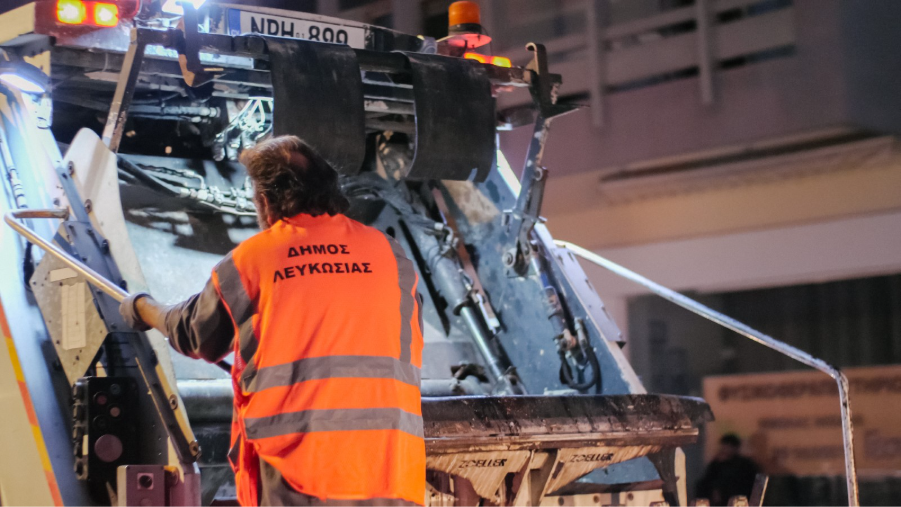
A central part of this puzzle is waste collection fleets. When they work well, residents might not notice. One missed collection, however, and cities can face disruption and frustration.
Now Nicosia is turning the page thanks to an AI-driven solution that has transformed waste collection and already cut fuel consumption.
Future-proofing waste management
Smarter technology was key for the local authority better manage its existing fleet of waste collection vehicles.
Through a six-month pilot project — supported by EIT Urban Mobility’s RAPTOR programme — Nicosia collaborated with Omnia Smart Technologies to deploy the company’s AIOne platform and optimise its operations. Programmes like RAPTOR are helping Nicosia “move towards a more sustainable future,” Mayor Prountzos said.
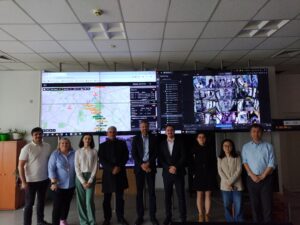
As part of the project, members of the Omnia Smart Technologies team travelled to Cyprus and worked on-site and in the field alongside officers from the Nicosia Municipality Waste Collection Service. This hands-on collaboration gave the Omnia team first-hand insight into the city’s day-to-day waste collection operations, allowing them to observe the collection process in practice and identify and record the specific needs and challenges faced by crews on a daily basis.
AIOne’s user-friendly dashboard gathers data on everything from collection points and working hours to weighbridge records and real-time fleet movements, and uses AI and GPS tracking to offer optimised route planning. A live fleet tracking function means operators can re-route or adjust collections according to local needs.
The platform’s analysis also took into account the specific geographical and operational conditions of Nicosia. Narrow streets, dead-end roads, areas with special characteristics and other access restrictions were considered when analysing the collection network and developing the proposed routes and operational solutions. This meant that the optimisation was based on the realities faced by collection crews in the field, rather than relying solely on theoretical or standard routing assumptions.
“The knowledge gained by participating in EIT Urban Mobility’s pilot programme was extensive,” underlined Nicosia’s Municipal Health Officer, Sophia Sevastidou,
“All this helped us to improve our operational efficiency.”
The technology also supports the city in introducing pay-as-you-throw waste policies thanks to radio-frequency identification (RFID) bin tagging and an app that enables on-demand waste collection.
“Our solution has also future-proofed the city of Nicosia, enabling the authority to adapt quickly to any changing policies that come in the future,” explained Jean-Philippe Taylor, CEO of Omnia Smart Technologies.
The solution allowed Nicosia to combine its existing knowledge of its streets, facilities and neighbourhoods, and to adjust and optimise routes and operations according to changing demands and volumes of waste.
“We worked with Nicosia to implement two key modules of our AIOne platform called MapSmart and Vehicle Tracking through SolveSmart. These enabled us to optimise the daily rounds for the city’s waste collection operation and give them the ability to monitor planned versus actual collections in real-time,” he added.
Efficiency leads to big savings
With smarter operations, the city can ultimately manage its own resources in a more cost-effective and sustainable way.
“It’s a key financial issue for us because the more you optimise, the more you reduce downtime or duplication of resources. This provides substantial savings, especially in our case where have to gather waste in the city and then transport it to a facility outside the district of Nicosia,” explained Mayor Prountzos.
“The challenge is important to address because inefficient waste operations can waste taxpayers’ money and increase emissions and overall operational costs,” added Taylor.
As a result of the implementation, the AIOne solution contributed to reducing fuel consumption, saving working hours and improving the utilisation of available personnel. It also helped reduce fleet maintenance and operating costs, lower greenhouse gas emissions, and support a fairer and more balanced distribution of areas of responsibility and workload among waste collection crews.
Nicosia’s residents are expected to benefit from more reliable service with fewer missed collections, cleaner streets, and lower carbon dioxide emissions in the urban area. In short, the city sees it as an urgent quality of life issue.
For drivers, who received hand-on training during the pilot, increased fleet efficiency will also contribute to a happier workforce.
Living laboratory
Fresh from the successful pilot in Nicosia, Omnia Smart Technologies sees its RAPTOR experience as putting it in a stronger position to pursue its expansion across Europe.
“EIT Urban Mobility’s support has helped us at Omnia to better understand European collaboration frameworks,” Taylor shared.
This successful collaboration between Nicosia and Omnia Smart Technologies is at the heart of what RAPTOR does: pairing cities that face specific mobility challenges with startups and SMEs that offer innovative, tailored solutions.
“Cities sometimes have urban mobility challenges that they do not have the technical or financial resources to resolve alone. At the same time, we have SMEs and startups that are super motivated, have expertise on given topics and are willing to help, but they lack funding and access to these types of stakeholders,” explained former EIT Urban Mobility Innovation Officer, Julia Lazarus.
For municipal officials, it was a valuable opportunity. “The collaboration with EIT Urban Mobility was excellent and was characterised by a friendly and professional approach, prompt responsiveness, immediate assistance whenever needed, monitoring of the program’s progress and timelines, and guidance in administrative matters and in potential future cooperation,” Sevastidou highlighted.
Through the living laboratory approach to sustainable mobility embraced by Nicosia, it is hoped planners will continue to gain new insights to improve and develop waste policies, supporting the city in achieving its long-term environmental goals and making life better for residents.