While cities have been making progress tackling vehicle engine exhaust emissions, a lesser-known form of transport pollution — non-exhaust emissions (NEEs) — is causing increasing concern.
These harmful particulates come from parts of the vehicle outside the engine, particularly from brake, tyre and road wear, and are drawing growing scrutiny for their harmful impacts on both human health and the environment. According to a study commissioned by EIT Urban Mobility, in collaboration with Transport for London and the Greater London Authority, and conducted by e:misia, as exhaust emissions decrease, NEEs have become a dominant source of urban particulate matter.
Now a unique device developed by The Tyre Collective has succeeded in capturing up to a quarter of NEEs particles produced by vehicles in recent trials.
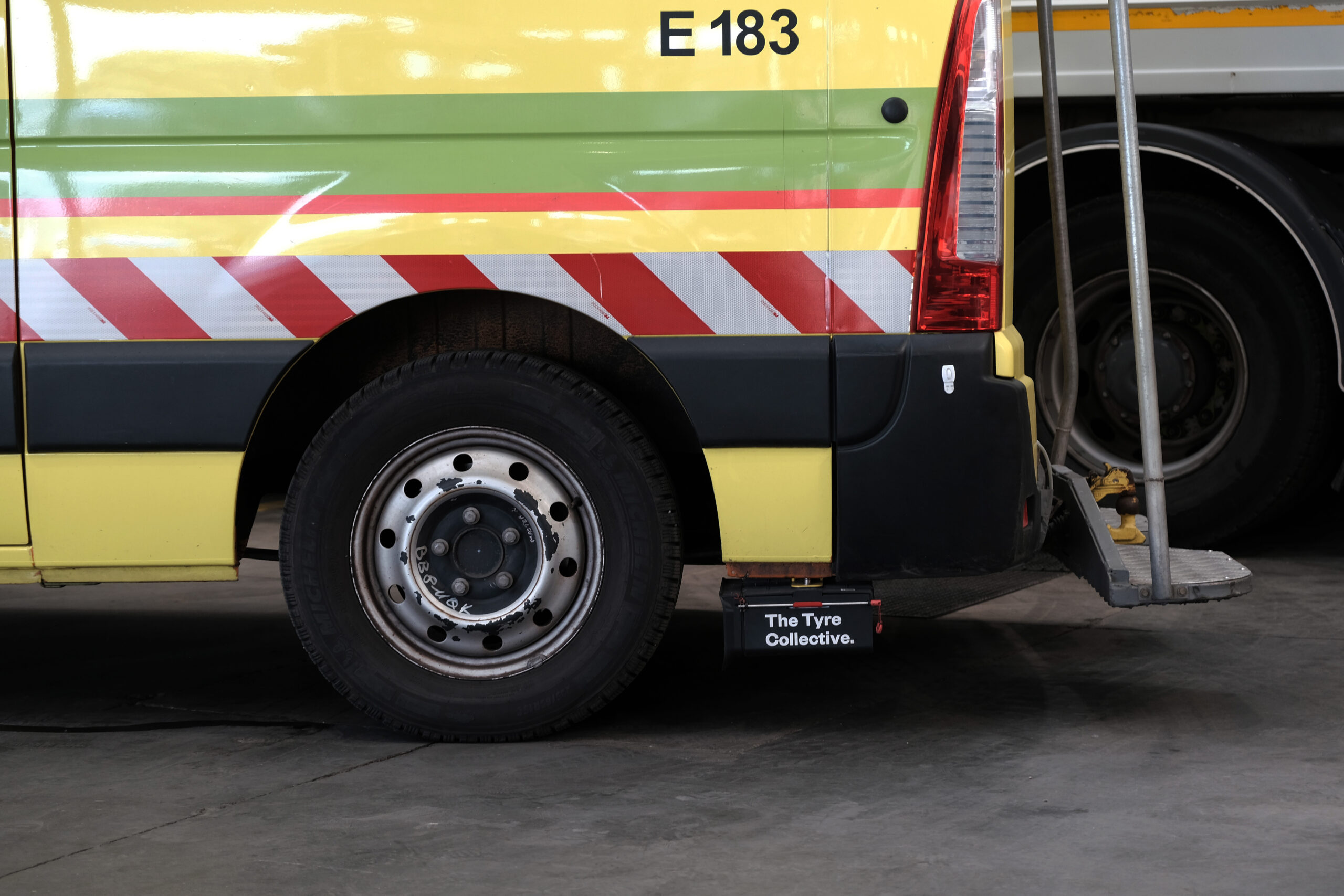
The small TC05 device, developed and piloted through EIT Urban Mobility’s Targeted Open Call 2025, is attached behind vehicles’ rear wheels and uses electrostatics to capture NEEs as they are released, before they spread into the air and wider environment.
A vehicle retrofitted with the TC05 device and driving around 10,000 miles over a year could clean up around 1.34 million m3 of air and 6.5 million litres of water, according to the startup’s projections.
“With the development we did through this EIT Urban Mobility grant, we definitely increased that capture efficiency by almost two times,” The Tyre Collective CEO and Co-founder Hanson Cheng shared.
Winning plaudits
The recent TC05 pilots took place in partnership with the Eurometropolis of Strasbourg, and highway services firm Ringway in the United Kingdom. Clémentine Flocon, Environmental Research Officer, City and Eurometropolis of Strasbourg explained “The Eurométropole got involved in this project because its goal is carrying on finding new ways to be an example regarding clean mobility. The transformation of our vehicle fleet is part of an ambitious structural approach: to reduce our emissions, while ensuring continuity of public service.”
Partnerships with these entities enabled the startup to work on commercialising the device for light commercial vehicles and offered a valuable chance to find ways of streamlining the logistics involved in cleaning the device’s filters.
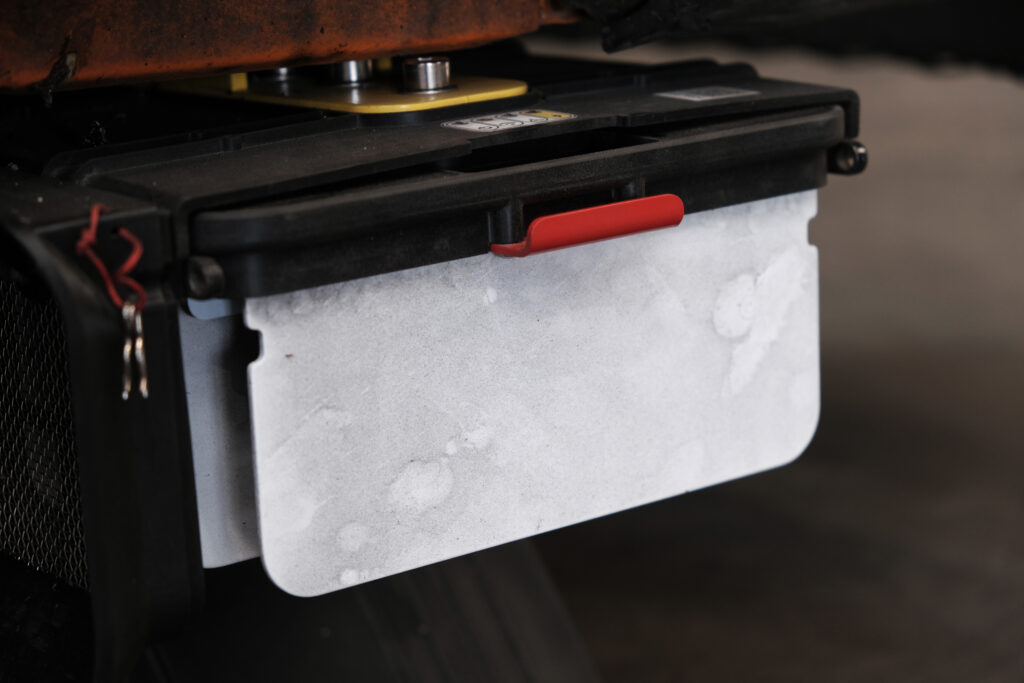
“In Strasbourg, after they finished a test drive you could actually see a very thin buildup of these particles on the device. I think that really helped put it in perspective for people what we’re capturing,” Cheng recalled, “Normally you’re walking down the street and you’re breathing these particles in without seeing it. But I think when you see a concentration of it, it is quite shocking.”
Participation in the Targeted Open Call enabled the team to further develop and refine the TC05 hardware, as well as improve the platform where the device data is visualised. The startup’s innovation also saw it go home with prizes at the 2025 European Startup Prize for Mobility, including the Audience Prize – voted for by both the expert jury as well as by the online and live award ceremony attendees.
Toxic cocktail
Benefits of the device go beyond capturing harmful PM particles: data it gathers allows companies or municipalities to better quantify their fleet emissions originating from tyres.
“There’s a lot of quantification on CO₂ emissions but tyre wear is this unknown area. Even though they just look like a piece of rubber, tyres are actually quite complex in nature. There are over 200 different components in there,” Cheng noted.
“We quantify impact both in terms of improvements in air quality and water by capturing these particles or preventing specific chemicals and toxins from reaching the environment,” he explained.
The environmental impact is key. More than 96% of people in Europe faced PM2.5 concentrations above the World Health Organisation’s annual air quality guideline limit in 2022, with NEEs a major source of urban particulate matter, according to the EIT Urban Mobility study.
“In big cities like London, more than 60% of emissions are already from NEEs, which means that for a lot of cities, it’s time to start thinking, ‘okay, how do we address that?’” EIT Urban Mobility Innovation Officer Mohamed Adnan Aboulaïch explained, “Tyres are also one of the biggest, if not the biggest, source of primary microplastics in the ocean. It’s a cocktail of stuff that we’re not very aware of and studies are coming out about the toxicology and the problematics with it.”
Scaling up
The long-term vision for The Tyre Collective is integration: getting its device into the body of vehicles.
To that end, it works with OEMs and automotive tier-one suppliers to find ways that the device could be produced as a new vehicle part in future EVs.
With TC05 almost market-ready as a retrofit device, the Tyre Collective continues to work with urban administrations to understand how it can support cities’ air pollution reduction strategies, and the possibilities for larger trials.
The team now aims to start making sales in 2026 and hopes by scaling up and commercialising they can play an innovative role in helping reduce the long-overlooked harms caused by these stealth pollutants.
“Can we wait another 20 or 30 years for a fully sustainable tyre to come out to address this issue? Or can we start doing something now? I think it’s where we bring the most value,” Cheng concluded.