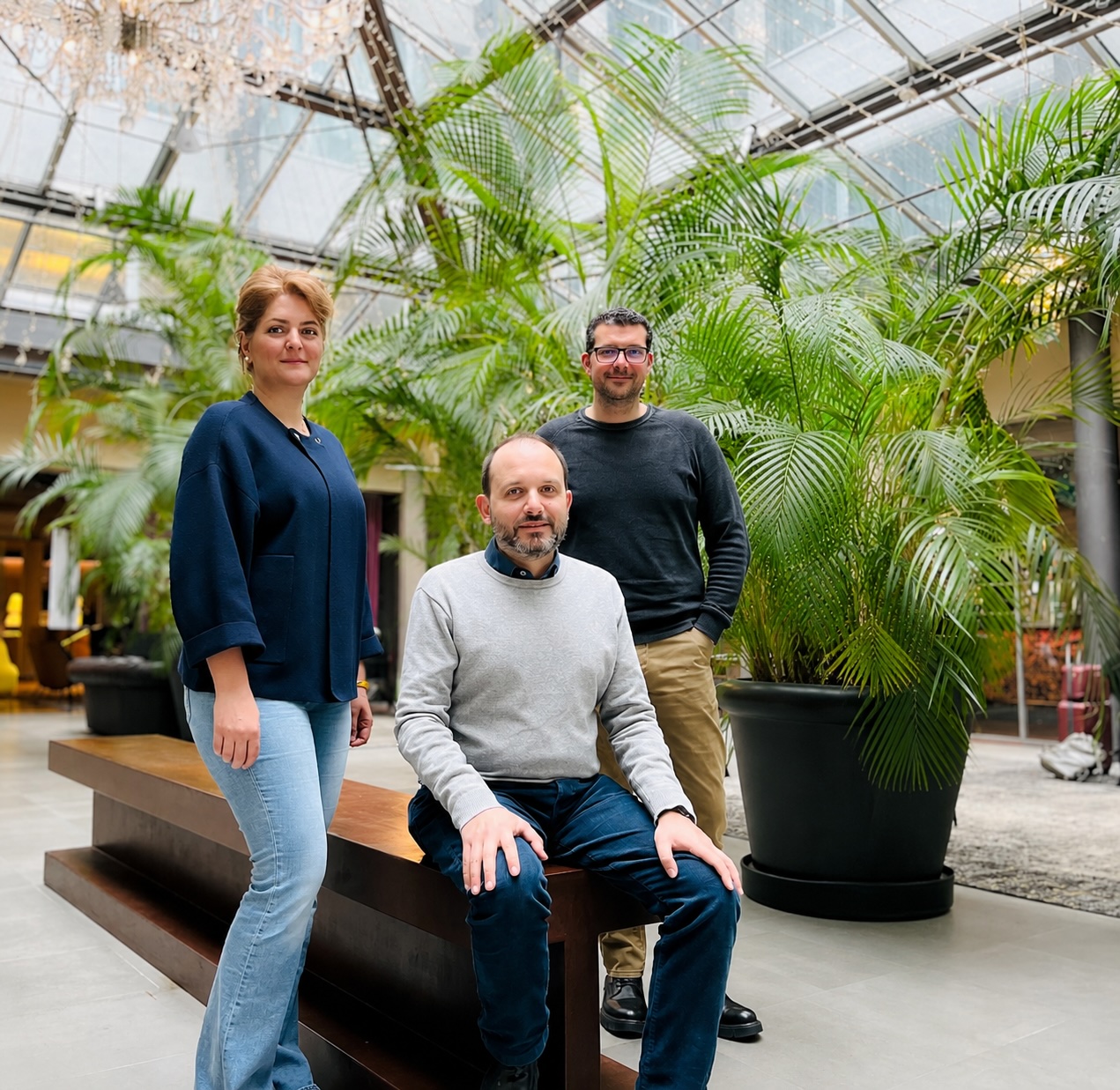
When executive Elham Hassanzadeh visited the Dolomites mountain range for the first time in 2021, she was struck not only by its natural beauty, but also the constant, heavy flow of freight traffic in the area. The stark contrast between this UNESCO World Heritage Site and the emissions-intensive transport corridor running through it opened her eyes to the true scale and environmental cost of the freight industry.
Hassanzadeh’s instinct was right: Europe’s road transport and logistics sector is notoriously one of the hardest to decarbonise. Despite the sheer scale of the sector – around 6 million trucks, 35 million vans and 40,000 fuel stations – many operators are running on old-fashioned and fragmented systems for their refuelling, payments and reporting systems. This leads to operational and sustainability inefficiencies, including exposure to fraud, limited transaction visibility and inconsistent emissions reporting. At the same time, with profit margins as low as 1.5-2% across the industry, operators have little breathing room to risk trying new ways of working.
Founded in Italy in 2021 by Elham Hassanzadeh, Arxax draws on its founder’s 17 years of experience in the energy sector. This woman-founded startup is developing an integrated digital platform to help modernise road freight through two core services covering smart payments in refuelling and recharging and emissions tracking and reporting.
Leading the way
Arxax was commercially launched in 2025, making the transition to sustainable transport more practical and commercially viable for freight companies across the continent.
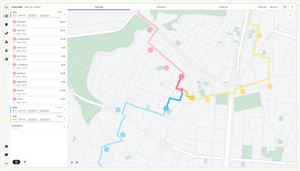
Arxax’s digital platform covers three core elements. The first, ‘Connect’, helps fleet managers choose the best refuelling stations based on fuel type, price and vehicle routes, so that drivers don’t have to spend time searching themselves. The second, ‘Pay’, simplifies fuel payments through a digital system, avoiding the need for traditional fuel cards and reducing authorisation time down to about one minute. The third, ‘Smart’, tracks fuel consumption and emissions, helping fleet operators track and report on their sustainability targets. For the latter, Arxax is globally certified by the Smart Freight Centre for CO2 emissions measurement and reporting, enabling operators to accurately and efficiently track progress.
Arxax also supports fleets in the switch to lower-emission fuels, such as hydrotreated vegetable oil (HVO), liquefied natural gas (LNG) and biogas, as well as renewable electricity. In particular, HVO, made from vegetable oils and waste fats, is a renewable alternative to diesel. Its potential to reduce emissions depends on the feedstock and production pathway. As demonstrated in Arxax’s Cap Delivery pilot, switching to HVO can offer a practical way for existing diesel fleets to reduce their emissions without requiring technical modifications to their vehicles.
Backed by a whole ecosystem
Arxax’s development has been supported by the wider EIT Urban Mobility ecosystem, since the start, supporting its commercial validation and pilot deployment activities. For instance, Arxax was selected for SME Market Expansion Call which supports the development of solutions for expansion into a new industry sector or geographic market. The ARXAX H2LLO Connect project ran from April to October 2025, perfectly timed for the period of its commercial launch in July 2025, helping the company take its first steps towards real-world impact.
The project supported market validation through data triangulation, expert review, scenario analysis and regulatory insight. It also helped establish a pilot with Autostrada del Brennero, a major European freight corridor connecting Northern Italy to Bavaria in Germany, which is used by more than 2.5 million trucks each year.
Arxax was also given a stage and an audience. The team took part in major European mobility and startup events such as Slush in Helsinki, Finland; Tomorrow.Mobility World Congress in Barcelona, Spain and the Sifted Summit in London, England, building commercial visibility, investor exposure and industry networks. This was further boosted by e-pitch sessions on one of the European Commission’s innovation platforms. The increased visibility contributed to broader media exposure and industry recognition, including coverage by TG News ALIS, RAI – Radiotelevisione Italiana and Südtiroler Wirtschaftszeitung.
CEO Elham Hassanzadeh explained the value of this multi-faceted ecosystem: “Through the EIT Urban Mobility network, Arxax gained access to mobility innovators, investors, cities, corporates and sector experts across Europe, helping strengthen its credibility, refine its market positioning, and transition from concept to market-ready solution.”
From Italy to beyond
Arxax has already demonstrated its commercial traction. Since its commercial launch in July 2025, the startup has achieved average month-on-month growth of 32%, scaling from an initial pilot of three vans to more than 400 vehicles in its network. By Q3 2026, the company generated six times as much revenue as in all of 2025.Launching from Italy, Arxax already works with more than 110 refuelling station operators, with access to a much larger network of 1,100 stations.
A notable Italian case study includes Arxax’s collaboration with Cap Delivery, a last-mile delivery business in the province of Veneto. In addition to Arxax’s digital platform, the partnership trialled the use of HVO across its delivery fleet. The pilot now involves more than 50 HVO-powered vans, with over 60,000 litres of HVO delivered. The results showed an estimated 75% reduction in CO₂ emissions compared with traditional diesel, without requiring technical modifications to the vehicles. The project also reduced the number of refuelling stations used from around 40 to just six, while bringing average transaction authorisation times down to approximately one minute.
Looking ahead
Arxax plans to expand further across Europe, through station partnerships, telematics integrations and strategic network collaborations.
By contributing to Europe’s wider ambitions for a more sustainable and digitally connected freight sector, Arxax has the opportunity to help drive change across one of Europe’s largest and most challenging industries. What began with a stroke of insight in the Dolomites could now have an impact for the transport industry as a whole.