Five years ago, with a bold mission to build one of Spain’s most innovative cities, Las Rozas Innova launched as the public innovation company of Las Rozas City Council.
“In Las Rozas Innova, we are the ones that are looking for new projects for the city, looking for innovation. That’s why we started working with EIT Urban Mobility,” explained Nuria Blanco, Las Rozas Innova’s Mobility Manager.
Positioned within the bustling Madrid region Las Rozas municipality and its more than 100,000 residents face different mobility challenges brought on by changing demands and evolving uses of urban spaces.
Amid this situation, Las Rozas Innova collaborated with EIT Urban Mobility to partner with startups to harness technology in ways that benefit diverse groups, especially pedestrians and vulnerable road users.
AI for improving accessibility on streets
Las Rozas Innova and the City Council wanted to prepare a strategic accessibility plan, but with a lack of information around pedestrian infrastructure and road crossings a new solution for collecting and analysing data was needed.
The answer was the AI Pedestrian Crossing Accessibility (AIPECRA) project, supported by EIT Urban Mobility’s Rapid Applications for Transport (RAPTOR) Programme, which acts as a matchmaking opportunity for cities to match with startups offering relevant solutions.
“This was our first project with the EIT Urban Mobility. To be honest, we saw the call on their website and contacted them just to know more. We had a meeting with the manager of EIT Urban Mobility’s Innovation Hub South and then we began to collaborate,” reported Elvira Pérez, responsible for financing and European projects at Las Rozas Innova.
“We received 20 different proposals from startups to solve our challenge. It was interesting to know their different approaches, and, although not all of them could be tested in Las Rozas, if something works for us in the future, it’s useful to know where they are,” Blanco added.
Finally, the technology AIPECRA, developed by Italian startup LOKI was the winner, an AI-driven technology to gather comprehensive street-level data that could help make the urban areas safer and more accessible.
“The results of the RAPTOR project will be used for many other projects within the city council,” Blanco stressed.
So far, in addition to AIPECRA, Las Rozas has also been able to integrate the data provided by LOKI into the municipality’s digital twin and expects to find further uses going forward.
“It was the starting point not only for working with high-efficiency mobility, but also for this strategic accessibility plan” Blanco noted.
The fruitful collaboration helped spark continued partnership between the startup and the municipality, with the two entities actively working together in Horizon Europe proposals and other initiatives.
Spotlighting safety
Las Rozas also wanted to focus on innovation for safety in 2025, including the EIT Urban Mobility-backed SAFELIGHT project, which developed a computer vision solution to automatically evaluate urban lighting.
“We want to study what impact it has on vulnerable road users if you improve the lighting conditions on a street or an intersection,” Blanco said.
The ‘Autonomous Inspector for Lighting’ that SAFELIGHT created will help cities discover key locations for improving urban lighting and recommend optimum solutions. And once an improvement has been put in place, a second automated inspection will follow to validate the real-world improvements on safety.
Untangling logistics
As a city located in the Madrid region, Las Rozas also faces challenging demands when it comes to logistics. A new solution was therefore required to help the city urban planners respond to its evolving mobility landscape.
“We have developed many initiatives related to shared mobility, traffic management, sustainability, bike lanes; but when we started speaking about logistics, it was like, okay, we haven’t got data,” Blanco recalled.
The solution? Last mile delivery platform LogE-Hubs. With support from EIT Urban Mobility’s 2025 main call, Las Rozas was able to collaborate with French technology partner Urban Radar to build a platform specific to answer its needs. Different data layers in the platform show information including loading and unloading zones, bike lanes and traffic flow of different vehicle types. The project supported a better understanding of logistics-related congestion, delivery patterns and potential locations for urban logistics hubs and provided knowledge to support informed decision-making by municipal services.
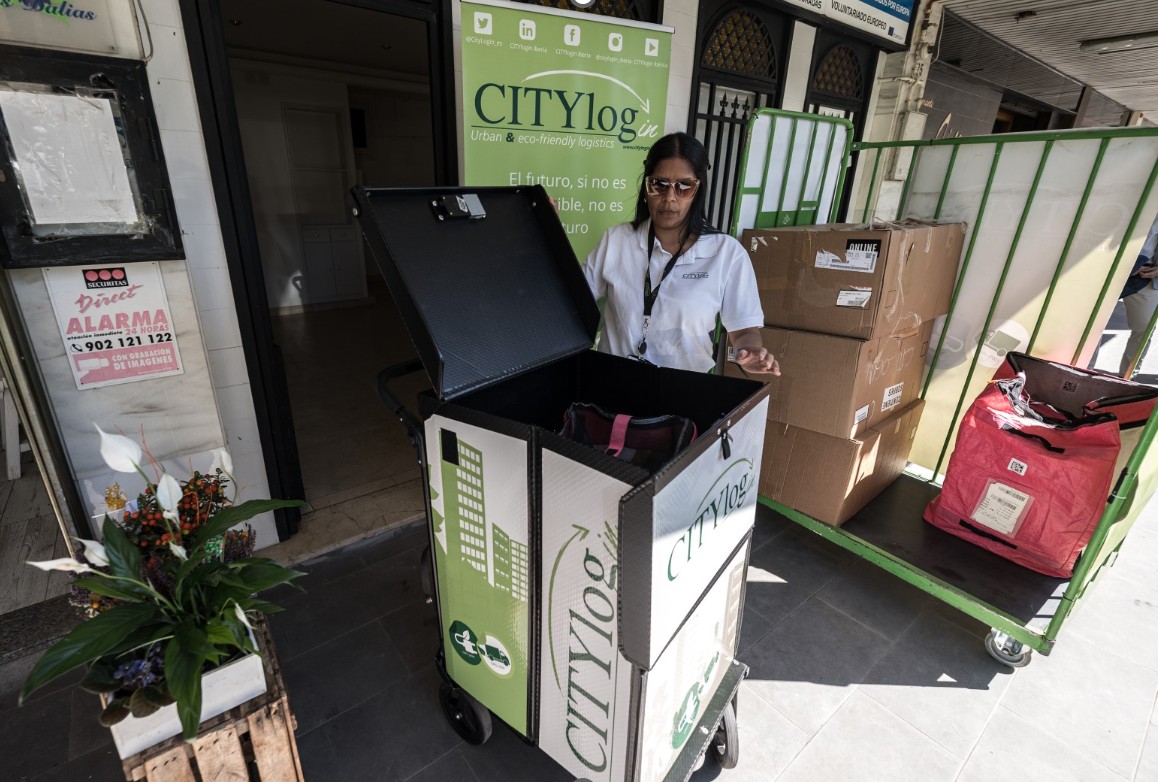
To further tackle the problem of urban congestion caused by logistics deliveries, Las Rozas Innova, along with partners elsewhere in Spain and Czechia, also developed the smart logistics project, LUCID.
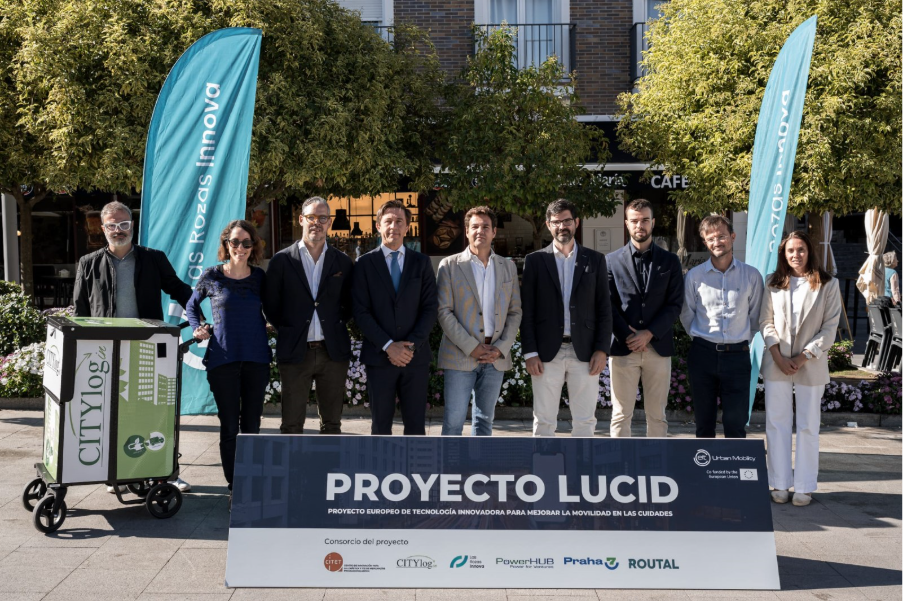
The platform enables real-time insights on logistics operations through advanced analytics and machine learning. At the same time, LUCID optimised route planning to reduce congestion, directly benefitting residents and local businesses.
“If you reduce this congestion, these traffic jams, the illegal parking, then everything reverberates in a positive way to the environment of the city,” Blanco emphasised.
At a recent Las Rozas Innova-run demo day local business representatives were “very interested” in LUCID’s early results. “If you want to start the digitalisation of commerce, having this access to the technology is very attractive for them,” Blanco said.
Innovating for citizens
As it continues its mission, Las Rozas Innova has connected with forward-looking cities, such as Komotini in Greece, to share best practices on sustainable urban mobility and to expand its own network of cities facing the same challenges.
“Komotini has a very strong strategy on accessibility in the city, and this is a topic that we are very interested in,” Pérez shared.
“We have local contact with EIT Urban Mobility’s Innovation Hub South, but the regional Innovation Hubs are also in contact. So, when I ask if they have any contacts in, let’s say, Norway, they can connect us with the contact point there. It’s very easy to contact other cities,” Blanco added.
Looking ahead, Las Rozas Innova wants to further enhance its work on the management of innovative mobility projects. To help achieve their goals, the team is hoping to continue to work with EIT Urban Mobility.
“We want to innovate but not for the sake of innovation,” Blanco stressed, “we want to create innovation that has a focus, with the aim of making life easier for the citizens, taking into account all the people.”
“Participating in international innovation projects allows Las Rozas to stay up to date on the latest trends, anticipate future challenges, and consolidate its position as an innovative and advanced city, capable of participating in initiatives alongside leading innovation entities, companies, and startups. These projects transform the city into an urban laboratory where real solutions are validated to move towards a more sustainable city, while attracting investment, talent, and new opportunities,” stated José de la Uz, Mayor of Las Rozas and President of Las Rozas Innova.