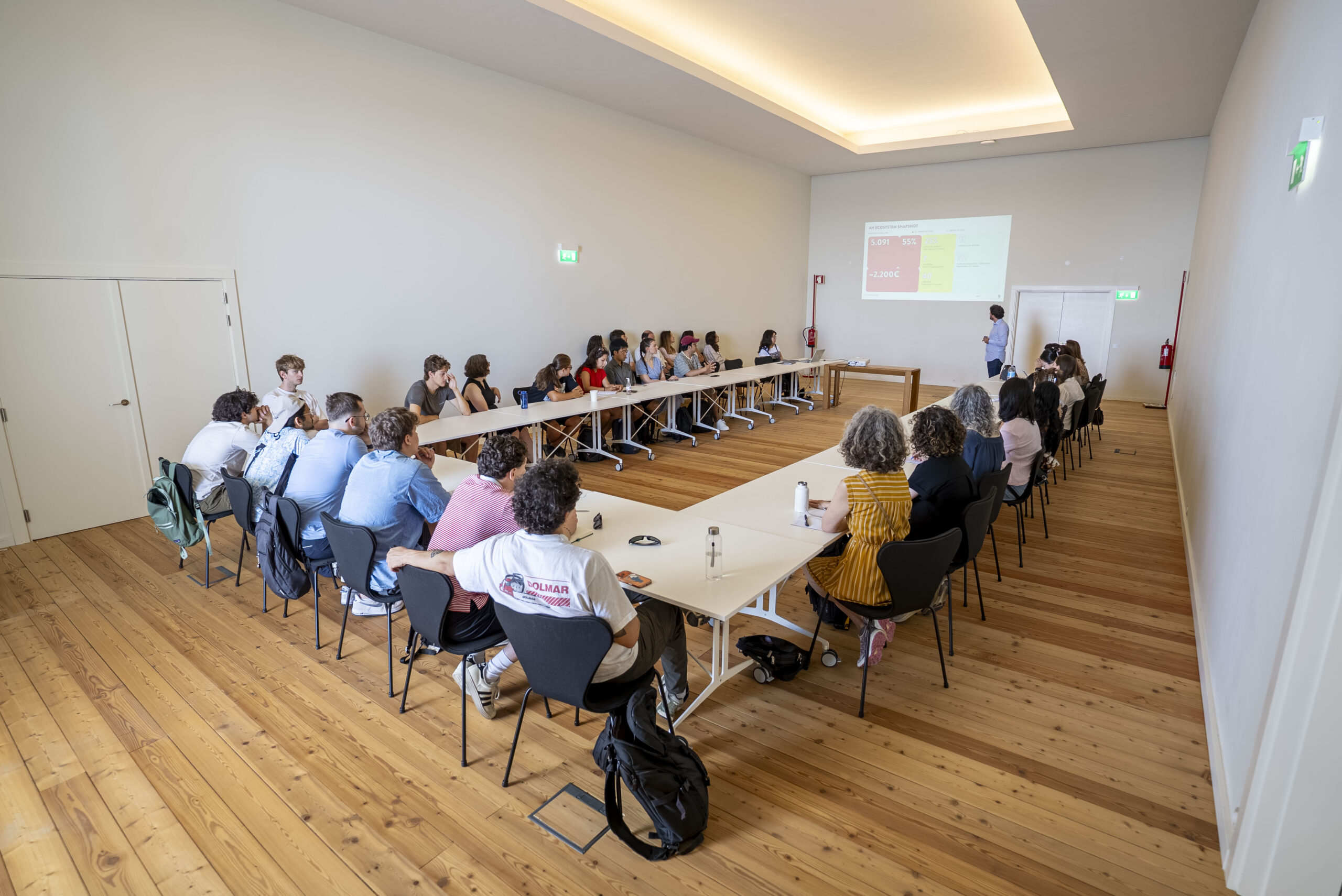
This summer, more than 200 international students attended 7 summer schools across Europe. In each school, students worked together to address our most urgent urban mobility challenges and to advance the creation of healthier, more sustainable and liveable cities for all.
The summer schools covered topics like logistics, age-friendly mobility as well as healthy, sustainable, and energy-efficient city design. Moreover, the programmes combined expert-led learning with practice and offered students the chance to apply their expertise to real-world challenges.
Local challenges and innovative solutions
The 2026 summer school season started off with the “CityMinds” School in Thessaloniki (Greece). This school equipped its participants from RIS countries with entrepreneurial skills in Smart Urban Mobility and City Logistics. The programme, curated by the Hellenic Institute of Transport (CERTH/HIT), introduced the students to the “design thinking process” which they then applied to the specific mobility challenge they were tackling. Ultimately, the teams presented their solution in a pitch competition with awards for the two winning teams. Additionally, outside of the classroom, a key highlight for the students were three site visits which offered them insights into local challenges and solutions in urban mobility and city logistics.
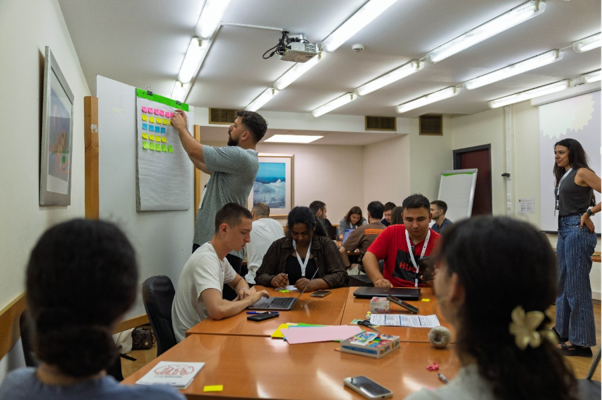
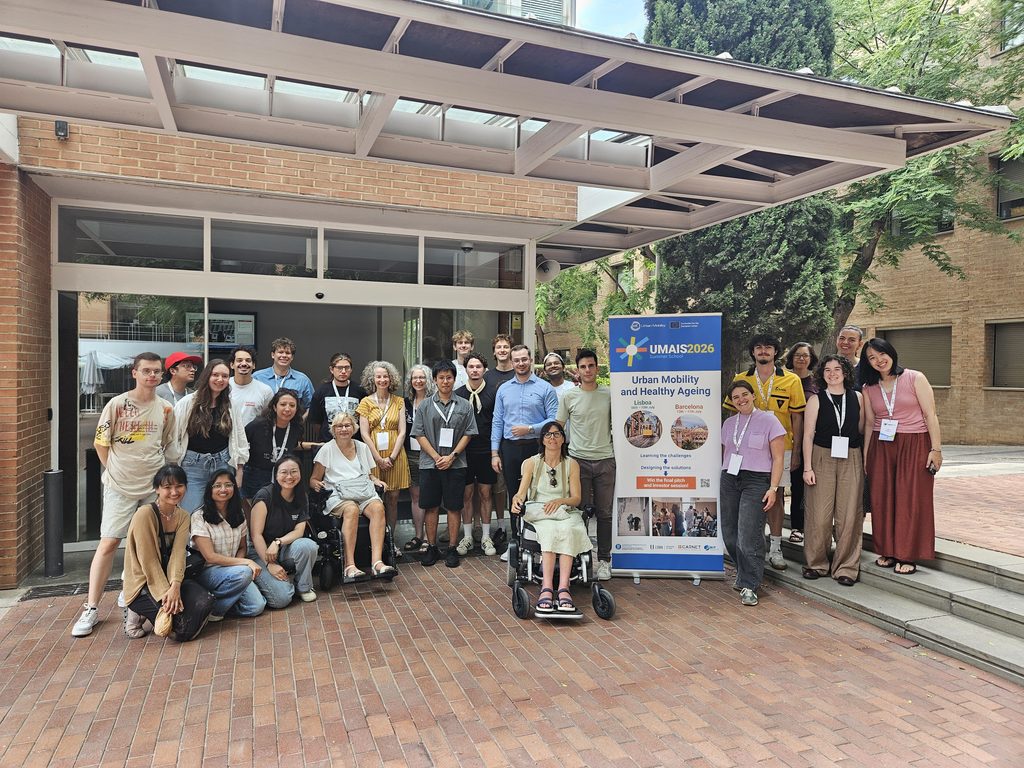
The learning journey continued with the “Urban mobility and healthy ageing” Summer School, hosted by the University of Lisbon (Portugal), and the Polytechnic University of Catalonia, Barcelona (Spain). Through expert-led classes, workshops and mentorship, the international participants learned to analyse mobility challenges affecting older adults. Additionally, they designed inclusive, age-friendly mobility innovations which strengthen independence and reduce mobility issues. Finally, the programme concluded with an investor-style session and a final pitch event where the students presented their projects. Two projects received an award: The first place was “SolMove”, a smart mobility platform designed to improve independent travel for people with disabilities. The second place was awarded to “E-Takka Takka”, a smart electric walker designed to help older adults carry groceries.
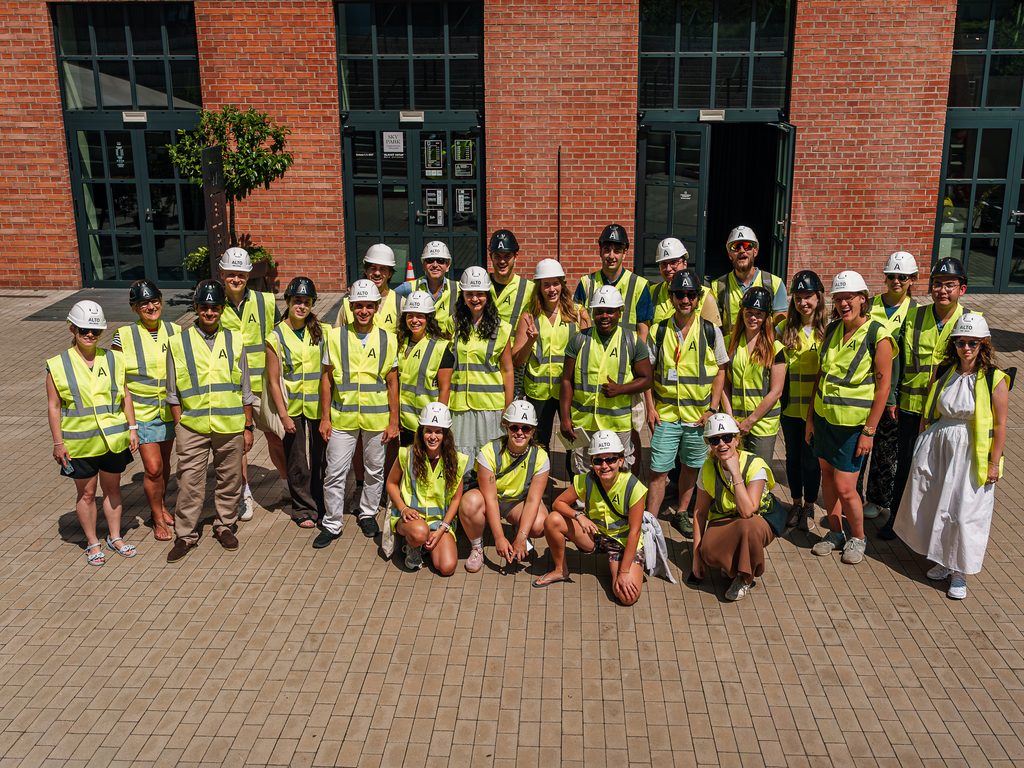
Ljubljana (Slovenia) and Bratislava (Slovakia) hosted this year’s “Resilient Cities” Summer School. Learning about practical approaches to urban resilience, participants explored key topics like health-focused urban design, sustainable transport and autonomous mobility. Collaborating with on-site partners, the students worked on local challenges like reimagining public spaces, making rail travel more attractive, or exploring novel insurance solutions for autonomous driving. The students developed their ideas through workshops, a mini-hackathon, pitch practice, site visits and coaching. In a final pitch event, the winning student team was “LALE Land Solutions”. They impressed the jury with their design for an inclusive and climate-resilient hub, aimed to revitalise public space around a local market hall. Partners for this school were the Slovak University of Technology, the University of Ljubljana, and Kimitisik B.V..
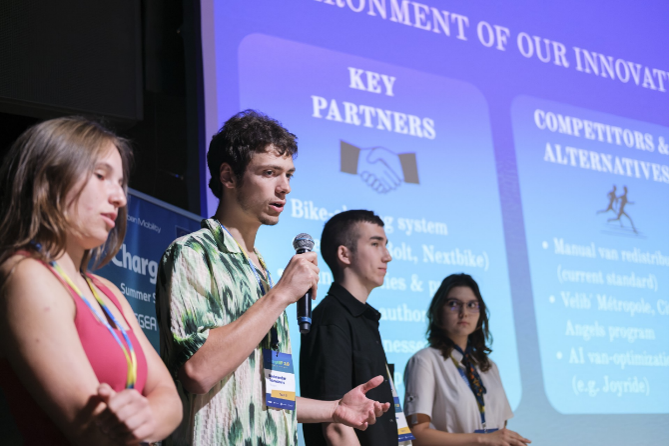
At the same time, the “ChargeUp 2.0” Summer School took place in Šibenik (Croatia), hosted by the North-West Croatia Regional Energy and Climate Agency (REGEA) and ERKON. The school empowered university students from RIS countries to design innovative and energy-efficient urban mobility solutions. By combining lectures on zero-emission mobility, expert inputs, and entrepreneurial skills, the students contributed to stronger collaboration between academia, businesses and public authorities. The school concluded with a pitching competition. The first place was awarded to “DistriBike”, a solution proposed to tackle uneven distributions of bikes in bike-sharing docks.
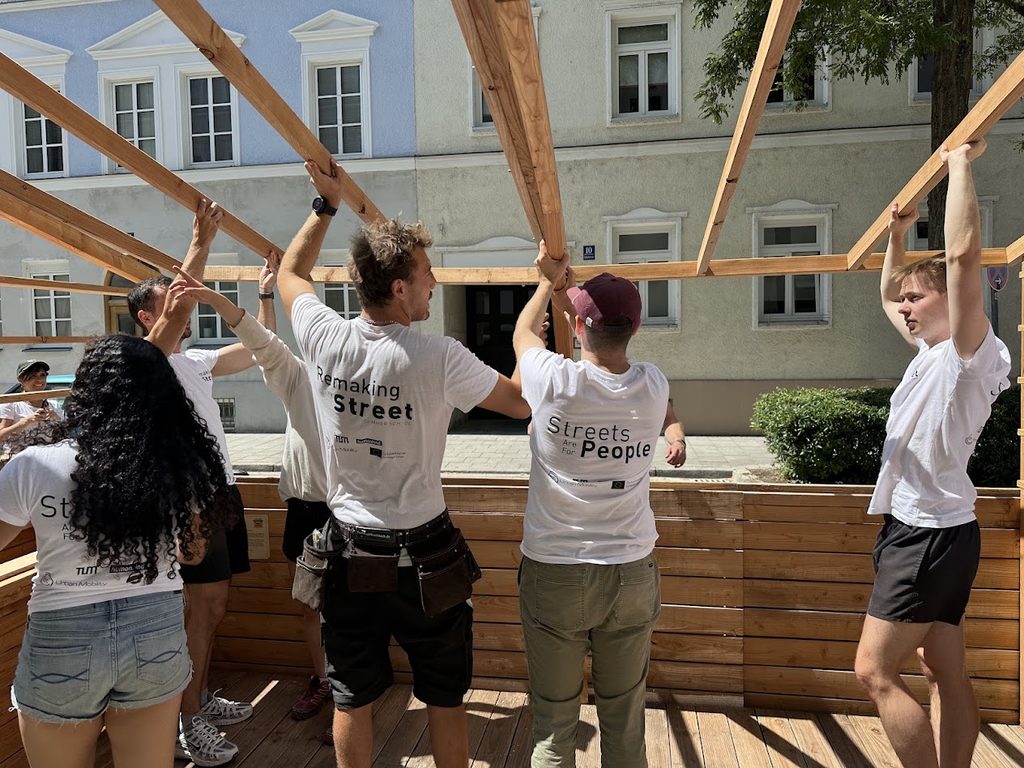
The “Remaking the Street” Summer School in Rotterdam (the Netherlands), and Munich (Germany), focused on transforming urban streetscapes to enhance liveability and sustainability. The international participants explored innovative approaches to redesigning streets, addressing challenges like reducing car dependency, increasing green spaces, and improving pedestrian and cyclist access. Through workshops about accessibility by proximity and street experimentation, the students learned how to redesign urban environments with a focus on citizen experience in the public space. Beyond the classroom, students had the opportunity to explore both cities’ urban planning though site visits. Additionally, they got hands-on experience designing and building two parklets in Munich. The school was organised by the Technical University of Munich and Humankind.
This year’s “Cargo Bike Revolution” Summer School was hosted by Ghent University and the Technical University Berlin. The school offered students the opportunity to design and test scalable cargo bike solutions tailored to real urban challenges. Students started with two weeks of lectures, site visits, cycling tours, and coaching. Afterwards, they progressed from investigating real-world challenges to developing their own innovative concepts. The students presented their work on the final day. In five groups, the participants proposed applicable solutions for real cargo bike challenges ranging from healthcare services to pet mobility.
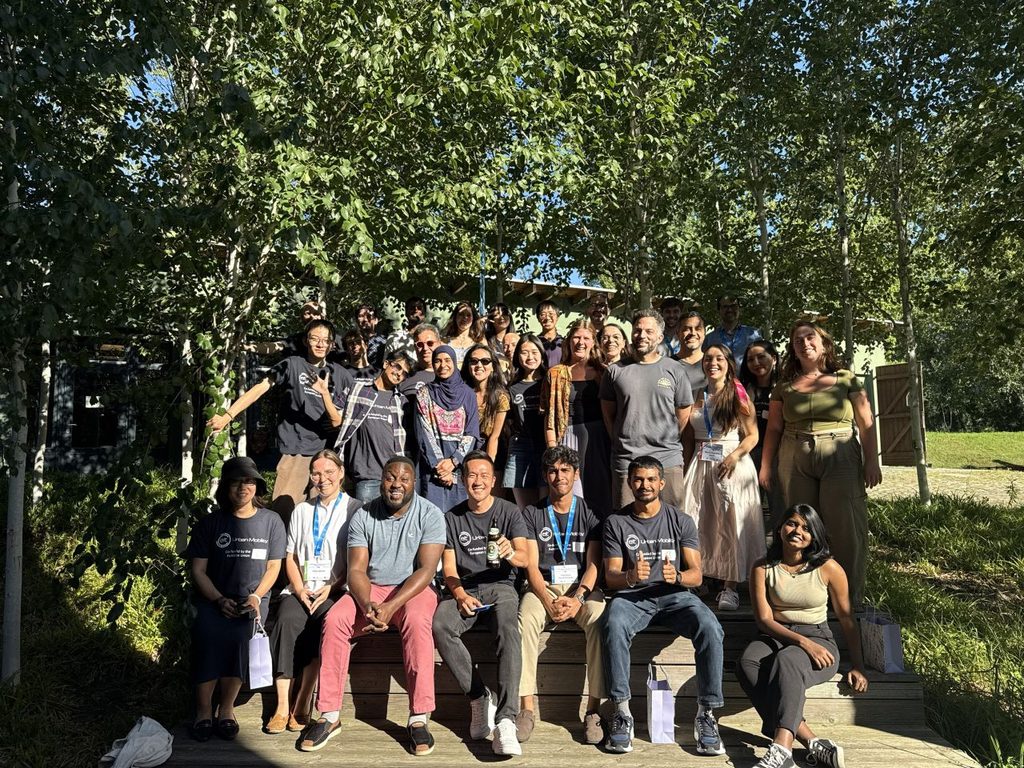
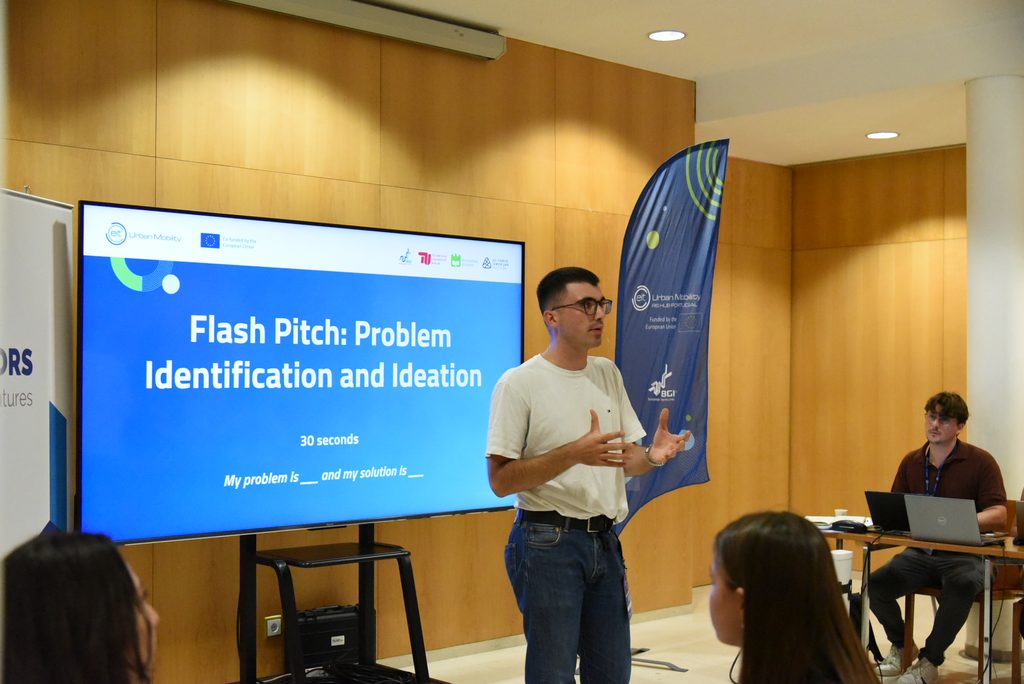
With students from 13 different countries, the “Innov4Mobility” Summer School in Aveiro (Portugal), closed this year’s summer school learning opportunities. This school fostered the students’ entrepreneurial skills through a hands-on, learning-by-doing approach. International and multidisciplinary teams worked on real mobility challenges proposed by external stakeholders. Furthermore, the participants collaborated with cities, startups, academia and industry experts to develop market-oriented solutions. Through a pitch competition, they proposed solutions related to public transport, logistics, mobility data, and health. This year’s winning team was “Alentejo Mobility”. They tackled the lack of public transport in rural areas by proposing eco-friendly transport fleets. This school was organised by BGI Sustainable Ventures and the Technical University Berlin.
International collaboration and peer-learning
The 7 summer schools, supported by EIT Urban Mobility and organised by our partners, brought together learners from the EIT Urban Mobility Master School and Innovation and Entrepreneurship Fellowship, as well as external students and professionals. In international and interdisciplinary groups, students had the chance to learn with and from each other. In collaboration with stakeholders across sectors, they contributed to advancing inclusive and sustainable urban mobility in local contexts and beyond.
What’s next
This year’s summer schools contribute to enhancing the impact of education in the mobility and entrepreneurship sector. Educating over 200 students, the summer schools capacitate and empower the next generation of sustainable urban mobility leaders. In 2027, EIT Urban Mobility and its partners aim to follow up on this year’s success and to further enhance urban mobility education and entrepreneurship across Europe.