Tackling the negative impacts of urban logistics is a key challenge for growing cities that want to build less congested, less polluted, more liveable cities.Getting there, however, can require overcoming a lack of data on how different logistics players move through and use urban spaces.
The EIT Urban Mobility-supported LUCID project demonstrated the benefits of an award-winning data intelligence solution for optimising logistics routes, thereby cutting traffic, fuel consumption and emissions. Piloted throughout 2025 in Las Rozas, Spain, and Prague, Czechia, LUCID deployed an app from last-mile route optimisation specialist Routal. Through the pilot, the Routal app gained thousands of new users and enabled the efficient delivery of nearly 10,000 packages. “We are talking about more than 30% in cost savings just by optimising your operations,” Routal CEO Xavier Ruiz reported.
Cutting waste
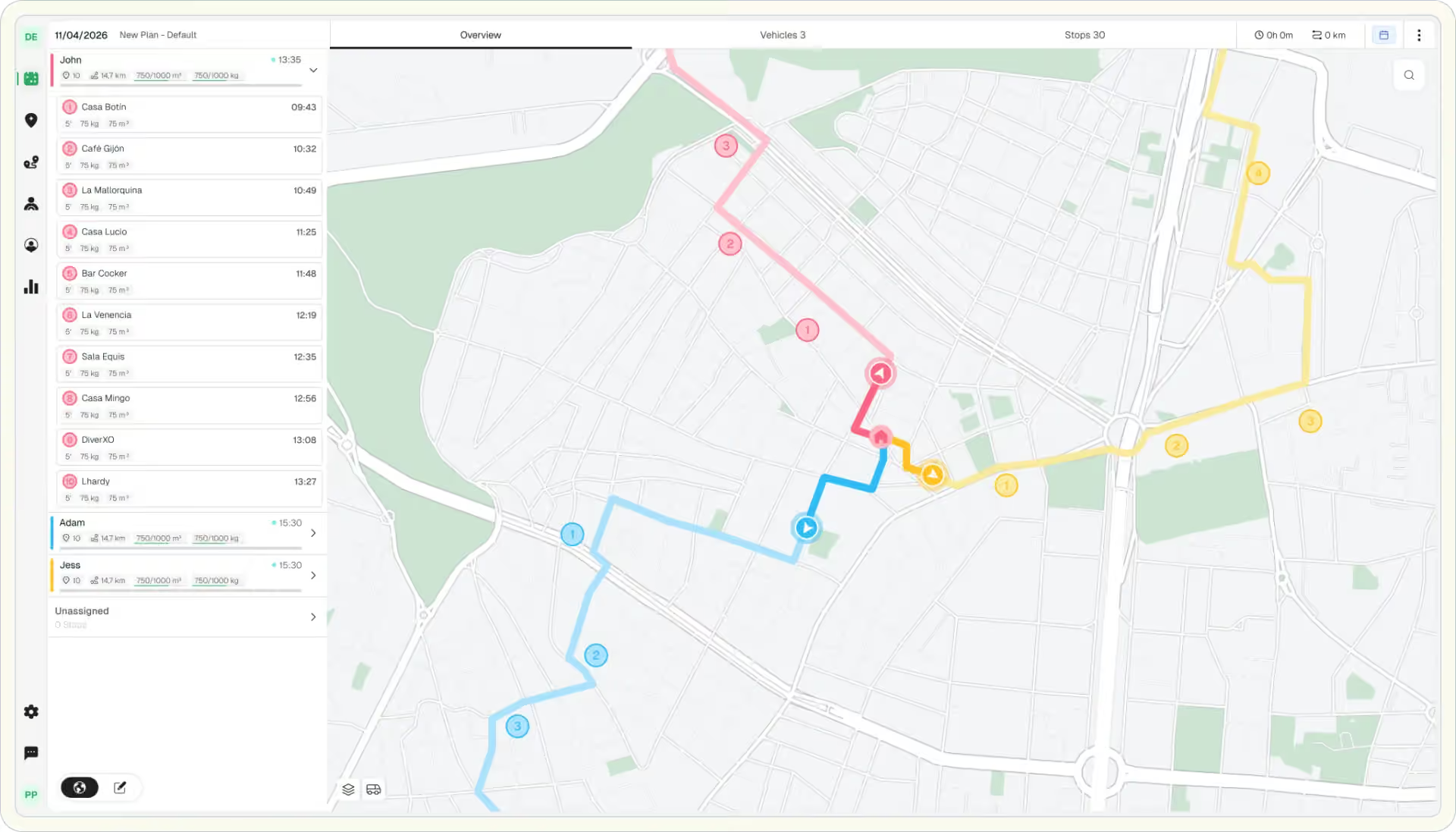
Using machine learning and advanced analytics, Routal gives cities and couriers real-time insights for more sustainable and efficient operations, helping deliver cleaner urban environments with reduced pollution.
“We are reducing waste,” Ruiz stressed. “Why does a truck driver have to travel more than specifically needed for their operations? It doesn’t make sense for them because it’s wasting time, it’s wasting a lot of gas, and it’s generating traffic and congestion that could be avoided.”
The LUCID project was a collaboration between Citylogin Iberica, Las Rozas Innova, PowerHUB and Praha 7, and Routal, in a consortium coordinated by CITET, a Spanish logistics and transport innovation non-profit.
The pilot also demonstrated how a smart platform that combines public and private sector logistics data can offer urban planners and policymakers real-world evidence they need to make better decisions. Through LUCID, the cities could access shared data to discover new ways of making their dynamic logistics activity more efficient, such as adjusting access hours in different streets, or reassessing infrastructure already in place.
Moreover, these insights support logistics operators to cut fuel use and costs by reducing unnecessary vehicle trips and optimising use of loading and unloading zones. The Routal team, for example, was able to analyse data generated by couriers to see to what extent actual behaviour overlapped with existing loading and unloading zones. Drawing on this data, Routal could make concrete suggestions for improvements and optimal locations where local authorities should place the zones. These insights are especially valuable for municipalities that cannot access data firmly held by large private logistics companies.
“I think that was something that the local government saw a lot of potential for the future, basically because they otherwise don’t have any information regarding where the drivers really stop. Before now, they didn’t have tools to get this information,” Ruiz highlighted.
Empowering last-mile players
The solution is also available to small businesses and self-employed couriers, who play a significant role in last mile deliveries. These smaller players, however, often rely on popular smartphone map apps, not configured for the specific route-planning work that is essential for cost-effective delivery work. For them, more efficient deliveries unlocked through Routal equates to less money spent on fuel, lower costs, and higher productivity.
“Hopefully in the near future, there won’t be a delivery person without a route optimizer in their pocket,” Ruiz said.
Routal is continuing to develop its app further to offer more value to couriers. One AI-driven feature recently added to the app makes it possible for couriers to take a photo of a parcel label then swiftly and conveniently extract the information they require to make deliveries. “We get everything through AI, so they don’t even need to type anything,” Ruiz noted. The new feature generated a spike in new user sign-ups as well as conversions from free to paid-tier subscriptions.
An award for innovation
The success of the pilot saw LUCID awarded Best Innovation Project in 2025 by CITET members.
“The experience was great. EIT Urban Mobility put us in contact with the members of the consortium, and we even got an award,” Ruiz shared. “It was a new experience for us. We had never worked with a local government before. It went well and they were interested in the outcomes of the project.”
This collaboration allowed Routal to scale their solution, while enabling the cities to enhance planning possibilities, such as where it could be feasible to do last mile deliveries by cargo bike. Now Routal’s ambition is to continue its worldwide growth and draw on the pilot experience to strengthen its product offers.