How can cities make better use of the vast amounts of data they already collect? And how can artificial intelligence (AI) help create transport systems that are more connected, sustainable and responsive to people’s needs?
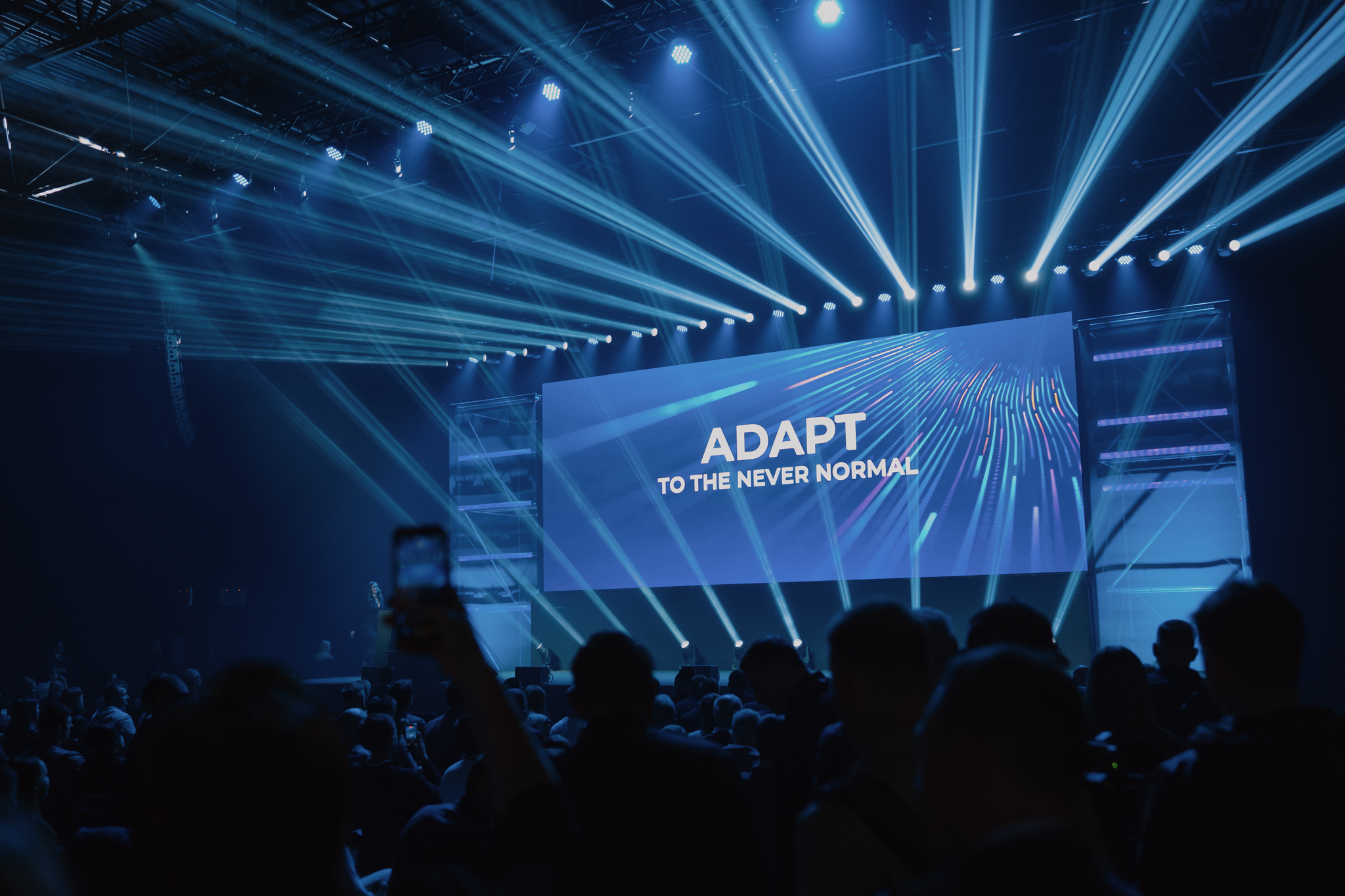
These questions were at the heart of Transport Innovation Forum 2026 in Vilnius, held under the theme “adapt to the never normal”. Organised by the Transport Innovation Association, this event brought together transport and logistics professionals, technology companies, cities and public sector representatives to explore how the mobility sector can respond to rapid technological change while turning innovation into practical solutions.
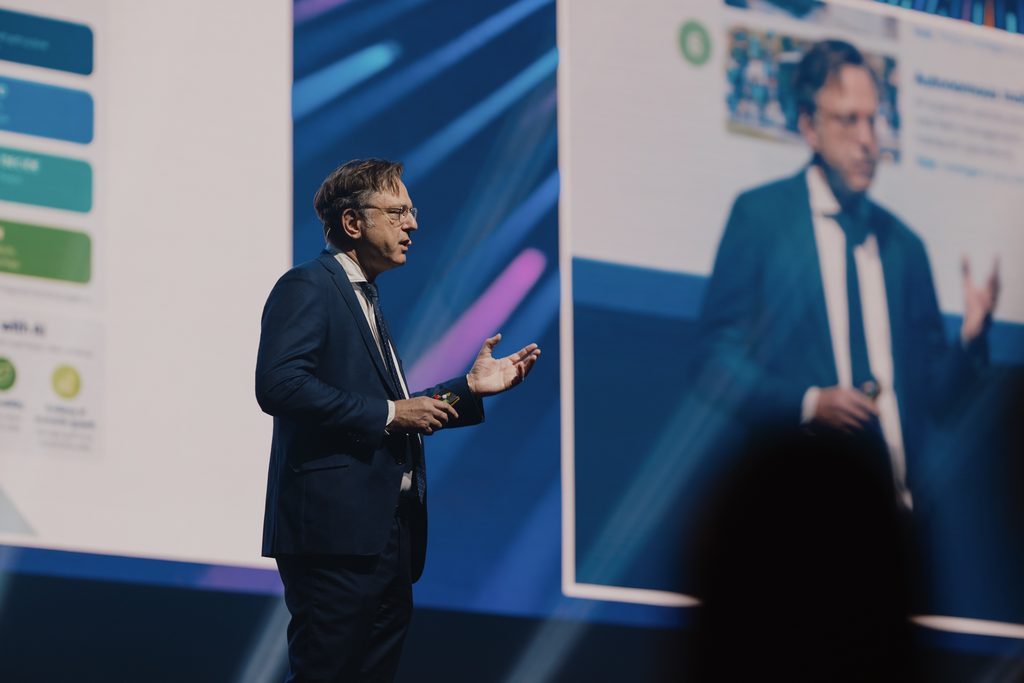
EIT Urban Mobility was represented by Willem-Frederik Metzelaar, Regional Director, who gave a keynote on how data and AI can power the future of urban mobility. The discussion continued in a fireside chat between Milestone Systems’ Community and Partnerships Lead Roland Harwood and Vaidas Paulauskis, CEO of Vilnius ID, moderated by Adriana Pacheco, City Partnership Manager at EIT Urban Mobility.
From breaking down data silos to building trust around AI, several challenges emerged throughout the discussions.
Connected data is the foundation for better mobility
One of the clearest messages from the Forum was that cities cannot build better mobility systems while continuing to treat transport modes, data and technologies as separate systems.
In his keynote, Willem-Frederik Metzelaar highlighted how mobility systems have traditionally developed in silos, making it difficult to provide travellers with seamless alternatives to the private car. Integrating data from public transport, cycling, walking and other modes can help cities create systems that make it easier for people to choose how they travel.
Examples from Barcelona, Flanders and Stockholm demonstrated how cities and regions are already working to open up mobility platforms and connect data from different sources, making existing data usable across systems and organisations.
This, Metzelaar argued, is part of the shift from “Smart Cities” towards “Wise Cities”, where technology utilised used to support wellbeing, inclusivity, sustainability and economic growth.
AI is already providing new tools for cities
The Forum also showcased how rapidly AI and other digital technologies are developing and how they can support more evidence-based decision-making.
EIT Urban Mobility is working with European innovators across areas including video analytics, digital twins, scenario simulation and public transport demand prediction. Technologies from companies such as Milestone Systems, Argaleo, Scenexus and Asistobe demonstrate how cities can move from simply collecting data towards understanding it, making better decisions and taking action.
Metzelaar also highlighted the potential of AI-powered digital twins to simulate the impact of decisions such as road closures or changes to traffic flows, as well as tools that can predict public transport demand and support cities in planning their sustainable mobility transitions. Automated vehicles were another area of focus, with EIT Urban Mobility supporting projects across Europe and advocating for the move from pilots towards wider implementation.
Using urban video data responsibly
Roland Harwood explored another major opportunity for AI in mobility: making better use of video data already being collected in cities.
Milestone Systems’s approach combines computer vision and AI with privacy-preserving anonymisation, allowing video to be analysed without identifying individuals. The company’s technology can retain information such as movement, gaze direction and other characteristics that can be useful for analysis, while ensuring people cannot be identified.
This opens up applications beyond traditional security. During the presentation, Harwood highlighted examples including analysing cycling safety at intersections in Copenhagen and using AI to analyse traffic accidents. Milestone is also exploring applications across rail networks, airports and ports.
Ultimately, as Harwood explained, Milestone “embeds privacy and responsibility from day one, not as an afterthought,” a valuable lesson for similar developers.

Building trust between cities and technology companies
The fireside chat between Harwood and Paulauskis focused the discussion on the realities of implementing AI in cities.
For Paulauskis, one of the biggest challenges is finding technology partners that can offer long-term expertise rather than one-off solutions. Cities need technologies that can evolve with their needs, while open standards are important to avoid vendor lock-in.
Both speakers also highlighted the importance of treating data as infrastructure. Cities may already hold huge amounts of valuable information, but often lack the resources or technical capacity to make full use of it. At the same time, many cities are dealing with similar problems but continue to work independently, with data and solutions often stopping at municipal boundaries.
Networks such as EIT Urban Mobility could play an important role in helping cities share knowledge, data and solutions across borders.
Privacy, data ownership and AI sovereignty
The potential of AI comes with difficult questions around privacy, trust and ownership.
Paulauskis noted that strict privacy and data governance requirements can sometimes mean that cities prioritise securing data over finding ways to use it. At the same time, transparency with citizens is essential if cities are going to build trust around how data is collected and used.
The discussion also touched on different approaches to surveillance around the world and the balance between public safety and individual privacy. Both speakers argued for a European approach in which privacy is preserved by default, with data use clearly governed and justified.
Data ownership was another important consideration. Cities should retain ownership of their data while exploring fair ways of exchanging it for technology and services. This could create new models of collaboration in which data itself becomes part of the value exchanged between cities and technology companies.

From pilots to real-world impact
A recurring challenge in urban innovation is not a lack of ideas, but the difficulty of scaling them.
As Harwood pointed out, pilots are easy to start but much harder to turn into operational solutions. Milestone has developed a three-stage approach, moving from proof of technology, to proof of concept and finally proof of value, assessing both economic and social benefits along the way.
The speakers also stressed that AI should not simply be added to existing processes for the sake of innovation. Paulauskis argued that AI is currently particularly useful for specific tasks rather than attempting to solve complex urban challenges in one step. Harwood similarly encouraged organisations to start small, experiment and collaborate, while considering the ethical and political implications of new technologies.
The next step: collaboration
The discussions at Transport Innovation Forum 2026 demonstrated that the technology needed to make mobility smarter is increasingly available. The bigger challenge is connecting it to the right data, governance frameworks and partnerships.
From integrated mobility platforms and digital twins to responsible computer vision and AI-powered planning tools, cities are already experimenting with new approaches. The next step is to move beyond isolated pilots and fragmented systems towards solutions that can be shared, scaled and adapted across cities.
As the Forum demonstrated, adapting to the “never normal” is not simply about adopting new technology. It is about building the collaboration, trust and data infrastructure needed to turn innovation into better outcomes for cities and the people who live in them.