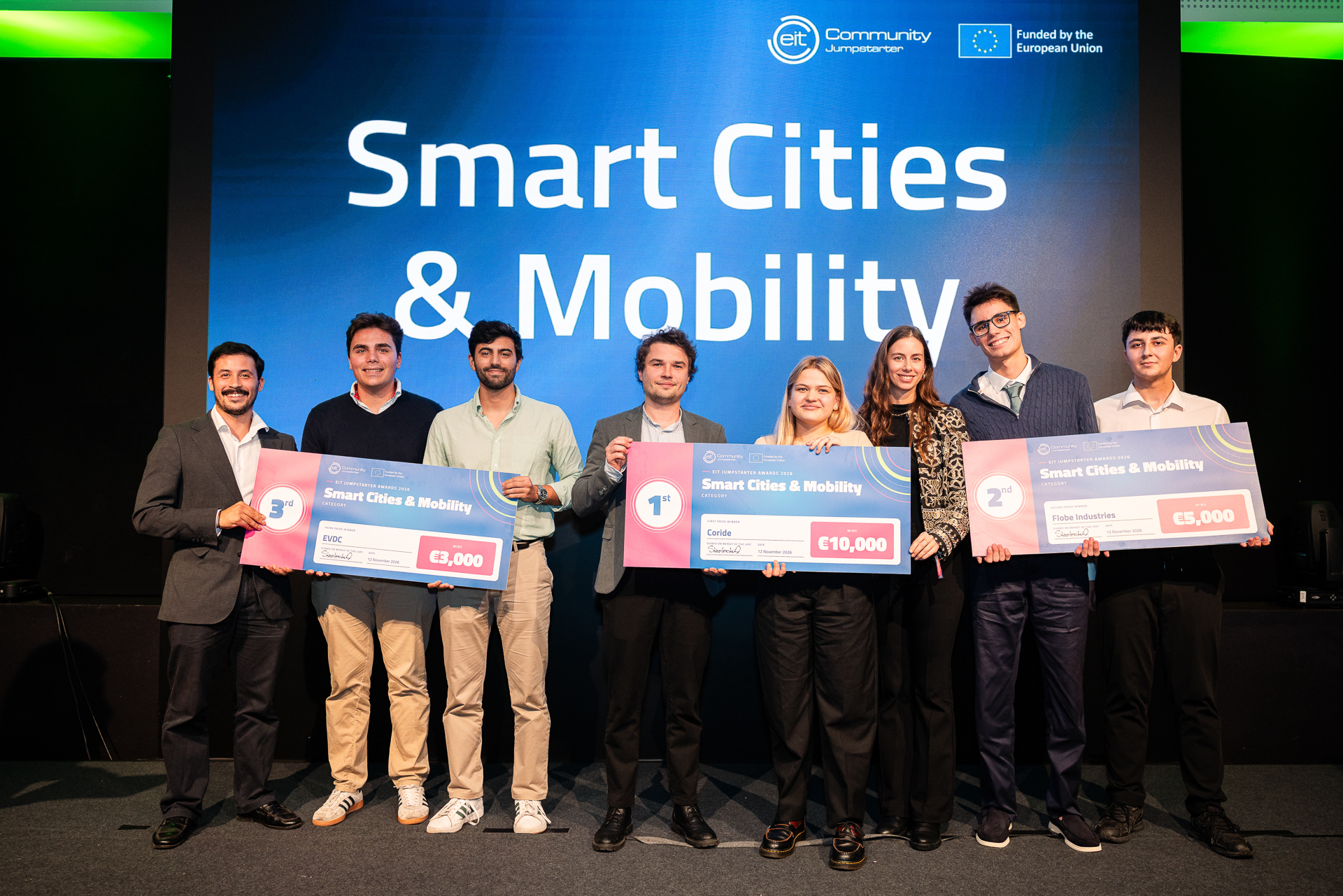
The 2026 edition of EIT Jumpstarter attracted 895 applications across eight innovation categories, reaffirming its position as one of Europe’s leading pre-acceleration programmes for aspiring entrepreneurs. Among them, the Smart Cities & Mobility category received 159 applications, reflecting the growing demand for solutions that can help cities become more sustainable, efficient and liveable. Following months of training, mentoring and pitching, three startups emerged as winners, offering innovative approaches to some of Europe’s most pressing mobility challenges. Notably, all three winning teams originate from countries covered by the EIT Regional Innovation Scheme (RIS), highlighting the strength of innovation ecosystems emerging across Europe’s regions.
Announced during the EIT Jumpstarter 2026 Awards Ceremony, held in Lisbon, Portugal, as a side event of Web Summit, the Smart Cities & Mobility awards recognised three startups developing solutions to address challenges across the urban mobility ecosystem, from reducing car dependency and strengthening public transport systems to accelerating access to electric vehicle charging infrastructure. The winning teams received prizes of €10,000 for first place, €5,000 for second place and €2,500 for third place, providing additional support as they continue their journey towards market deployment.
First place: Coride is rethinking the daily commute
Awarded first place, Latvian startup Coride, led by Marta Edite Murniece, is tackling one of the most persistent mobility challenges in Europe: single-occupancy commuting. The company’s employer-focused carpooling platform helps organisations connect employees travelling along similar routes, enabling them to share journeys, reduce commuting costs and lower transport-related emissions.
Unlike traditional ride-sharing services, Coride is designed specifically for workplaces. Employers provide access to the platform as part of their employee benefits, while users receive rewards and incentives for participating. The solution also helps organisations monitor and reduce Scope 3 emissions, supporting corporate sustainability goals and more responsible commuting habits.
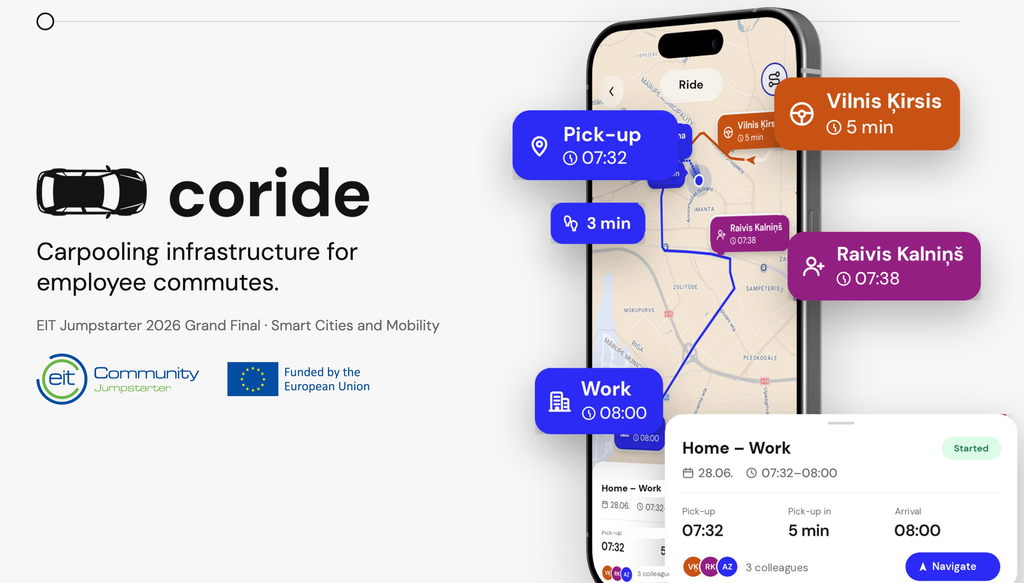
The potential impact is substantial. The startup estimates that widespread adoption could remove thousands of vehicles from daily traffic, significantly reduce CO₂ emissions and help employees save money while improving access to workplaces, particularly in areas where public transport options remain limited.
Second place: Flobe Industries brings AI-powered insights to public transport
Second place was awarded to Bulgarian startup Flobe Industries, represented by Fedor Timoshenko. The company has developed an artificial intelligence solution that helps public transport operators measure and address fare evasion using existing CCTV infrastructure.
By transforming camera networks into real-time analytical tools, Flobe Industries enables operators to better understand where and when fare evasion occurs and optimise inspection efforts accordingly. The solution has been designed with privacy in mind, avoiding facial recognition technologies while providing actionable operational insights.
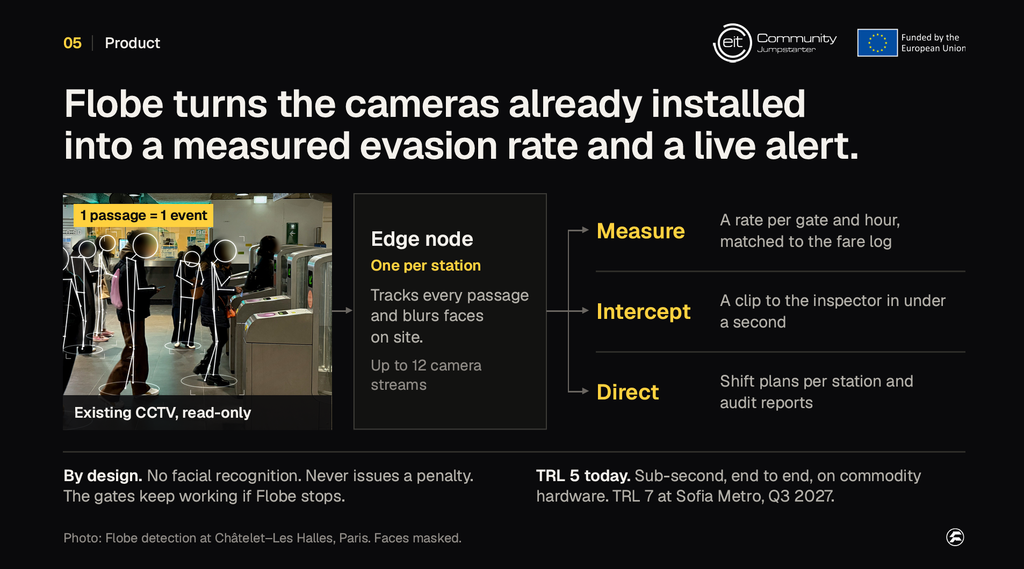
For cities and transport authorities facing increasing pressure on public budgets, improving revenue protection can play an important role in maintaining service quality and investing in network improvements. Through its technology, the startup aims to strengthen the economic sustainability of public transport systems across Europe.
Third place: EVDCGrid unlocks EV charging through infrastructure
Portuguese startup EVDCGrid, represented by Diogo Guerreiro, secured third place with an innovative approach to expanding electric vehicle charging networks. Instead of relying on costly new infrastructure, the solution repurposes existing public lighting circuits into direct current microgrids capable of supporting EV charging.
By making use of infrastructure that cities already own and operate, EVDCGrid can significantly reduce installation costs and deployment times while supporting the rollout of charging infrastructure where it is needed most. This approach offers municipalities and charging point operators a practical pathway to accelerate the transition towards cleaner mobility.
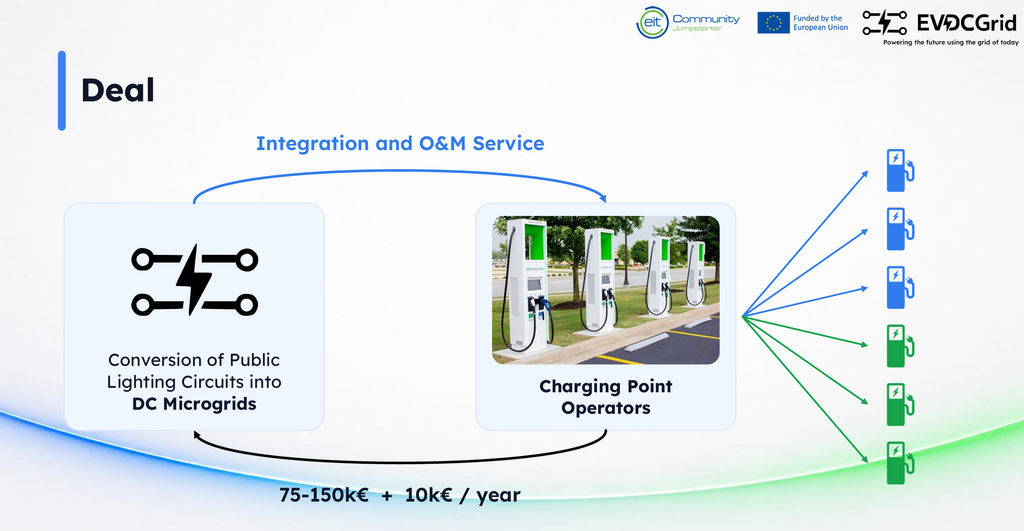
As electric vehicle adoption continues to grow across Europe, solutions that enable faster and more cost-effective deployment of charging infrastructure will become increasingly important, particularly in dense urban environments.
Supporting the next generation of mobility innovators
The achievements of Coride, Flobe Industries and EVDCGrid reflect the growing impact of EIT Jumpstarter in supporting the next generation of innovators. Through training, mentoring and access to a pan-European innovation network, the programme helps early-stage ventures transform promising ideas into solutions with the potential to deliver real impact for cities and citizens across Europe. As these startups continue their growth journey, they represent the entrepreneurial talent that will help shape the future of urban mobility.
To discover the winners across all EIT Jumpstarter 2026 categories, read the official announcement.