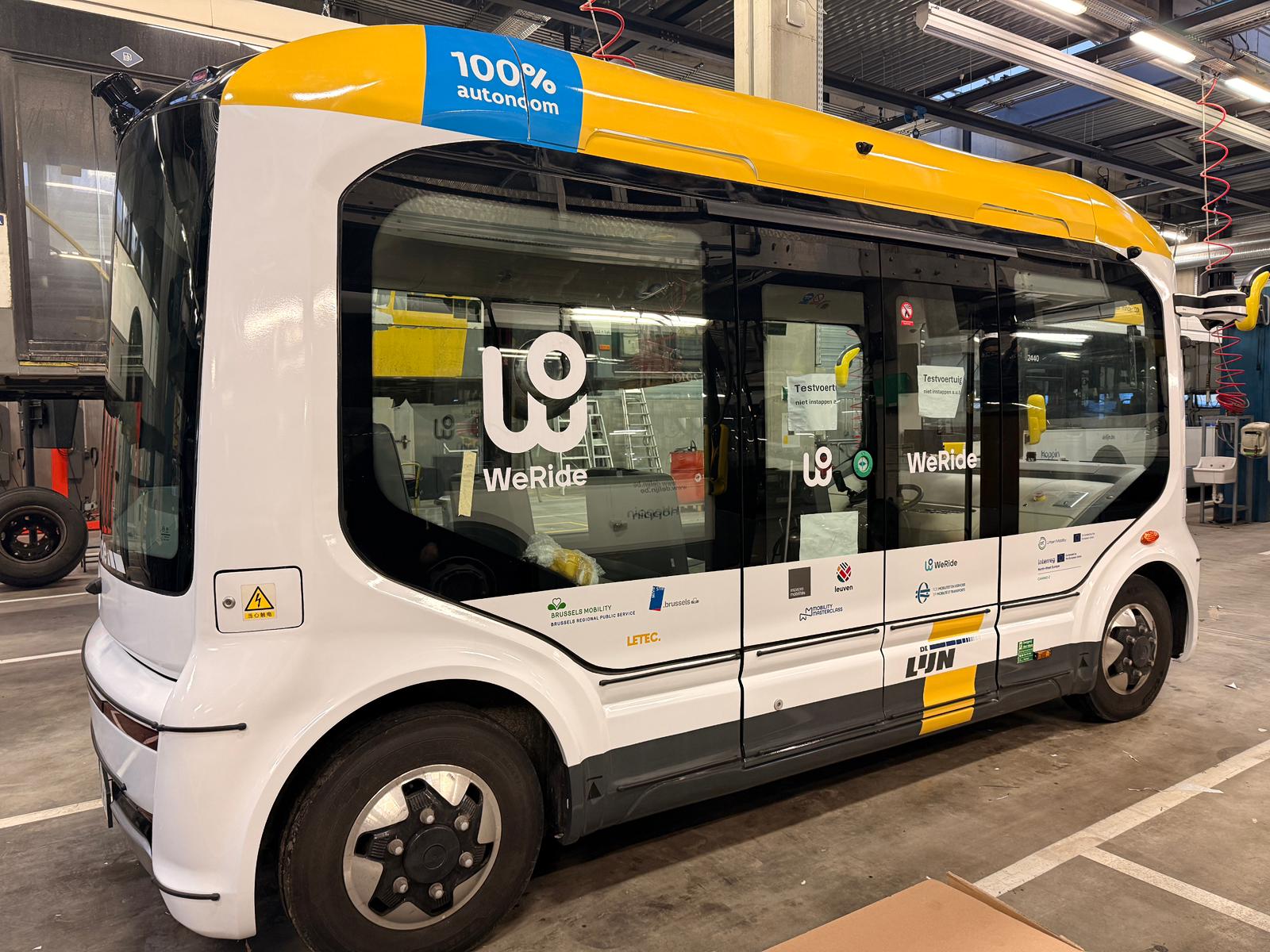
In a first-of-its-kind project led by Espaces-Mobilités and funded by EIT Urban Mobility, two self-driving shuttles from WeRide opened for public service in Leuven, Belgium.
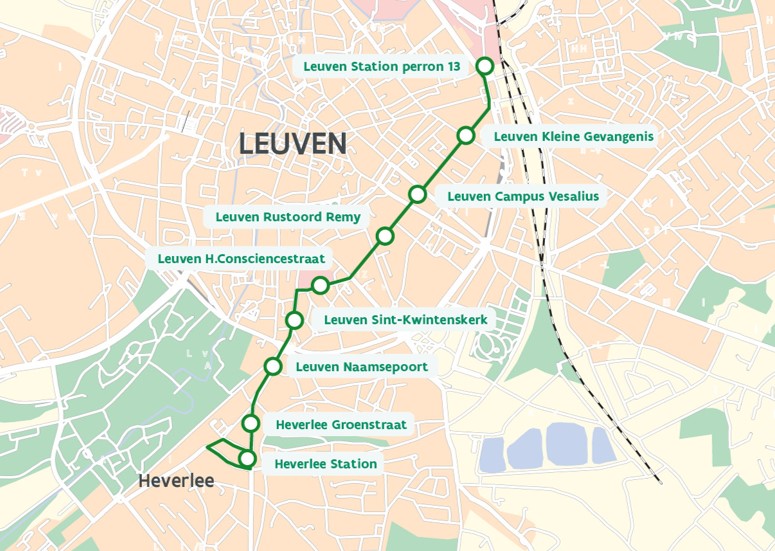
Since January 2026, Leuven residents can take the AV autonomous bus line 16 from the city’s railway station to the neighbouring municipality of Heverlee, a 4 km route that sees plenty of commuters and students.
The initiative was developed and coordinated by Espaces-Mobilités, which led the procurement process, regulatory approvals, safety assessments and training activities. After a competitive tender, WeRide was selected as the technology provider due to its ability to operate safely in dense, mixed urban traffic.
Before opening to passengers, the shuttles completed four months of on-street testing in collaboration with Flemish public transport operator De Lijn, which plays a central operational role in this autonomous bus line project. Using onboard cameras and radar technology, the vehicles mapped the city centre and learned local traffic patterns before opening their doors to the public.
“Within a few months, the autonomous mobility project group has managed to set up a line in busy city traffic. Thanks to the rapid evolution of algorithms, the breakthrough for autonomous transport is imminent, and with this project, we aim to be ready for the shift expected within five to ten years,” says Ann Schoubs, CEO of De Lijn.
This is a strong example of how the training and real-world deployment led by EIT Urban Mobility and its partners are already making autonomous mobility a reality across daily operations in Europe.
Many thanks to all of the other partners who helped bring this project to the finish line: STIB-MIVB, LETEC, Departement Mobiliteit en Openbare Werken and Bruxelles Mobilité – Brussel Mobiliteit.