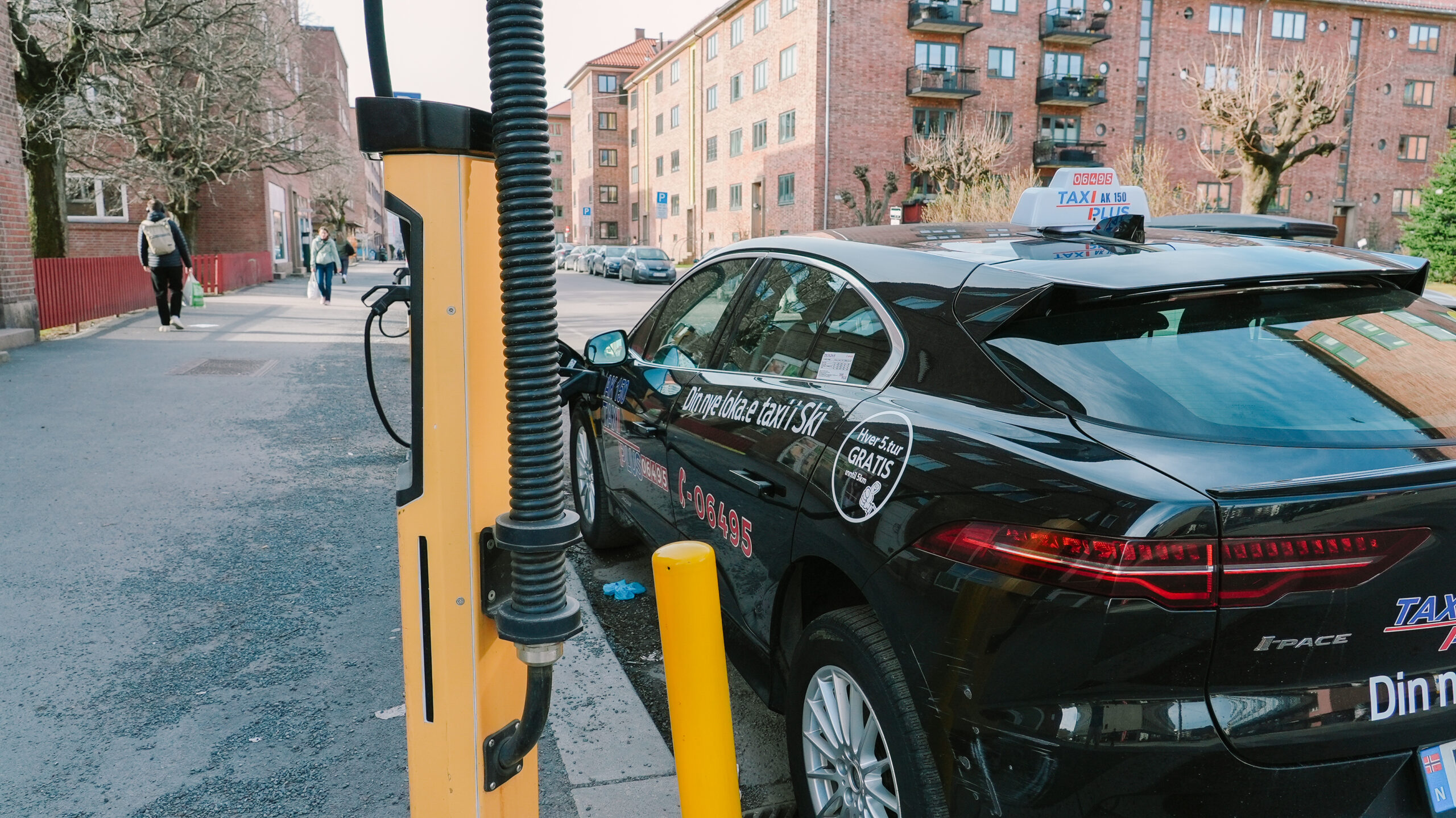
The race to transition to more sustainable mobility is underway across Europe. The EU under the European Green Deal is targeting a 55% reduction in emissions by 2030 and carbon neutrality by 2050 [1]. A large part of this transition is the push to increase electric mobility. Yet the road to a well-balanced ecosystem of electric vehicles (EVs) and EV charging infrastructure is far from straightforward. A lack of charging points can deter EV adoption. And high upfront costs and low return on investment can discourage further rollouts if the infrastructure remains underused. At the same time, a comprehensive public charging network will be essential to keep pace with demand as the EU phases out sales of internal combustion engine (ICE) vehicles. A lack of data is central to many of the challenges surrounding the development of the EV charging network.
Charging forward
In the first half of 2025, battery electric vehicles (BEVs) accounted for 15.6% of all new passenger car sales in the EU[2]. While this remains below the level needed to meet climate goals, it represents clear progress compared to the 12.5% share in the same period of 2024[3]. Hybrid-electric vehicles continue to dominate the market, holding a 34.8% share during the first six months of 2025[4]. However, EV uptake differs greatly across Europe. Nordic countries remain frontrunners, with BEVs representing 96% of new registrations in Norway, 66% in Denmark, 60% in Sweden, 56% in Finland, and 51% in Iceland between January and May 2025[5]. At the other end of the spectrum, Slovakia (5.3%) and Croatia (4.8%) [6]. These countries illustrate the so-called “chicken-and-egg” challenge: low consumer demand discourages investment in charging infrastructure, while the lack of infrastructure deters consumers from buying EVs.
The availability of charging infrastructure has improved, but remains uneven. Across Europe, public charging points grew by more than 35% in 2024 compared with 2023, surpassing one million in total[7]. Yet accessibility is concentrated, with 61% of all EU charging points located in just three countries: the Netherlands, Germany, and France[8]. To meet the EU’s target of 3.5 million public chargers by 2030 —around 2.6 million additional chargers will need to be installed in the next five years. This will mean an average installation of nearly 520,000 per year. This is a steep climb from the 153,027 new chargers added in 2023[9].
Strategic and optimised charging infrastructure
Meeting the target number of chargers is important. However it is more critical that they are installed strategically to optimise their usage and ensure accessibility. Historically, a lack of data has meant that in many cases, chargers are installed in locations with insufficient demand, leading to low utilisation rates and untapped revenue potential. Additionally, accessibility remains uneven, with rural areas and underserved communities often left behind.
Addressing this supply-and-demand mismatch requires smarter planning, deeper data insights, and innovative business models that align infrastructure deployment with actual mobility needs. Two startups from EIT Urban Mobility’s investment portfolio, SurplusMap and Voltaage, are developing and testing their solutions in real world pilots across varying geographies in Europe in order to overcome these barriers and support the energy transition.
SurplusMap: data-driven EV charging infrastructure deployment
Norwegian startup SurplusMap addresses one of the EV sector’s biggest bottlenecks: the lack of actionable data for strategic charging infrastructure roll-out. Using AI-driven analytics, their platform evaluates charger performance, market gaps, competitor networks, and future demand forecasts to help municipalities and operators place chargers where they will be most used.
SurplusMap has to date analysed over 500,000 chargers across 15 countries. Their insights are grounded in a vast dataset, enabling clients to identify underutilised assets and redirect investment towards high-potential sites. Whilst a forerunner in the transition to EVs, Norwegian cities are also looking for insights to optimise their existing and future infrastructure. In Oslo for example, SurplusMap mapped and analysed more than 500 municipal chargers, delivering real-time usage data and energy load forecasts. This allowed the city to prepare for grid impacts, participate in flexibility markets, and make informed deployment decisions.
The SurplusMap solution, delivered via a SaaS model, makes it easily scalable to other European cities. And by aligning supply with demand, SurplusMap is not only boosting utilisation rates but also helping accelerate the electrification of mobility.
Following their 2024 project SPMEV working with the City of Oslo, in 2025 SurplusMap is scaling their solution to Germany. In Germany they will test their solution in another EIT Urban Mobility co-funded project EVMov. The EVMov project will take place in collaboration with Berlin Brandenburg Airport, where they will map existing infrastructure, integrate real-time data and use AI to forecast and provide insights to optimise operations.
Voltaage: optimising EV charging infrastructure location and revenue
Founded in 2021, French startup Voltaage specialises in optimising both the placement and profitability of EV charging stations. France is one of the top three leading European countries in respect to the number of charging points. However, whilst much of the conversation has focused on the number of charging stations, equally important is their strategic location. This is where Voltaage’s data-driven platform comes into play. The solution aggregates traffic patterns, demographic information, grid availability, existing infrastructure, and points of interest to pinpoint optimal charging locations for energy companies, charging point operators (CPOs), and municipalities.
The startup’s approach is particularly valuable in a market where 70% of charging sites currently operate at a loss due to poor location choice. Voltaage is integrating competitor analysis, demand forecasting, and financial projections, helping to ensure new sites are strategically placed, while also offering dynamic pricing tools to improve the performance of existing assets.
Selected as one of 13 startups for the Moove Lab Accelerator, Voltaage is working closely with public energy actors. Voltaage has onboarded more than 4,100 charging stations in the past 9 months and has been able to more than double revenues per charger per year for its customers.
Moving forward
To accelerate the uptake of electric mobility there is a need for both the demand and supply sides to have the tools that can give them data and insights that allow for strategic decision making. By combining advanced analytics, and data-driven site selection, SurplusMap, and Voltaage are addressing EV infrastructure challenges. Together, their innovations can deliver higher utilisation rates for charging stations, reduced infrastructure investment risk, increased integration of renewable energy, better accessibility, and enhanced profitability for operators. Their work is helping to ensure Europe’s EV transition is economically viable and socially inclusive.
Whilst the electrification of transport plays a significant role in the transition to more sustainable mobility, EVs and charging points alone will not enable the EU to meet its climate targets. Instead, a comprehensive approach that incorporates renewable energy supplies is critical.
[1] https://commission.europa.eu/strategy-and-policy/priorities-2019-2024/european-green-deal_en
[5] https://theicct.org/publication/europes-ev-market-leaders-denmark-sweden-and-finland-aug25/#:~:text=Nordic%20countries%20are%20leading%20Europe’s,first%20five%20months%20of%202025.
[6] https://centraleuropeantimes.com/romania-leads-cee-for-ev-adoption/#:~:text=Stragglers:%20Poland%2C%20Slovakia%2C%20Croatia,hub%20for%20lorries%20and%20buses.
[7] https://www.iea.org/reports/global-ev-outlook-2025/electric-vehicle-charging
[8] https://alternative-fuels-observatory.ec.europa.eu/sites/default/files/document-files/2024-05/Charging_ahead_Accelerating_the_roll-out_of_EU_electric_vehicle_charging_infrastructure.pdf
[9] https://alternative-fuels-observatory.ec.europa.eu/sites/default/files/document-files/2024-05/Charging_ahead_Accelerating_the_roll-out_of_EU_electric_vehicle_charging_infrastructure.pdf