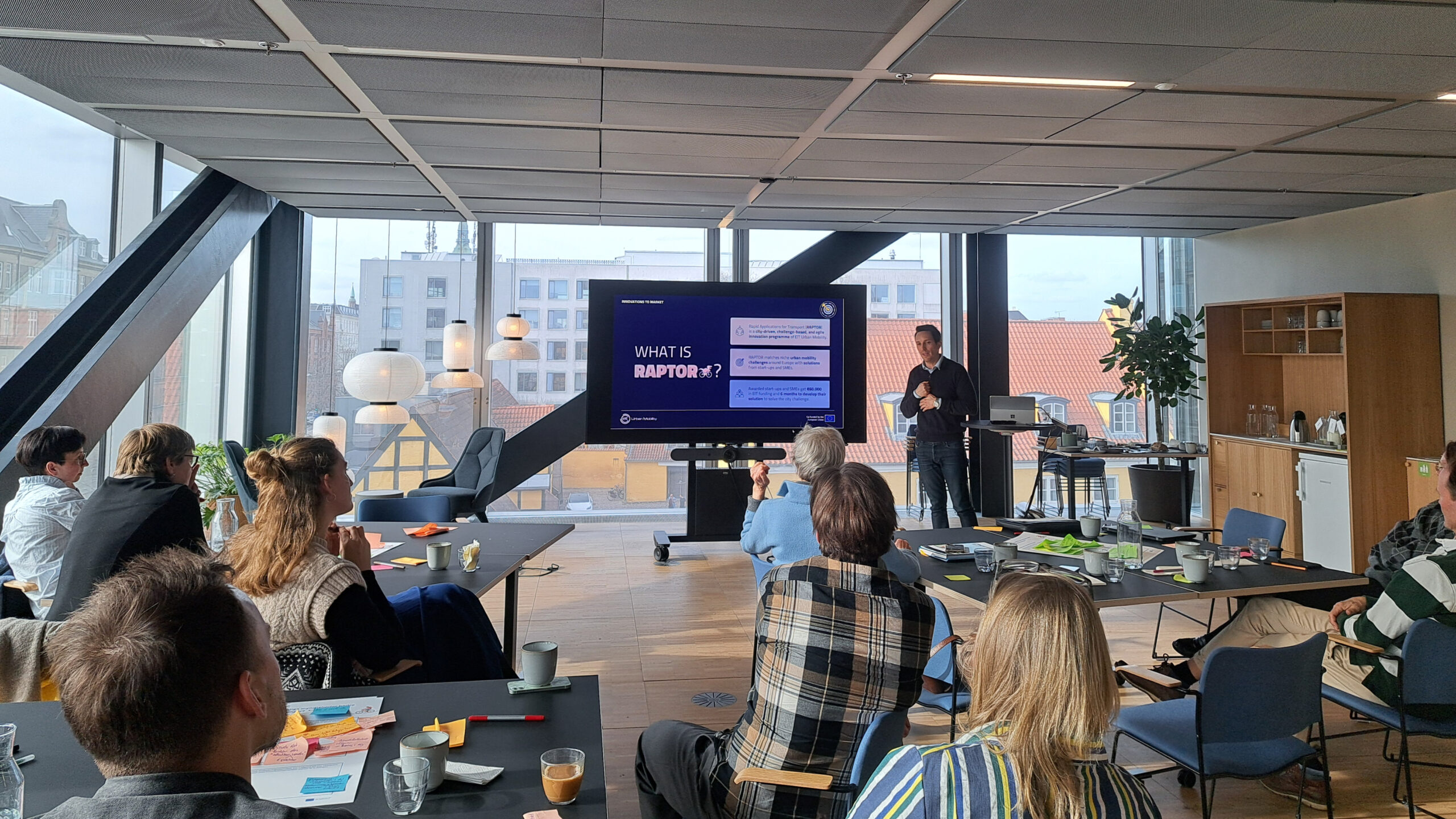
On 12 March 2026, mobility professionals gathered in Copenhagen for the Mobilitetsnetværksmøde, a recurrent mobility network meeting organised by Marianne Weinreich for Danish municipalities, regions and public transport authorities (PTAs).
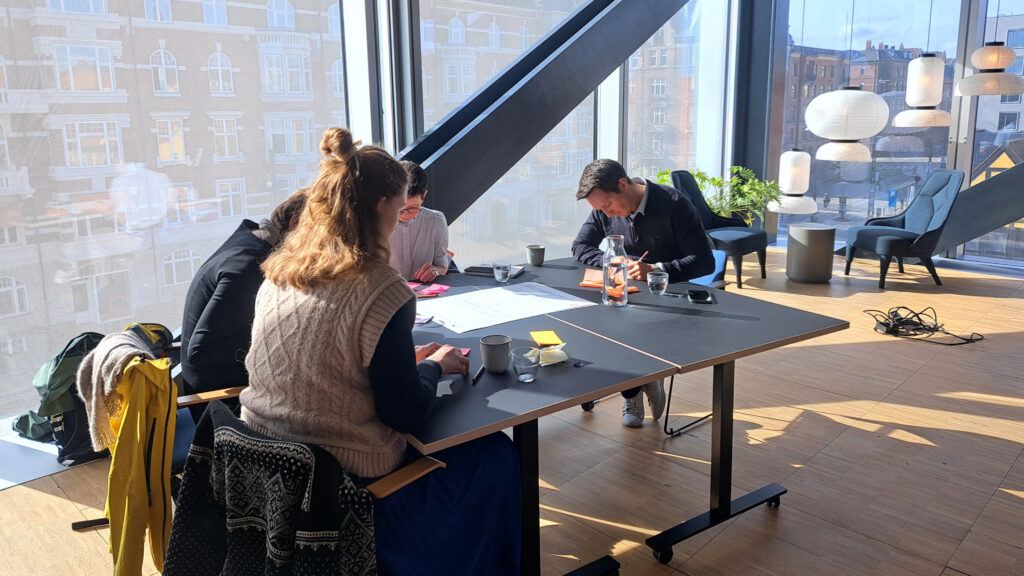
During the event, EIT Urban Mobility hosted a workshop on how Danish public authorities can better access innovative mobility solutions, when budgets and internal resources are tight, and public-private collaboration sometimes limited.
The discussion highlighted a strong willingness to engage with innovation, but also structural challenges faced by many public entities when trying to access new mobility solutions.
Innovation still relies on individuals
Across the participating Danish public authorities, innovation is happening, but often in small cells of passionate employees. Participants pointed out that new innovation initiatives are typically driven by highly motivated individuals and networks, rather than supported by formal structures – and the budgets that come with such.
This “bottom-up” dynamic enables creativity but also fragility. When innovation relies on a few people working on such tasks alongside other daily responsibilities, experimenting with innovation and scaling successful solutions becomes significantly more difficult.
Additionally, it is often unclear what exactly constitutes innovation. Where does innovation start? Often it can be as simple as employing existing solutions in new ways, but the lack of a common understanding means that innovation work is unclearly defined, not least for the (political) decisionmakers who allocate resources.
Clear direction, but limited capacity
Most organisations do not lack visions for change. Climate action plans, mobility strategies and regional frameworks provide both direction and political backing. However, turning these ambitions into reality through innovative solutions remains a challenge.
Limited budgets and competing operational priorities mean innovation is often treated as a secondary task. As a result, even well-defined strategies do not always translate into concrete action.
Unlocking better collaboration
Procurement and public-private collaboration emerged as critical levers for change. Participants highlighted that many tenders still tend to prioritise the lowest cost, which leaves little room for innovation and risk-taking.
Stronger and earlier dialogue between public authorities and private providers was seen as essential. However, mutual trust sometimes suffers due to contracts that are often strictly focused on running operations, as seen with bus operators, which leaves little room to explore new solutions together.
At the same time, face-to-face interactions have declined in recent years but is sorely needed to rebuild long-term collaboration and mutual understanding. Public sector representatives also mentioned a lack of opportunities to meet private companies.
From pilots to real-world impact
While there are many mobility pilots in Danish municipalities, regions and PTAs, moving from pilot projects to full implementation remains a major hurdle. Innovation funding is still largely project-based, often depending on European programmes, which in turn can limit continuity and scaling.
For smaller municipalities in particular, limited resources and market size make it harder to attract private mobility operators and sustain innovation efforts.
If even just a few municipalities were to come together and launch a tender, they might be able to join forces around a common challenge and provide a larger space for testing, improving their attractiveness to the private sector. The same approach is being pursued through the EIT Urban Mobility-supported Øresund Mission Cities Innovation Programme, where four cities aim to identify common challenges and address them together.
EIT Urban Mobility supports innovation development
Initiatives and calls from EIT Urban Mobility offer support for developing innovative solutions, as presented by Michael Skibsted, City Funding and Development Officer at EIT Urban Mobility.
In particular, the RAPTOR Call, Strategic Innovation Open Call and SME Market Expansion Open Call from EIT Urban Mobility are relevant for public entities that want to work on innovation.
A shared path forward
Despite these challenges, the discussions were marked by openness and a strong willingness to improve collaboration. One message stood out: innovation does not always require reinventing the wheel.
By learning from proven solutions, adapting them to local contexts and strengthening collaboration across sectors, Danish mobility stakeholders see a clear path toward more scalable innovation.