Europe’s latest response to rising fossil fuel costs makes one thing clear: reducing dependency on imported energy is no longer only about supply, but also about how energy is used every day. With the launch of the “AccelerateEU” toolbox by the European Commission, urban mobility is gaining renewed attention as a practical and immediate way to cut fuel consumption while strengthening resilience. EIT Urban Mobility welcomes the proposal as an important step toward a more secure and sustainable energy future.
Daily transport choices across European cities already shape energy demand at scale. Shifting from private cars to public transport, cycling, or walking can significantly reduce fossil fuel use, particularly as sectors like aviation compete for limited supply.
“The European Commission is right to prepare measures to reduce fossil fuel usage. This will protect EU citizens from rapidly increasing costs and foster the EU’s geoeconomic energy resilience. EIT Urban Mobility will support any push for stronger public transport and accelerated EV adoption. Through our unique innovation network, we ensure that Europe’s public transport networks stand ready to support at a time of crisis, “ said Marc Rozendal, CEO of EIT Urban Mobility.
Urban transport systems already offer the capacity to support this shift. Outside peak hours, public transport networks run well below their limits, providing convenient alternatives without the need for major new infrastructure. Innovations developed across the EIT Urban Mobility network are helping make these options easier to use, enabling seamless multimodal journeys in the digital age.
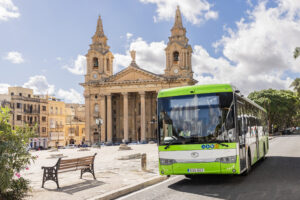
The transition to cleaner transport is also accelerating. While rail systems in European cities are largely electrified, bus fleets are rapidly catching up, with electric buses now dominating the EU market. Public backing for this transition is strong, with 65% of Europeans supporting more investment in public transport, even if it comes with higher taxes (Politico and Bebartler, 2026).
Efforts led by DG MOVE on intermodal hubs will further connect urban systems with low-carbon long-distance travel. Strengthening links to options such as cross-border night trains can reduce reliance on short-haul flights and help lower jet fuel demand.
The potential impact is significant. Transitioning the mobility ecosystem could reduce fossil fuel consumption by up to 63% by 2030 compared to 2022 levels (Cost and Benefits of the Urban mobility transition, EIT Urban Mobility, 2024). Expanding solutions like bike-sharing systems can also deliver immediate benefits, cutting transport costs by up to 90% compared to fossil-fuelled cars while reducing fuel use.
Accelerating the shift to zero-emission vehicles remains another key step. Corporate fleets, in particular, can drive rapid adoption, while electrification supports Europe’s resilience by enabling more local and diversified energy production. In this context, the EU must also carefully consider the geoeconomic implications of any potential reversal of the internal combustion engine phase-out, with the introduction of ETS2 and continued volatility in global energy prices. Electrically propelled cars, by contrast, strengthen Europe’s energy resilience by relying on electricity that can be generated more locally and from a more diverse set of sources.