A fintech taking the friction out of e-bike adoption for commuters and last-mile urban logistics
E-bikes are the fastest-growing e-mobility segment in Europe, yet that growth represents only a fraction of the addressable potential. By reducing the physical demands of cycling, they make active travel viable for users who would otherwise find it impractical: commuters navigating longer distances or hilly terrain, and workers running last-mile delivery in dense urban centres. For many, however, key obstacles remain: a high purchase price, the practical hassle of maintaining a product most users have little prior experience with, and the persistent risk of theft. Public incentive schemes have helped some buyers cross the threshold, but they cater largely to those already committed to ownership, leaving a much larger potential market unreached.
Blike responds to these barriers with a finance model that bundles insurance, maintenance, GPS tracking, and theft recovery into a single monthly subscription, removing key barriers to e-bike access without requiring upfront ownership. Blike’s online platform serves individual commuters and businesses operating electric cargo bike fleets for last-mile logistics. Blike also wants to offer e-bike brands the possibility of embedding its subscription infrastructure as a white-label financing layer into their websites and checkout flows, giving brands a ready-made path to offer flexible access to their own customers. Currently operating across the UK, Blike is working towards expansion into European markets.
Highlights of why we invested in Blike
- Resolving purchase paralysis through a flexible subscription model: Blike reframes e-bike access as a service rather than a purchase commitment. Starting with a low monthly payment, users can experience e-bike commuting at low financial risk and after three months, choose to continue, buy outright, swap for a different model, or simply return.
- An all-inclusive bundle that removes practical barriers beyond cost: Every Blike subscription includes GPS tracking, insurance, theft recovery, and access to a nationwide maintenance network in the UK, delivering a hassle-free experience for riders.
- A curated portfolio of new and certified pre-owned e-bikes: Blike works with established e-bike brands across commuter, folding, and cargo categories. Its ReCycle programme gives quality-checked e-bikes a second life at a lower monthly cost, extending affordability while supporting circular economy models.
- A financing model designed to scale: Blike approaches e-bike adoption as a fintech challenge, building a subscription solution that serves individual riders, logistics operators, and e-bike brands looking to offer flexible access to their own customers.
- Strong policy alignment: from the European Declaration on Cycling and the EU Urban Mobility Framework to the UNDP SDG Local Solutions initiative, there is growing international recognition of the role e-bikes play in everyday commuting, in widening access to active travel, and in decarbonising urban logistics. Blike is well positioned to help accelerate that adoption.
Blike’s innovative approach earned it the Gold Winner title at the Startup Awards at Micromobility Europe 2025, and helped secure a £10 million approval in institutional debt funding that will support the company’s ambition to significantly expand its fleet. With UK-wide coverage already in place and European market entry on the horizon, Blike directly supports EIT Urban Mobility’s mission to accelerate the transition to more sustainable, inclusive, and accessible urban mobility systems. As Silvia Berberi, Investment & Portfolio Manager at EIT Urban Mobility, noted:
“We know that once people try an e-bike, they are far more likely to adopt it. Blike’s subscription model is a smart and fast-to-scale answer to that adoption challenge, making the uptake of e-bikes and other small electric devices, such as quadricycles for deliveries, genuinely frictionless. By making access flexible and hassle-free for individuals and businesses alike, Blike is opening a gateway into multimodal, low-carbon mobility.”
Blike: a subscription model built around users, partnerships, and scale
Founded in London in 2020 by Tim Carrigan and Steve Ellis, Blike offers a flexible “subscribe to buy” model designed to tackle the affordability and adoption risks that hold back widespread e-bike uptake. Its user-friendly subscription includes insurance and maintenance, delivering a frictionless experience for users, whether individuals or businesses. The model has shown proven traction across the UK and a clear path to scale.
Underpinning Blike’s operations is a network of strategic partnerships that removes the everyday friction of e-bike use for their clients: Fettle and a network of local bike shops provide UK-wide maintenance and servicing; Sundays, together with GPS recovery specialists Backpedal, manage the insurance and recovery support included in every subscription; and every Blike e-bike is registered free of charge with BikeRegister, the UK’s national police-approved marking and registration scheme.
For e-bike brands, Blike provides a white-label subscription infrastructure that embeds directly into e-bike brand websites, giving manufacturers a ready-to-deploy financial tool that allows them to offer subscription as an option for their own customers.
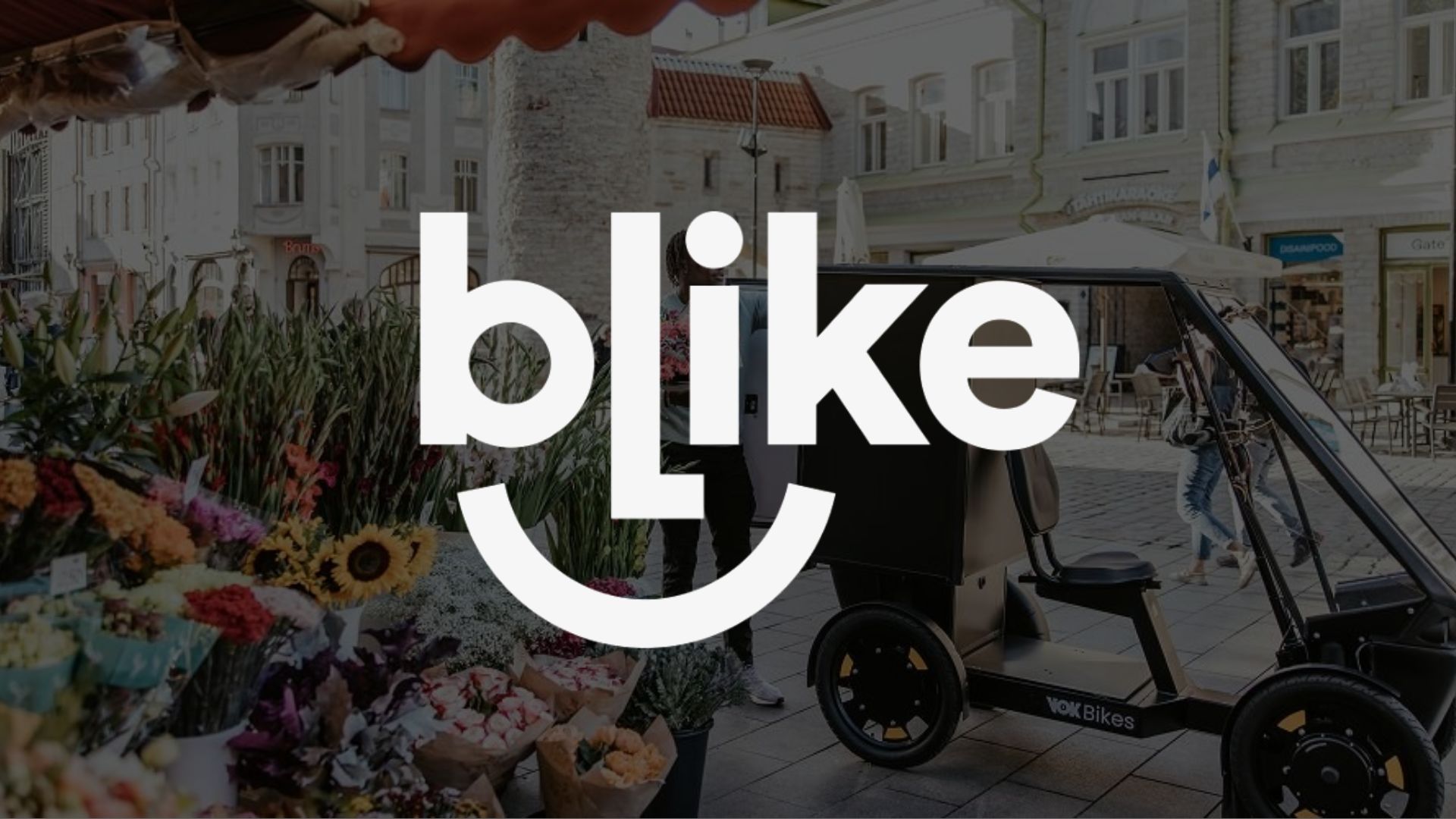
For businesses running urban logistics operations, Blike offers flexible cargo bike subscriptions covering electric models from VOK and Estarli, with maintenance, insurance, and fleet management in one plan and terms that scale up or down as operational needs change.
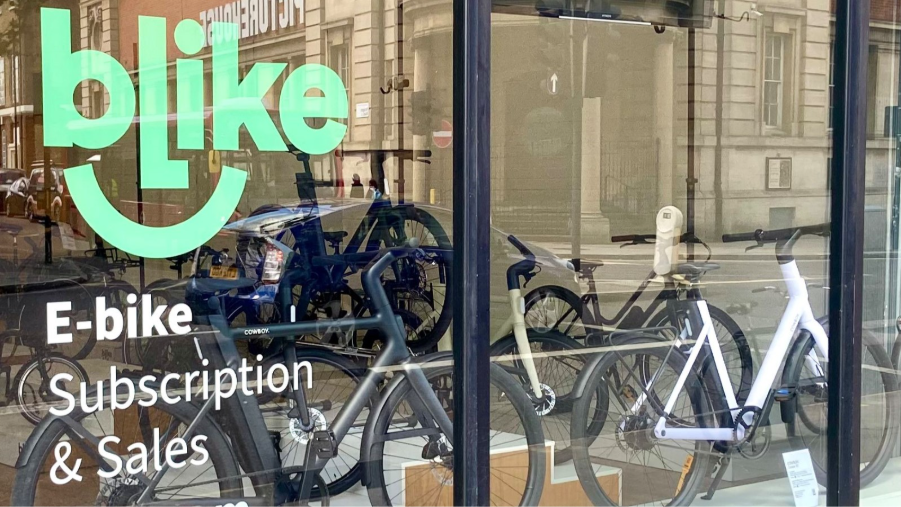
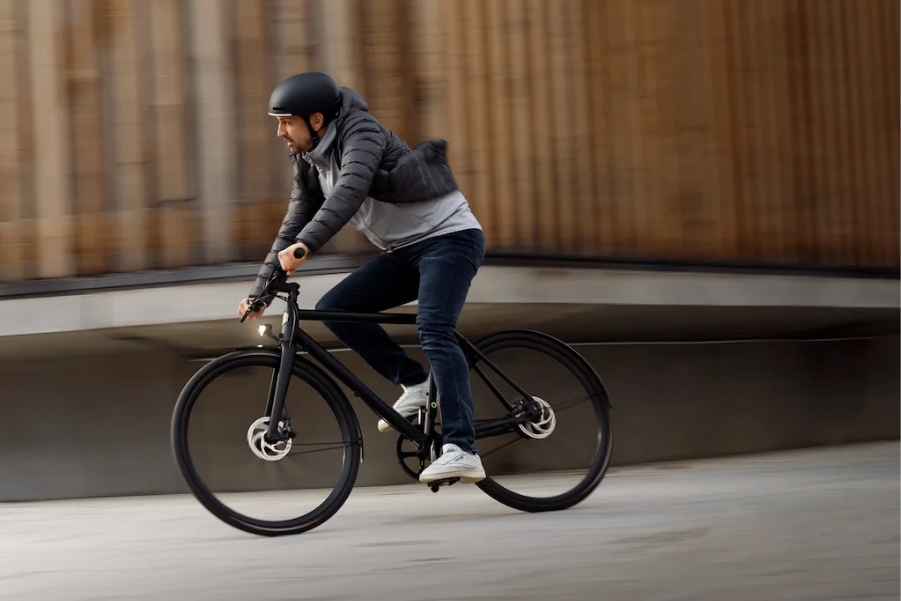
For individual riders, the subscription with an option to buy removes every practical obstacle to trying an e-bike: no large upfront payment, no long-term commitment, and a three-month minimum term during which transport habits can genuinely shift. Blike’s model is well aligned with research cited in EIT Urban Mobility’s work on behavioural change, which shows that car owners offered a sustained e-bike trial are overwhelmingly satisfied by the experience, with the majority finding it the most convenient option available. This behavioural insight sits within a broader and growing recognition of e-bikes as a strategic lever in sustainable urban mobility.
A growing policy and evidence base for e-bikes in sustainable urban mobility
International policy frameworks increasingly recognise the role of e-bikes in more sustainable, inclusive, and resilient urban mobility systems. The European Declaration on Cycling (2023) identifies e-bikes as the fastest-growing e-mobility segment and commits signatories to supporting its uptake as part of the broader cycling agenda. The EU Urban Mobility Framework places active modes at the centre of Sustainable Urban Mobility Plans, while the OECD, UN-Habitat, and the UNDP SDG Local Solutions initiative each highlight e-bikes and e-cargo bikes as practical levers for improving accessibility, decarbonising last-mile logistics, and reducing congestion in cities as diverse as London, Bengaluru, and Kampala. Research from the Institute for Transportation and Development Policy positions electric-assist mobility as one of the most significant available levers for replacing car trips in urban settings.
The academic evidence base is equally clear. Studies consistently point to e-bikes as an effective tool to widen cycling uptake among groups otherwise deterred by physical effort, distance, or terrain, and to shift a meaningful share of car and public transport trips towards active modes, particularly for commuting. Research also identifies measurable health benefits from e-cycling, and demonstrates that upfront cost remains one of the most consistent barriers to adoption, with financial support measures such as subsidy schemes significantly increasing bicycle mode share.
Taken together, the evidence converges on a clear insight: e-bikes can deliver on their potential only when the financial and practical barriers to adoption are systematically addressed. This is precisely the space in which Blike operates.
Looking ahead
EIT Urban Mobility recognises that Blike’s approach can help unlock the potential of e-bikes and electric micromobility for more inclusive and greener mobility systems, supporting commuters facing longer distances or challenging terrain, people with mobility limitations, and businesses looking to decarbonise last-mile logistics. As Blike continues to grow, EIT Urban Mobility looks forward to supporting its expansion into new markets and its contribution to the modal shift at the heart of Europe’s sustainable urban mobility agenda.
Do you want to know more about Blike’s mission and its solutions?
Visit the company website and LinkedIn.
This article is part of Why we invested? Series presenting EIT Urban Mobility equity portfolio.