Search
Close this search box.
EIT Urban Mobility logo co-funded by the European Union
Search
Close this search box.

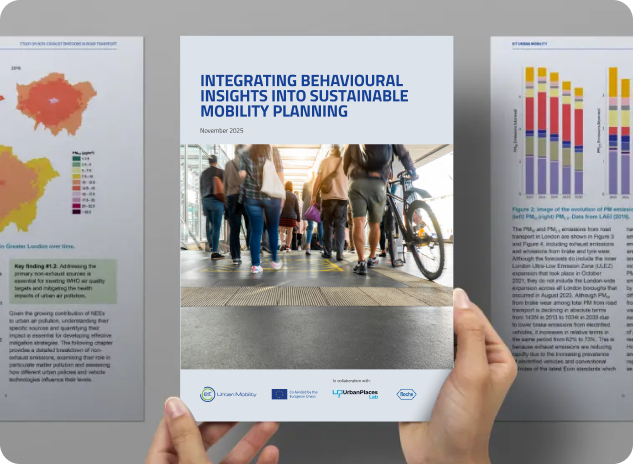
Integrating behavioural insights into sustainable mobility planning

Despite their decisive role on sustainable mobility behaviour, psychological factors have not yet been a major focus of mobility transformation discussions among practitioners and decision-makers. Aspects such as infrastructure, regulation, financial and in-kind incentives have often been prioritised. Aimed at mobility decision-makers from the private and public sectors, this report provides an overview of key psychological models and their implications for the mobility sector. Developed thanks to the support of Roche and Urban Places Lab, it highlights main barriers to change as well as practical interventions to overcome them.

Objectives & methodology:

This report was developed during a workshop with 15 psychology and mobility experts, complemented with literature review. It aims to:

Highlight and understand the main psychological factors impacting people’s mobility decisions

Identify mobility offers and demand-side strategies that motivate sustainable behaviour

Provide recommendations to public and private entities for targeted interventions supporting the uptake of sustainable mobility options

Read the report here

Complete the form and obtain our report

Findings & recommendations:

Promoting sustainable mobility behaviour is an essential component of the transition to better mobility systems. Next to the provision of adequate infrastructure and a coherent regulatory and policy framework, interventions focused on leveraging psychological factors impacting mobility behaviour show great positive impact. The report highlights the following key findings and recommendations (see conclusion and recommendations section for more details):

Be aware of cognitive biases such as the status quo preference

Desired changes in people's mobility behaviour need to be perceived as simple

Mobility is a basic, goal-oriented, human behaviour

Infrastructure is a major enabler

Successful mobility hubs follow some common patterns

Timing is key and has to be leveraged to incentivise people to change

Focus on positive and rewarding experience

Deploy targeted and individualised interventions

Combine psychological nudging with supportive regulation and infrastructure

Assess interventions against its costs and effort