Public transport operators looking to achieve more sustainable bus fleets naturally look to electric models. However, operating electric bus fleets in a cost-effective, efficient way requires understanding the bus’s battery health. And understanding battery health presents another challenge: dependence on vehicle manufacturers’ own battery health calculations.
The EIT Urban Mobility-supported SoH Fleet! project tackled this pain point during recent pilots in France and Spain.
“When you consider that the battery pack represents one-third of the total cost of a bus, and that fleet operators do not have a reliable means of monitoring the battery ageing, you realize that there is something to do. And it’s exactly what we have done with the SoH Fleet! project,” underlined Pierre Gruyer, Innovation Programme Manager with ACTIA Automotive, which led the project.
By enabling better access to data and advance notifications around battery health, the SoH Fleet! project allows public transport operators to become less reliant on vehicle manufacturers for calculating the state of a vehicle’s battery health.
In turn, this reliable and cost-effective way of accessing data has a positive impact on fleet efficiency and maintenance costs.
Seeing the future
Battery health is a critical topic for the successful management of electric bus fleets.
For example, the city of Barcelona has over 1,100 buses running on more than 100 bus lines and aims for 40% of its fleet to be fully electric in the near future, up from around 20% currently.
Without the knowledge of what an electric vehicle’s range will be beyond a certain point in the future, however, operators can face headaches around scheduling, routes and predictability.
“We mustn’t forget that batteries today represent a very, very high cost,” highlighted Israel Vallejo, Engineering and Innovation Department at Transports Metropolitans de Barcelona (TMB), part of the SoH Fleet! Consortium.
“Anticipating the replacement of 100 batteries represents a significant expense, and thanks to this study, we can know in advance when the replacement is necessary, if indeed it is necessary at all,” he added. A bus capable of 100 kilometres today, for instance, might not be capable of that same range six years down the line. That means the bus service would have to be adapted according to its battery capability in order to stay in circulation. This uncertainty has negative impacts for operators: from sudden breakdowns due to battery failure, to difficulties planning maintenance or replacement vehicles and batteries.
“The greatest impact this project has on our company is that it helps us understand the battery’s ageing process in advance. With this information, we can reorganise all our services to extend the state of health as much as possible and ensure that the bus’ lifespan coincides with the lifespan of a single battery,” Vallejo emphasised.
Cross-border collaboration
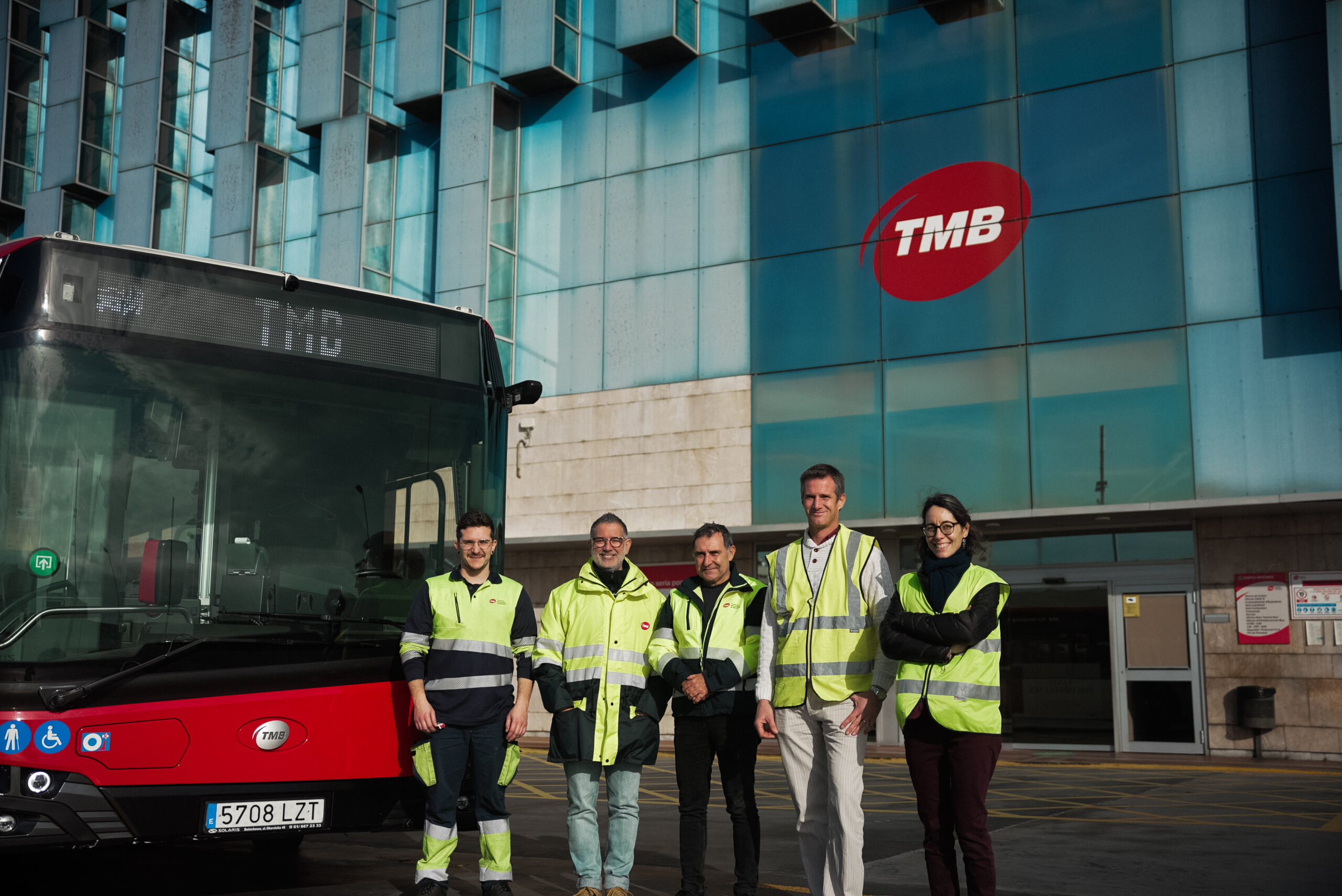
The SoH Fleet! project consortium comprised ACTIA Automotive and public transport operator Keolis Blois, both in France; and CARNET and Transports Metropolitans de Barcelona, both from Spain.
“EIT Urban Mobility has been a cornerstone of this project. By facilitating initial relationships between operators, cities and the technology provider, by co-funding development of the system on the experimentation, and by fostering a business-oriented mindset in order to increase adoption and commercial success,” Gruyer stressed.
“Working with EIT Urban Mobility has been very easy. The collaboration has been complete and their project management has been very friendly and helpful,” Vallejo reported.
Piloted on ten buses in Barcelona, Spain and six in Blois, France the project involved gathering the data necessary to compute the state of health of the batteries, and to offer predictions on diagnostic actions. By testing the solution in these different regions — where diverse geographic and climate factors all impact battery life — the project was able to gather more comprehensive data. This data was then sent via 3G to ACTIA which ran computations to produce a web-based dashboard that public transport operators can access. Through this platform, operators can access a real-time view of battery state of health and the main sources of energy consumption.
Financial and environmental savings
The next step for SoH Fleet!’s journey is for ACTIA to commercialise the solution, and to install the solution in more vehicles to improve overall accuracy. More accessible data on battery health can offer significant environmental as well as operational benefits.
“By 2030, 100,000 electrical buses will be operating across Europe. Considering that the battery pack will present one-third of the total cost, even one percent of an extension to their life spans represents €100 million in savings,” Gruyer stated. “Our target is a 10% extension, which translates to one billion euros, and a significant reduction of environmental impacts.”
These benefits all make it easier for operators to increase the share of electric vehicles in their fleets, offering passengers more sustainable public transport networks and more liveable cities.