
Electric roads and automated charging for fleets, freight, and future mobility
Meeting climate targets demands rapid electrification of transport, but today’s charging infrastructure creates fundamental constraints. Current systems require electric vehicles to detour to fixed charging points scattered across territories, demanding larger batteries to ensure sufficient range between stops. This means higher costs, reduced vehicle capacity, and significant operational downtime, which is particularly straining for commercial fleets and public transport services.
Elonroad addresses this issue through conductive charging rails on road surfaces that deliver power exactly where vehicles already circulate. Vehicles charge continuously while driving or automatically when parked, enabling smaller batteries and lighter vehicles. Beyond solving today’s charging constraints, this infrastructure future-proofs road transport networks for autonomous EVs, turning roads into intelligent energy distribution systems ready for tomorrow’s mobility.
Highlights of why we invested in Elonroad
- Space-efficient infrastructure: Elonroad’s conductive rail system integrates into existing asphalt, eliminating the need to clutter urban spaces with charging posts and cables while turning roads into intelligent energy distribution networks.
- Operational charging, not charging operations: Elonroad’s solution enables charging while vehicles load, unload, wait, or circulate, keeping fleets operational with minimal downtime and no detours to charging stations.
- Smaller batteries, lighter vehicles: Elonroad’s continuous charging enables smaller batteries, reducing vehicle weight, lowering costs, and increasing payload capacity.
- Proven in demanding environments: Piloted and deployed in ports, logistics hubs, and distribution centres, with expanding interest in Europe and beyond, Elonroad is validating its technology where operational intensity and reliability requirements are highest.
- Vehicle-agnostic and scalable: Elonroad’s system is compatible with both factory-equipped and retrofitted EVs across all vehicle classes, from warehouse utility vehicles to long-haul highway trucks, with modular deployment from parking areas to highway stretches.
- Policy-aligned for European deployment: Alternative Fuels Infrastructure Regulation explicitly includes electric road systems (ERS) as technology to be considered for transport electrification, providing regulatory validation and standardisation pathways for broader adoption of Elonroad’s solutions.
According to Peter Vest, Senior Investment & Portfolio Manager at EIT Urban Mobility:
“Electric Road Systems are a key element in the electrification of vehicles, from private EVs and trucks to public transport buses and shuttles. Elonroad’s dynamic charging system increases the range of electric vehicles while enabling them to operate with smaller batteries. Their rail system is also strategically positioned for the autonomous vehicles soon coming to public transport and closed-circuit operations, making Elonroad a pioneer in the kind of infrastructure cities will increasingly depend on.”
Elonroad: Intelligent charging infrastructure for electric vehicles
Headquartered in Lund, Sweden, Elonroad is a deep-tech scale-up founded by Karin Ebbinghaus, Dan Zethraeus and Kim Malmberg Svemark. The company’s origin story reflects the kind of lateral thinking that defines breakthrough infrastructure innovation: For founder Dan Zethraeus, that moment came on a snow-laden road, watching slush accumulate between his wheels. “Could we charge electric vehicles differently?” he wondered. The insight was immediate: what if a conductive rail embedded in the road could deliver power directly to vehicles as they drive?
Elonroad has transformed that insight into a comprehensive electric charging ecosystem combining conductive rails, vehicle-mounted collectors, and digital management resources.
How it works: Bringing energy to vehicles
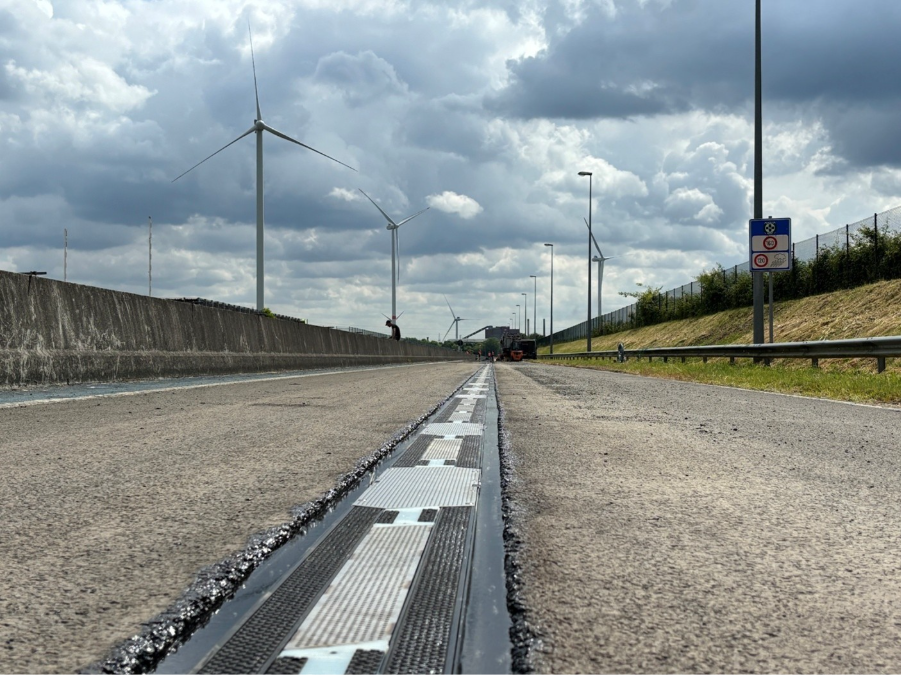
Elonroad’s core innovation is deceptively simple: rather than bringing vehicles to energy, bring energy to vehicles. Conductive charging rails are installed on top of the asphalt or embedded directly into the road – whether at loading docks, port terminals, parking areas, or highway stretches – and connected to power supplies. Vehicle-mounted collectors make contact with the rails, enabling automatic charging during any stationary moment or while driving.
The Elonroad ERS system can supply up to 300kW at 97% efficiency, activating only one-metre segments directly beneath passing vehicles, making it safe for pedestrians and animals while eliminating cable-related hazards. The technology is vehicle-agnostic, working with both factory-equipped and retrofitted EVs, and modular enough to serve everything from slow-moving warehouse vehicles to long-haul highway trucks. Digital connectivity enables load balancing and smart billing across the network.
This approach unlocks several operational advantages:
- For high-intensity operations (ports, logistics hubs, etc.): Vehicles charge continuously during cargo handling or transit loops, eliminating the need for buffer vehicles to cover charging downtime.
- For public roads and highways: Dynamic charging while driving extends effective range and reduces the need for dedicated charging stops, enabling smaller batteries that reduce vehicle weight, cost, and environmental impact. This is particularly transformative for heavy commercial vehicles where battery weight directly competes with payload capacity.
- For urban and utility fleets: Automatic charging during routine stops, such as loading docks, bus terminals, or waste collection points, means vehicles are always topped up without driver intervention, cable handling, or dedicated charging time.
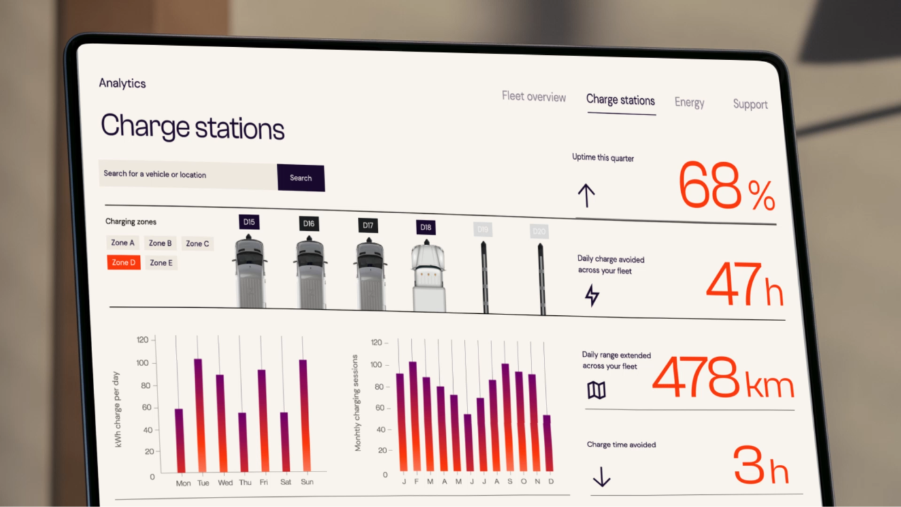
Complementing the physical infrastructure, Elonroad’s digital solutions provide mobility operators with real-time insights into energy consumption, pollution and emission data, vehicle uptime, predictive maintenance needs, and route optimisation based on charging availability.
Strategic deployment: from controlled environments to public roads
Elonroad is currently prioritising high-intensity operations settings where continuous charging delivers immediate operational value. In European ports and logistics hubs, the company has established multiple reference partnerships including the Port of Oslo for electrifying terminal vehicle operations, Martin & Servera in collaboration with Volvo for automated fleet charging, and Bring’s Malmö distribution centre for urban logistics.
The technology is also attracting tier-1 automotive suppliers seeking to future-proof their offerings. AISIN, a global leader in automotive drivetrains, partnered with Elonroad to develop and test conductive ERS solutions. As part of this collaboration, a test track was installed in summer 2024 at AISIN’s facility in Mons, Belgium, enabling testing with European original equipment manufacturer partners and signalling growing industry interest in ERS.
Public road deployment is advancing through strategic infrastructure partnerships. VINCI is deploying Elonroad’s technology on the A10 highway south of Paris, while the Swedish Transport Administration (Trafikverket) collaborates on domestic infrastructure integration. Internationally, the Port of Long Beach in California selected Elonroad for dynamic and stationary charging solutions, supported by California Energy Commission funding.
The infrastructure is also proving to be strategic for autonomous and teledriven vehicles: in Tallinn, Estonia, alongside Elmo, Elonroad deployed a fully automatic charging station for teledriven cars. A glimpse of the autonomous mobility future that electric roads enable.
Notably, this deployment momentum of Elonroad’s products and services has been accelerated by European Innovation Council (EIC) Accelerator funding, which enabled Elonroad to simultaneously scale technology and manufacturing, strengthening the company’s readiness to deliver electrification solutions at scale.
Regulatory tailwinds: Europe’s regulatory framework for alternative fuels infrastructure
Europe is moving from ambition to standardised deployment frameworks for alternative fuels infrastructure. The Alternative Fuels Infrastructure Regulation (AFIR), applicable since April 2024, sets binding requirements and targets for publicly accessible recharging and refuelling infrastructure across the EU, including along TEN-T corridors, as part of the EU’s “Fit for 55” climate package.
Crucially for electric road innovation, AFIR explicitly recognises “electric road systems” as physical installations that transfer electricity to vehicles while in motion, positioning this technology alongside conventional charging infrastructure as a legitimate pathway for transport electrification. This regulatory recognition matters because AFIR emphasizes interoperability, user-friendliness, and grid integration across alternative fuels infrastructure. For technologies like Elonroad’s, designed from the outset to be vehicle-agnostic and interoperable, this policy direction provides both validation and a clearer path to broader adoption as member states work to meet their mandatory deployment targets.
Looking ahead
EIT Urban Mobility investment in Elonroad reflects the role we play in Europe’s mobility transition: a strategic, long‑term partner backing infrastructure innovations that require research, innovation, capital and cross-sector coordination. By supporting technologies that sit at the intersection of policy, industry and everyday mobility needs, we are helping to build the systems that will make zero‑emission transport the new normal.
Do you want to know more about Elonroad’s mission and its solutions?
Visit the company website, LinkedIn page or the EIT Urban Mobility Innovation Marketplace.
This article is part of Why we invested? Series presenting EIT Urban Mobility equity portfolio.