TWINOPT will run for 24 months, from February 2026 to January 2028, reflecting the operational complexity of coordinating three pilot implementations across Jesi, Cambridgeshire and Antalya. The project is structured into six work packages, each aligned with specific responsibilities and partner expertise.
TWINOPT builds on the success of the previous EIT-funded MoTO project in Turin, advancing from historical data validation to a real-time operational tool. It addresses a critical gap in urban management where current traffic models are often siloed and too slow for active response. By providing a vendor-agnostic platform, TWINOPT enables traffic control rooms to transition from reactive monitoring to proactive, data-driven management.
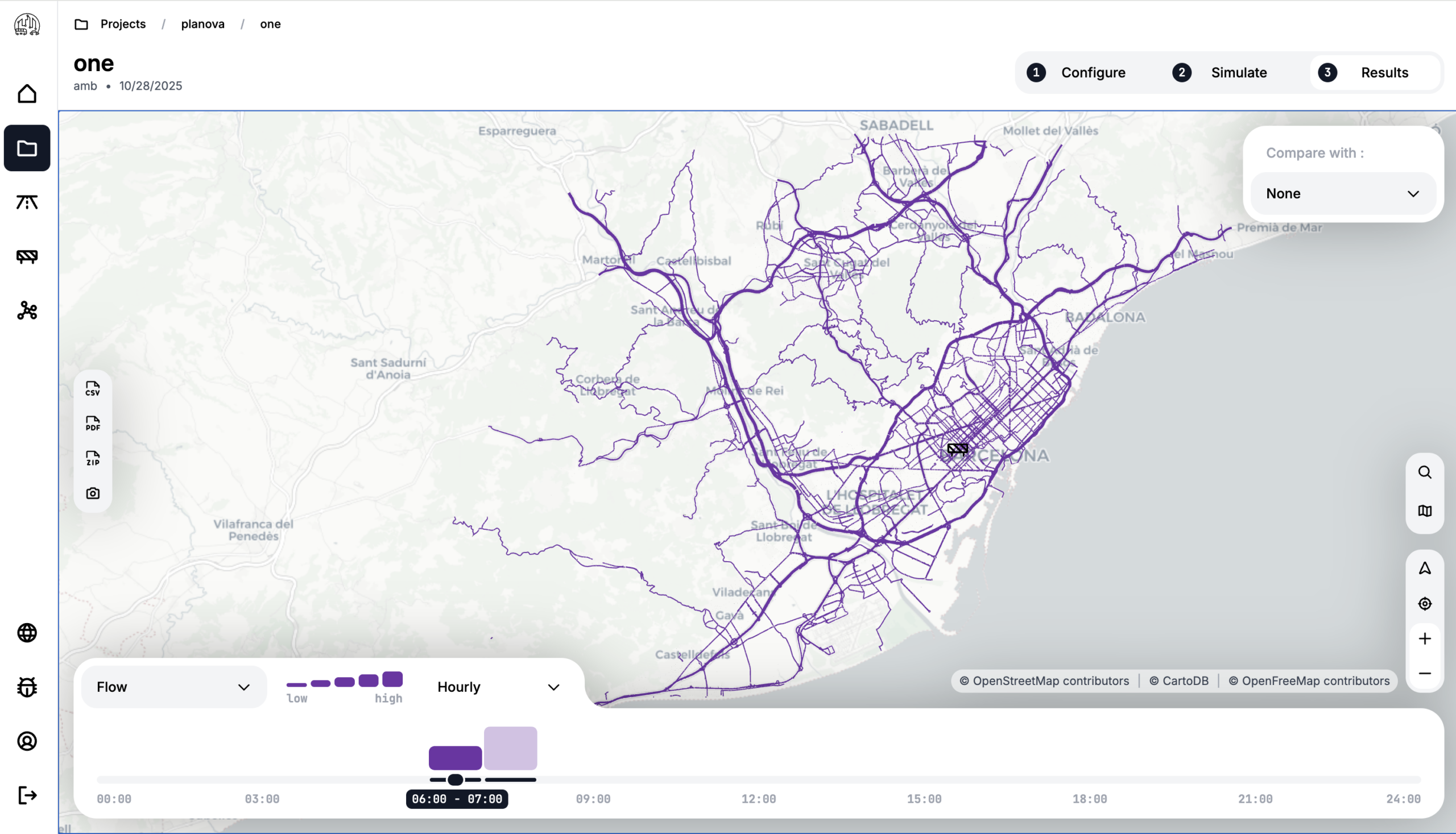
The platform integrates live sensor data, vehicle traces and public transport feeds in a unified interface. This enables short-term forecasting to predict congestion and rapid “what-if” analysis to test interventions, such as signal retiming or bus priority, within minutes. These capabilities ensure that operational decisions are based on real-time evidence rather than intuition.
To prove scalability and transferability, the solution will be refined through three diverse pilots in Jesi, Cambridgeshire and Antalya. Technical excellence is guaranteed by contributions from DLR and the Barcelona Supercomputing Center, providing high-capacity data analytics and visualisation.
Coordinated by Fondazione Piemonte Innova, TWINOPT is a city-led, business-driven partnership. Transcality leads the technical development and commercialisation to ensure the service is repeatable and procurement-ready.