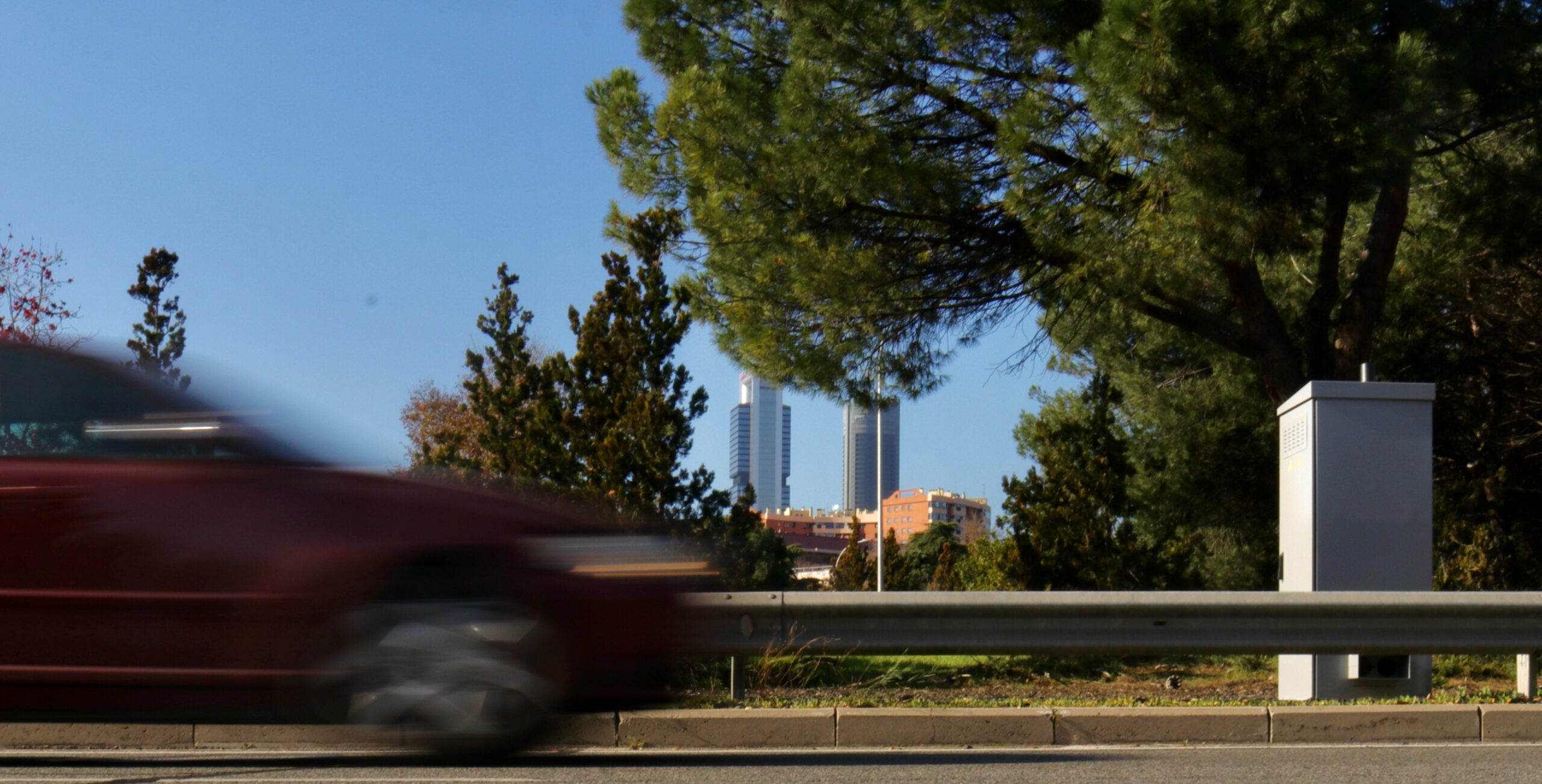
Co-funded by EIT Urban Mobility, the DAVER project tackles a critical disparity in urban air quality: the fact that approximately 2% of vehicles are responsible for over 40% of total traffic emissions. Inspired by upcoming EU roadworthiness regulations (which mandate remote sensing for roadside inspections), DAVER aims to deploy a market-ready, automated solution to identify “high emitters” without disrupting traffic flow.
The project’s main objective is to validate an integrated, enforcement-ready system that synchronises three sensing technologies, including remote sensing of emissions (RSE) and noise detection, in a single automated unit. This allows cities to perform complete environmental diagnoses of vehicles in real time.
The project is executed by a pan-European consortium that brings together technology providers OPUS RSE and Vinces, alongside three strategic pilot cities: Barcelona (Spain), Thessaloniki (Greece) and Groningen (Netherlands). Kicked off in February 2026, this 18-month initiative will test fixed and mobile configurations to raise the technology readiness level (TRL).
Beyond the hardware, DAVER innovates in governance by launching a City Observer Group. This peer-learning mechanism allows external public sector members to follow the pilots and assess the solution for future procurement. By the project’s end, DAVER will provide European cities with a proven, scalable tool to enforce low emission zones (LEZ) and significantly reduce premature deaths caused by urban pollution.