Every bus and coach relies on two lead-acid starter batteries to start and operate safely, in combustion, hybrid and electric fleets alike. Under conservative, calendar-based maintenance rules these batteries are replaced preventively on a fixed calendar basis, long before their electrochemical potential is exhausted. For a large national fleet this means that tens of thousands of batteries are discarded every year as avoidable waste, and the supply chain depends almost entirely on imports. Battery failures cause non-start events and service disruption.
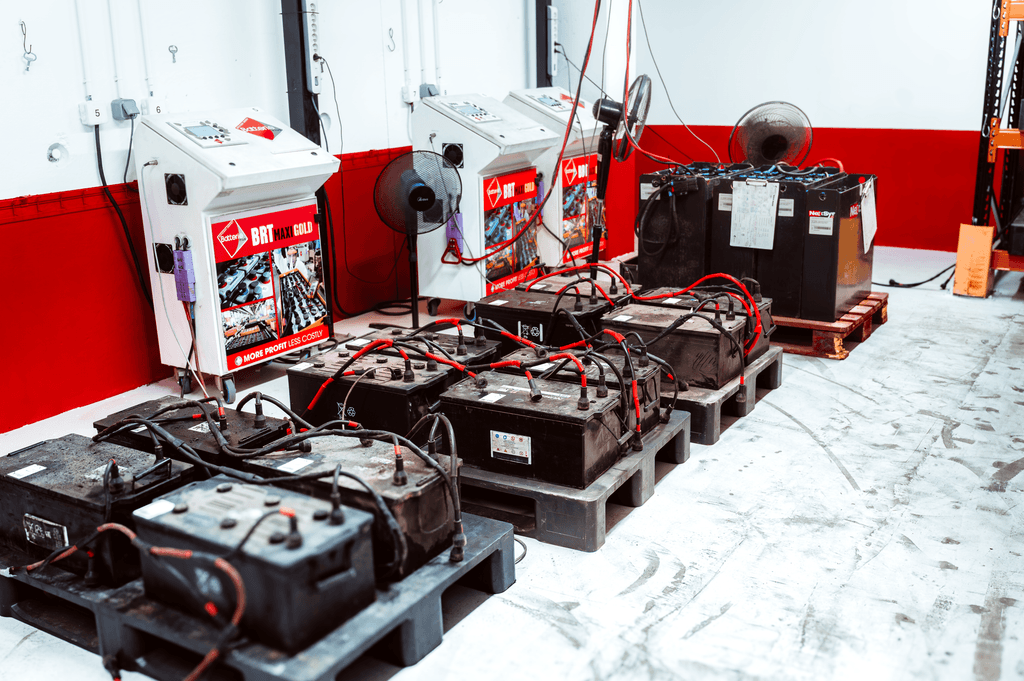
BATTERYSENSE replaces this linear replace-and-recycle model with a circular, service-based alternative. Used batteries are removed during planned maintenance, collected, diagnosed and, where eligible, electrochemically regenerated in an industrial centre, then returned to a managed stock and refitted to the next vehicles. Regeneration restores performance without destroying the battery, and a single battery can be regenerated several times.
The project goes further than the regeneration service itself. By combining on-board sensor data, fast diagnostics and operational records, it builds AI-based prognostic models that can predict the remaining useful life of a regenerated battery. This turns a conservative, calendar-driven replacement practice into predictive, fleet-level battery asset management, optimising regeneration cycles from each battery’s measured condition rather than a fixed calendar rule, while keeping reliability equivalent to new batteries.
The solution is piloted on real public transport fleets in France, under genuine operating conditions, across urban, interurban and higher-speed services. Results are assessed jointly by the operator’s local depots and its national maintenance, IT, procurement and innovation functions, and consolidated into a documented go/no-go framework for large-scale deployment.
BATTERYSENSE aims to extend the service life of every battery, cut waste and emissions, create local industrial jobs and reduce import dependence. It turns a linear purchasing routine into optimised, circular battery asset management for European urban mobility operators.