A Horizon Europe project is helping cities improve Mobility Management Plans through stakeholder-centred “soft” measures, using serious games, gamified incentives, and practical toolkits to influence everyday travel behaviour.
EIT Urban Mobility, an initiative of the European Institute of Innovation and Technology (EIT), a body of the EU, plays an active role in the Horizon Europe-funded Shift2Sustain, a project that officially launched in November 2025 and that aims to strengthen Mobility Management Plans (MMPs) and Mobility Management Measures (MMMs) by addressing one of the biggest barriers to sustainable urban mobility: user behaviour.
EIT Urban Mobility is leading the project’s communication and dissemination activities, managing the development of its digital toolkit for stakeholder engagement, and creating a knowledge exchange strategy between city stakeholders to ensure that knowledge on MMPs and MMMs is transferred effectively.
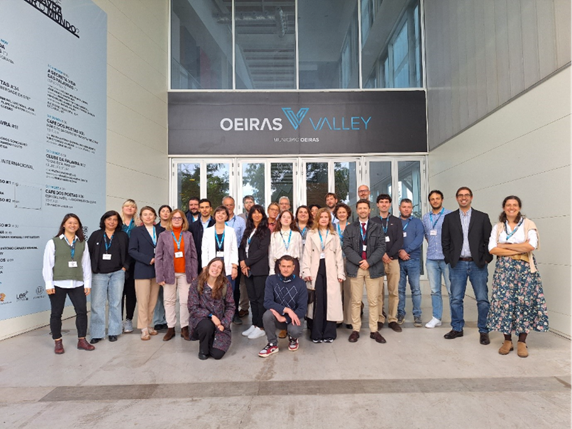
With nearly €5 million in funding over 36 months, the 17-partner consortium will pilot innovative mobility management measures in seven cities: Copenhagen, Gdańsk, İzmir, Oeiras, Sarajevo, Turin, and Zagreb. The project aims to better understand what drives transport decisions, increase the acceptance of mobility measures, and accelerate the uptake of more sustainable travel options.
From data to behaviour change
Shift2Sustain follows a structured approach to transform how cities design and implement mobility strategies. It begins with the development of a European-wide database of Mobility Management Plans and measures, analysing their impacts, success factors, and barriers.
Building on this foundation, the project will introduce new assessment methods based on environmental, economic, and social indicators, enabling cities to evaluate the effectiveness of mobility interventions more systematically.
These insights will then be applied in real-world conditions through pilot activities in the seven cities, where innovative approaches will be tested and validated to understand how mobility measures can be successfully implemented and adopted.
Making sustainable mobility work in practice
At the core of Shift2Sustain is a strong focus on co-creation and stakeholder engagement. The project will work closely with local stakeholders to design tailored measures that make sustainable mobility options more accessible, attractive, and realistic for different user groups.
To go beyond traditional planning approaches, Shift2Sustain will deploy innovative engagement tools, including serious games, gamification and incentives to encourage long-term shifts in travel habits. These tools will not only support the design of mobility measures but also help monitor their impact and improve user engagement.
Scalable tools and long-term impact
The project will deliver a range of practical outputs to support cities and mobility stakeholders across Europe, including:
- A digital toolkit combining planning support, gamification and behavioural insights
- Policy recommendations and guidelines for mobility planning
- A dedicated training programme to build capacity among practitioners
- Open-access resources to support knowledge sharing and replication
By combining data-driven analysis, behavioural insights, and real-world testing, Shift2Sustain will provide cities with actionable, scalable solutions that contribute to climate-neutral and inclusive urban mobility systems, in line with the EU Sustainable and Smart Mobility Strategy and the EU Cities Mission.
“Sustainable mobility is not only about infrastructure or technology – it is about people and their daily choices. With Shift2Sustain, we are helping cities better understand these behaviours and design measures that truly work for their citizens,” says Ana Vasconcelos, consultant at TIS – Consultores em Transportes, Inovação e Sistemas and coordinator of the Shift2Sustain project.
About Shift2Sustain
Shift2Sustain is a Coordination and Support Action financed under grant agreement number 101238251. The project started on 1 November 2025 and will end on 31 October 2028. Coordinated by Consultores em Transportes Inovação e Sistemas, its other partners include Panteia BV, Aston University, Technische Universiteit Delft, TRT Trasporti E Territorio Srl , STRATEC, Urbanisticni Institut Republike Slovenije, EIT Urban Mobility Foundation, Grad Zagreb, Gmina Miasta Gdanska, Izmir Buyuksehir Belediyesi, Ministarstvo Saobracaja Kantona Sarajevo, Comune Di Torino, Kobenhavns Kommune, Odraz-Odrzivi Razvoj Zajednice , Parques Tejos E.M. and Municipio De Oeiras.
Learn more about the project: https://shift2sustain.eu/
Funded by the European Union (Horizon Europe, GA No. 101238251). Views and opinions expressed are those of the authors only and do not necessarily reflect those of the European Union. Neither the European Union nor the granting authority can be held responsible for them.