
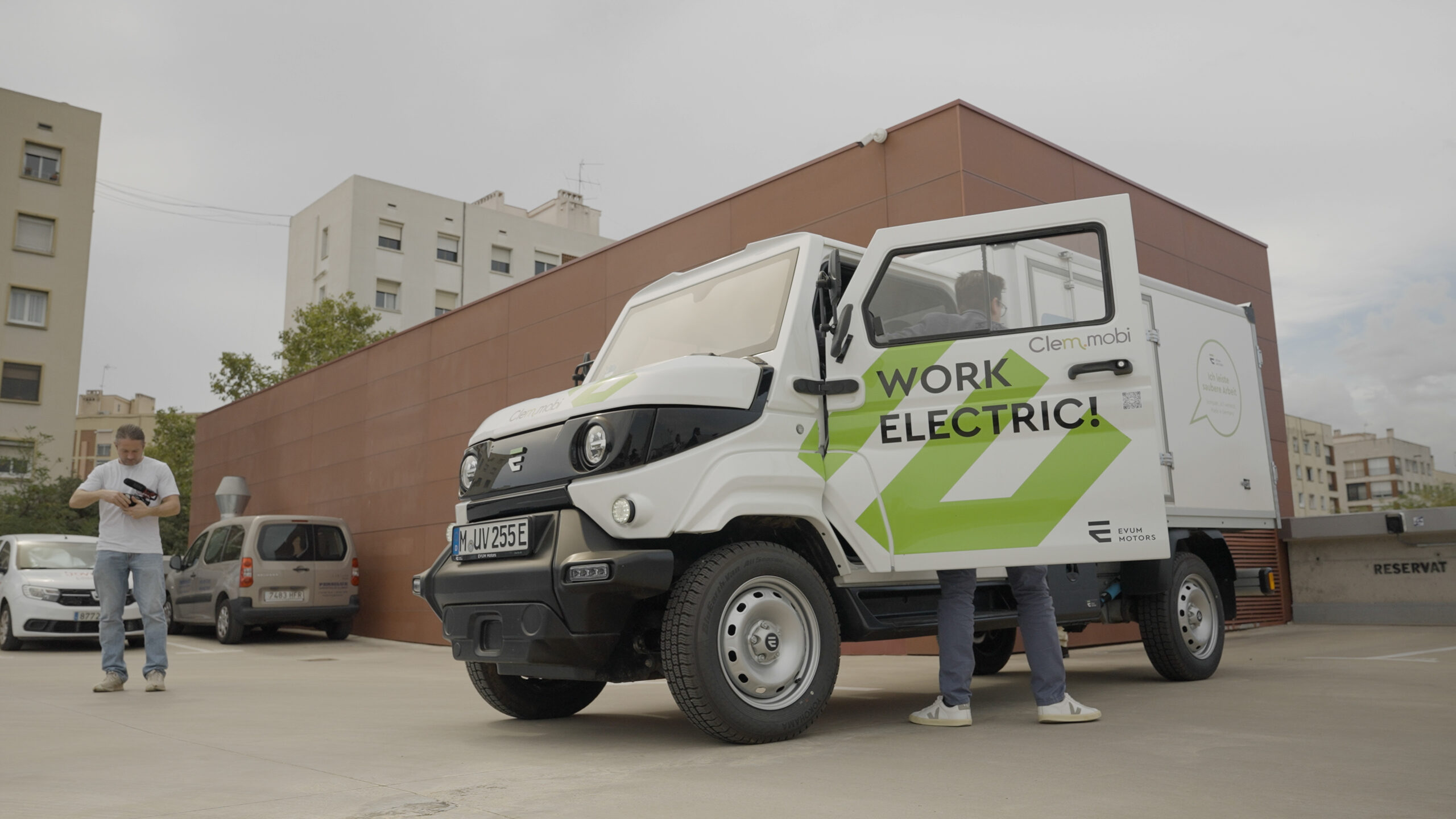
Batteries sit at the heart of Europe’s transition to decarbonised mobility. As the Clean Energy Technology Observatory notes, transport electrification prevented 658 million barrels of oil equivalent from being burned between 2010 and 2022, avoiding 280 million tonnes of CO2 globally. In the EU alone, batteries cut oil imports by 120 million barrels and prevented 51 million tonnes of emissions during that period.
The potential of electrification extends across the mobility industry and beyond. From public transport, freight, private and shared vehicles and micromobility, as well as heating and lighting buildings, electrification can also break down silos between sectors that have otherwise been considered in isolation. As demand accelerates, batteries embody both the promise of decarbonisation and the challenge of building a system that reconciles climate ambition, circularity and industrial resilience.
The global context underscores the scale of this shift. Battery demand reached 1 TWh in 2024 and is expected to more than triple by 2030, dominated by demand for electric cars, and a new share of the demand EV trucks, according to the International Energy Agency. Europe is emerging as a major growth market but the supply chain, from critical raw materials to cell manufacturing, remains dominated by non-EU actors. This dependency exposes Europe to strategic vulnerabilities as batteries are becoming essential to the Green Deal, industrial competitiveness and energy security.
Recent industry turbulence has made these risks visible. The bankruptcies of Northvolt, Britishvolt, and Germany’s CustomCells, along with delays and cancellations of planned gigafactories, highlight how difficult it is to scale domestic production in a globalised, capital-intensive and rapidly evolving market.
Amid rising demand and supply chain constraints, one imperative stands out: moving away from linear ‘take-make-dispose’ models. A circular battery economy, built on reuse, repair and advanced recycling, is now essential for a resilient mobility system.
Circularity in batteries is more than an environmental objective; it is a market opportunity. For innovators and startups, the circular battery transition opens opportunities to develop scalable reverse-logistics systems, automated dismantling processes, refurbishment solutions and high-yield recycling technologies. Mobility operators stand to benefit by integrating circular batteries into their fleets, lowering lifecycle emissions while reducing long-term operating costs. For investors, the sector represents a rapidly expanding market shaped not only by growing demand but also by binding, harmonised EU rules that significantly reduce regulatory uncertainty.
Setting a high bar: the EU Battery Regulation
The EU Battery Regulation marks a step change in how Europe governs the entire battery lifecycle. Unlike the 2006 Directive, the regulation applies directly across all Member States, ensuring a unified framework for sustainability, safety and traceability.
Key elements of the regulation include: carbon footprint declarations, due diligence for raw materials, minimum recycled content requirements, binding collection and recycling targets, battery passports enabling full traceability and Extended Producer Responsibility.
By categorising batteries into five types (portable, SLI, light means of transport, electric vehicle, and industrial) the regulation tailors rules to specific technologies and uses. Several of these requirements go live progressively through 2027. A notable milestone this year was the Commission Delegated Regulation, which defines how recycling efficiency and recovery rates must be calculated and verified. These standardised templates and formulas ensure recyclers operate on a level playing field, prevent fragmented reporting and keep critical materials such as lithium, cobalt, nickel and copper circulating in the European economy.
Regulation alone, however, is not enough. Turning ambitious rules into working systems requires investment, coordination, and shared knowledge across Member States and industry operators.
Turning policy into practice
To complement regulatory ambition with practical support, the EU has built a network of partnerships and funding programmes that accelerate innovation and de-risk deployment. Key initiatives include:
- European Battery Alliance (EBA): Coordinated by the European Commission and European Investment Bank, bringing together governments, industry, and research actors to strengthen the EU battery value chain.
- InnoEnergy (formerly EIT InnoEnergy): The Commission’s coordinator for stakeholder engagement within the EBA, connecting more than 440 industry and innovation partners and providing investment support to new ventures.
- Batteries Europe: The main forum for research and innovation coordination, aligned with the Strategic Energy Technology (SET) Plan.
- Battery 2030+: A long-term research effort into next-generation battery technologies, from advanced chemistries to self-healing materials.
- BATT4EU / Batteries European Partnership Association: A public–private partnership that has already unlocked over €343 million in funding for 64 projects since 2021.
- IPCEI Batteries: Transnational projects that support large-scale industrial initiatives across the battery value chain.
- Clean Energy Transition Partnership (CETPartnership): Supporting cross-border projects linking batteries to grid balancing, storage, and mobility.
These alliances are steered by a Strategic Research and Innovation Agenda (SRIA) under Horizon Europe, which turns policy priorities into concrete timelines aligned to Technology Readiness Levels. Together, they form Europe’s operating system for battery innovation, clarifying pathways, reducing risks and signalling where future breakthroughs and market openings are likely to emerge.
But research must now translate into tangible progress. By 2030, an estimated 1.7 million tonnes of batteries will reach end-of-first life annually in Europe, making scalable second life and recycling solutions urgent.
Moving from strategy to implementation: BatteReverse
One example of how Europe is operationalising these ambitions is BatteReverse, a Horizon Europe project focused on building and validating a reverse logistics value chain for end-of-first-life batteries. Led by the French Alternative Energies and Atomic Energy Commission and involving 10 partners from six countries, including EIT Urban Mobility, the project exemplifies the type of applied innovation needed to meet regulatory expectations and circularity targets.
Some of the notable expected outputs of the BatteReverse project include:
- A shared Battery Data Space: in which 50+ stakeholders will be able to share battery data, enabling traceability and faster pack identification, with battery passport functionality.
- A universal diagnostic tool: combining safe discharge with State of Health and State of Safety checks, making first assessments up to 80% faster.
- Smart safety packaging and active monitoring: preventing 30+ severe accidents annually for critical-state batteries.
- Semi-automated processes: for opening, dismantling, and classifying packs and components, resulting in 50% quicker dismantling and sorting time.
- Acoustic sensors and clear Remaining Useful Life criteria: for 75% faster second life assessment.
- A digital twin of the reverse-logistics chain: to identify the most profitable and sustainable circular business models for €30Mm added value per year in Europe.
Beyond technical outputs, BatteReverse also supports a free, open community for battery-circularity enthusiasts, enabling knowledge exchange, best-practice sharing, and collaboration among industry actors, researchers, and mobility operators.
By aligning regulation, investment and innovation ecosystems, Europe is building the foundations of a competitive circular battery economy. Projects like BatteReverse illustrate how policy ambitions can evolve into practical, scalable solutions, strengthening industrial resilience while supporting the shift to more sustainable urban mobility.