
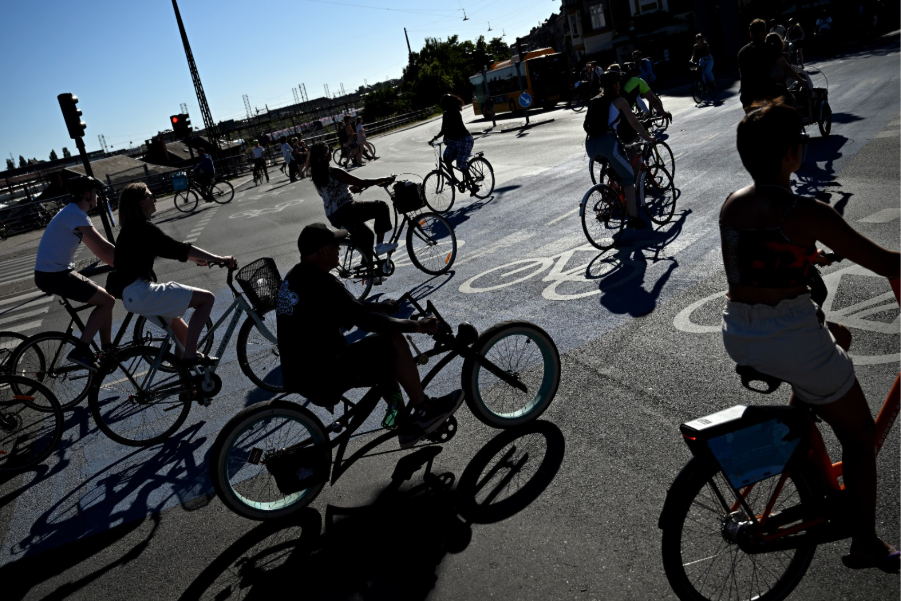
While electrification is central to net-zero emissions strategies, reducing emissions at scale also requires a significant shift toward active mobility – walking, cycling and other forms of micromobility. These modes are among the most sustainable and space-efficient forms of urban transport available, as well as advantageous for personal health. Yet despite growing investment in cycling lanes, shared scooters and pedestrian infrastructure, uptake will always be hindered if people do not feel safe.
Perceptions of safety are often as influential as objective safety statistics. A person may understand that cycling is cost-effective, sustainable, convenient and healthy, but if they perceive their path as dangerous, they are unlikely to choose a bicycle or scooter over a private car. Across Europe, this remains a major challenge. According to the European Road Safety Charter, 90% of European cyclists report having felt afraid of risky behaviour from other road users. And recent reporting from the European Transport Safety Council demonstrates that cyclist fatalities in the EU have declined at a significantly slower rate than deaths among motor vehicle occupants, reinforcing concerns that vulnerable road users are still insufficiently protected within urban transport systems.
The gendered dimension of safety
Safety perceptions also have a clear gender dimension. Research across Europe consistently shows that women are less likely to cycle in environments that have heavy vehicular traffic, poor lighting or fragmented infrastructure. Thus, cycling infrastructure designed around the “confident rider” often excludes a large proportion of potential users. If cities want active mobility systems that work for everyone, safety must be considered as a foundational element of accessibility and equity.
A growing ecosystem of startups and urban mobility pilot programmes are working to address this challenge. These initiatives place safety at the centre of active mobility innovation – combining technology, infrastructure analysis, behavioural insights and urban data to create transport systems that are more inclusive and sustainable.
Using AI to improve shared micromobility
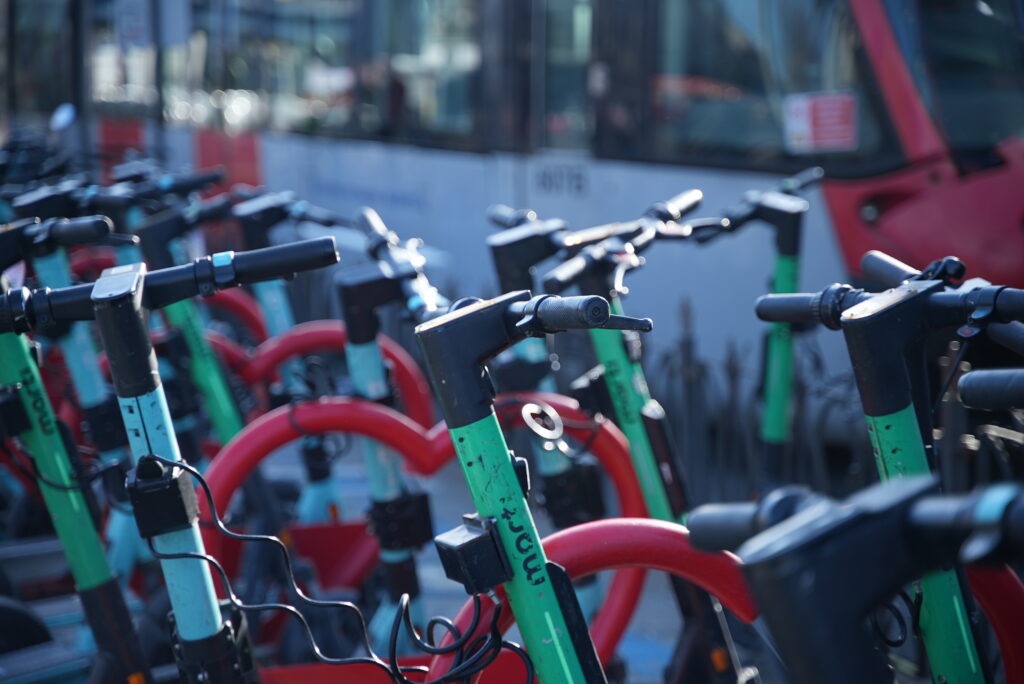
One company operating at the intersection of artificial intelligence and micromobility management is Luna Systems. The company develops edge-AI computer vision technology that can be integrated into shared micromobility fleets such as electric scooters, bikes, mopeds and delivery robots. Their system helps vehicles remain within the correct lanes and parking zones while also collecting valuable visual data from the urban environment.
Luna Systems’ approach addresses several key safety concerns simultaneously. Poorly parked scooters and disorganised shared mobility fleets have become a source of frustration in many European cities, and can be significant barriers for pedestrians, wheelchair users and people with visual impairments. By enabling vehicles to identify where they should and should not operate, Luna Systems supports safer interactions between different users of public space. At the same time, the crowd-sourced visual data generated by vehicles can provide municipalities with detailed insights into infrastructure conditions, conflict points and street usage patterns, creating a feedback loop for urban improvement.
Enhancing rider visibility and communication
Another startup focusing on rider safety is Flasher, which develops wearable technology designed to improve visibility, communication and navigation for cyclists and micromobility users. One of the recurring challenges in active mobility is that riders must divide their attention between navigating unfamiliar routes and maintaining awareness of surrounding traffic. Flasher’s system addresses this issue through haptic navigation, gesture-controlled turn signals, 360-degree visibility and collision detection alerts.
Importantly, technologies like these help bridge the communication gap between cyclists and motorists. Traditional cycling infrastructure often assumes a level of confidence and road awareness that may take time to master. Wearable systems that improve signalling and situational awareness can reduce cognitive load and increase rider confidence, particularly among users who may otherwise feel intimidated by urban traffic conditions.
Turning mobility data into actionable safety insights
Another EIT Urban Mobility-supported startup helping cities improve active mobility safety is Vianova, which recently launched its Vianova Intelligence Platform. The platform aggregates data from multiple sources such as connected vehicles, micromobility operators, sensors and historical collision records, and translates it into accessible, street-level insights for city planners and transport authorities. Rather than requiring specialist data science expertise, the platform is designed to help policymakers quickly identify high-risk locations, understand mobility patterns and evaluate the effectiveness of safety interventions.
This type of intelligence is particularly valuable for active mobility because many safety risks emerge at the interaction points between different transport modes. Vianova’s platform combines data from cyclists, e-scooters, cars and other road users to create a more holistic picture of how people move through urban environments. By identifying collision hotspots, dangerous intersections and areas where infrastructure may be underperforming, cities can make evidence-based decisions about where to prioritise investments in protected cycling infrastructure, traffic calming measures or redesigned public spaces.
Rethinking infrastructure safety
Alongside startups, European innovation projects are also exploring how infrastructure and urban design can improve perceptions of safety. One example is SAFELIGHT, an EIT Urban Mobility-supported initiative that focuses on improving safety at intersections and road crossings. Intersections are among the most dangerous points in urban mobility networks because they bring together pedestrians, cyclists and motor vehicles within limited space and time. SAFELIGHT uses intelligent lighting systems and adaptive infrastructure to improve visibility and reduce conflicts between users, particularly in low-light or high-risk environments.
Another EIT Urban Mobility initiative, Lane Patrol, focuses on assessing the quality and safety of cycling infrastructure. Using data collection and digital analysis tools, the project evaluates cycling lanes to identify gaps, hazards and maintenance needs. This type of work is essential because perceptions of safety are heavily shaped by infrastructure continuity. A protected cycling lane may encourage people to ride, but if that lane suddenly disappears at a dangerous junction or forces cyclists into mixed traffic, confidence quickly deteriorates. Lane Patrol aims to provide cities with the data needed to make infrastructure more coherent and reliable.
Similarly, AIPECRA applies artificial intelligence to urban mobility planning and risk assessment. By analysing patterns of movement and potential conflict areas, the project seeks to support proactive safety interventions rather than reactive responses after incidents occur.
Safety as the foundation of sustainable mobility
Early conversations around cycling and micromobility often focused narrowly on emissions reduction or traffic congestion relief while today, there is growing recognition that sustainable mobility systems will only succeed if they are designed around human experience. Infrastructure, vehicle technology, urban data and digital tools must work together to create environments where people feel protected and confident enough to choose active transport modes in their daily lives. Increasingly, this means embracing predictive and data-driven approaches to urban mobility management, allowing cities to identify risks and implement safety improvements before collisions occur.