
As net-zero emissions targets get ever closer, the electrification of transport will be a key component in the transition. Passenger cars are responsible for roughly 16% of the EU’s total carbon dioxide emissions, and while electric vehicles (EVs) are increasingly available and affordable, adoption still hinges on access to reliable and convenient charging infrastructure. For many drivers, range anxiety, or the fear that an EV’s battery will be insufficient to complete a trip, continues to be a significant psychological barrier – with up to 25% of survey respondents citing the concern as a key consideration in EV adoption.
Parking operators, therefore, sit at an intersection in the transition. Under the EU Energy Performance of Buildings Directive (EPBD), buildings with more than 20 parking spaces are mandated to install at least one EV charging point. This directive transforms a ‘nice to have’ to a legal requirement, presenting a real challenge for operators, especially those managing shared spaces or basements with outdated electrical installations.
Yet, beyond compliance, by integrating EV charging into their facilities, parking operators can play a role in enabling widespread electrification while unlocking new business opportunities. Yet this shift is not without its challenges – so understanding both the barriers and innovative solutions to these hurdles will be key to turn parking assets into future-ready mobility hubs.
Tackling high upfront costs: SurplusMap and AgeVolt
Installing EV charging infrastructure requires significant initial investment. Hardware, electrical upgrades, installation and ongoing maintenance can become a financial burden for operators managing large or older facilities. These high upfront costs can deter operators from innovating quickly, particularly when return on investment may not be immediate or clearly defined.
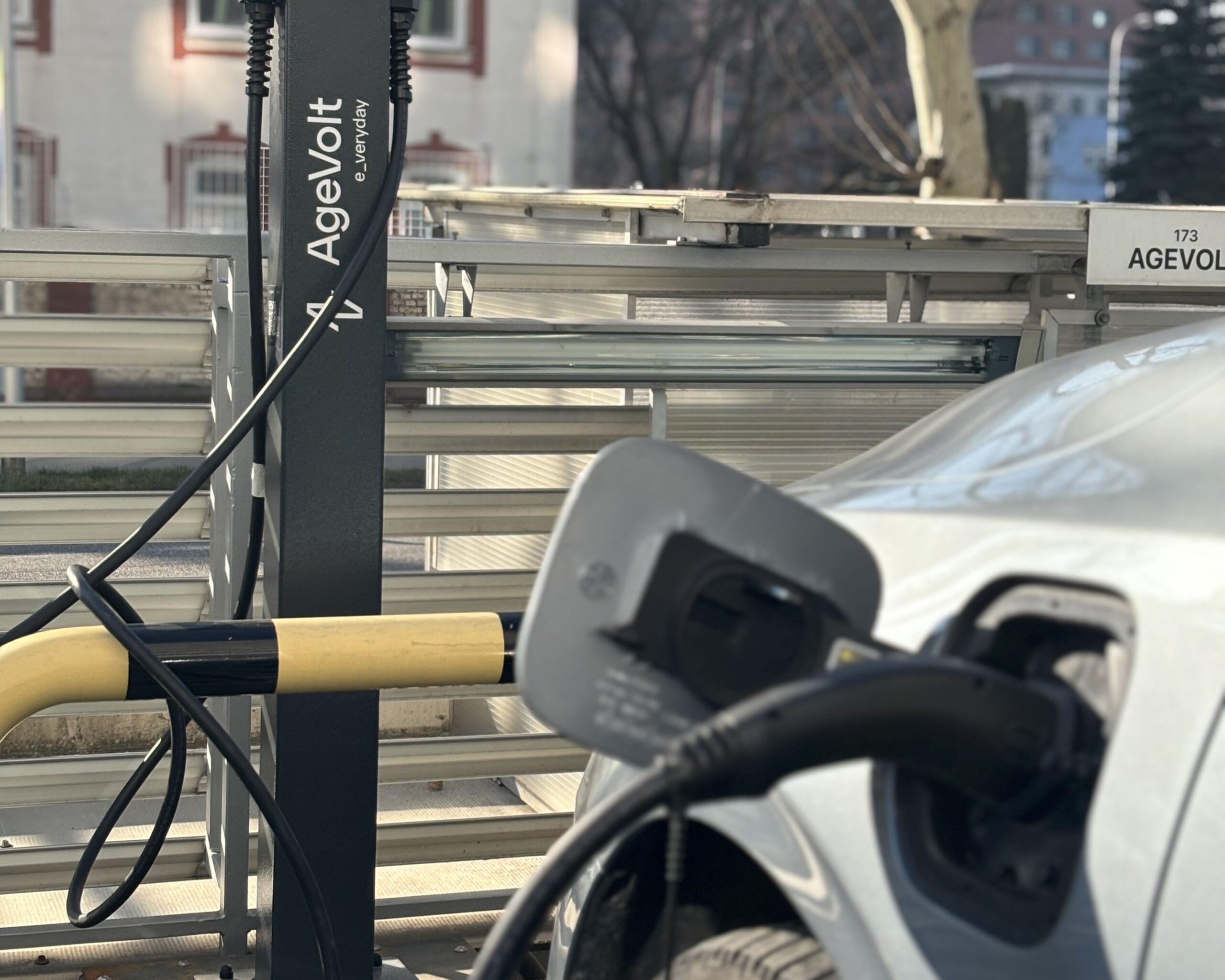
Startup SurplusMap is aiming to reduce this barrier with their data-driven approach., Their solution enables operators to identify and utilise unused electrical capacity within existing infrastructure, avoiding costly grid upgrades. Therefore, parking operators can reduce risk with data-driven decisions, deploy chargers more cost-effectively and forecast future demand. Meanwhile, AgeVolt offers modular and scalable charging solutions that reduce installation complexity and cost while operators retain ownership and control. Their approach allows operators to start small and expand as demand grows, supported by a digital platform that manages billing, charger management and reporting.
Managing load and grid capacity: Emissium and the EVOSS project
Even when operators are willing to invest, the local electrical grid may not be able to support additional load from EV chargers as many urban areas already face grid constraints. Additionally, unmanaged charging demand can lead to grid overloads, higher energy costs or even service disruptions.
Smart energy management platforms such as Emissium and the EVOSS project address this issue by optimising how and when electricity is used. Emissium leverages data-driven insights to monitor and control energy consumption in real time, ensuring that charging does not exceed grid capacity. EIT Urban Mobility’s EVOSS project complements this approach by offering intelligent load balancing and predictive analytics, allowing operators to distribute power efficiently across multiple charging points. Additionally, its onboard energy storage, charged during off-peak hours, optimises energy use and reduces grid impact. These solutions not only prevent grid strain but also reduce operational costs by taking advantage of off-peak energy pricing.
Addressing space constraints: Thomas by Batteri from the EVOSS project
Parking facilities, particularly in dense urban environments, often have limited space with existing space requiring optimisation for maximum profit. Allocating spots for EV charging can run the risk of reducing overall parking capacity or disrupting traffic flow within the facility. Additionally, retrofitting existing structures can be especially difficult when physical layouts were not designed with electrification in mind.
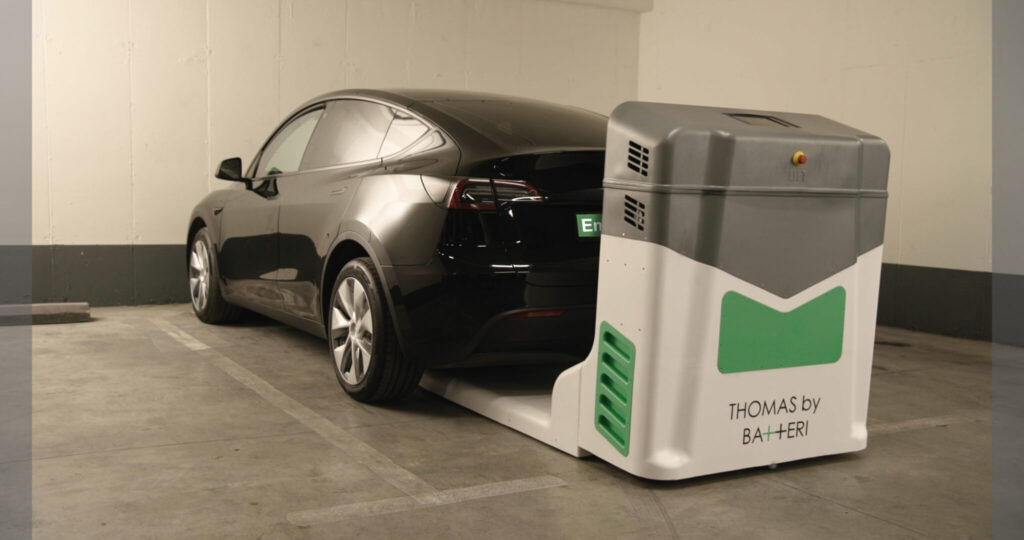
The EVOSS project, already mentioned for its energy capabilities, also helps to optimise spatial planning by integrating a robotic charger, named ‘Thomas’ from startup Batteri. This infrastructure can be deployed without altering parking layouts, allowing operators to maintain capacity.
Improving user experience and accessibility: Reserve & Charge and AgeVolt
Even when charging infrastructure is available, poor user experience can limit adoption. Drivers may struggle facing a lack of transparent pricing, incompatible systems or the inability to reserve charging spots. Accessibility is another concern, as not all users have equal access to private charging at home or work.
Startup Reserve & Charge, supported by the EIT Urban Mobility SME Market Expansion Open Call, designed a solution to improve the overall user journey by allowing drivers to book charging points in advance. By reducing uncertainty and ensures availability, EV owners can count on more reliable and convenient charging services. Additionally, AgeVolt’s user-friendly systems ensure a seamless interaction with charging hardware for parking operators themselves. Together, these solutions create a more inclusive and reliable charging ecosystem, encouraging broader adoption of electric vehicles.
Navigating regulatory and permitting hurdles with the EIT Urban Mobility ecosystem
Navigating the complex regulatory landscape can be one of the most daunting challenges of deploying EV charging infrastructure. Permitting processes vary widely between regions, and compliance with safety, energy and urban planning regulations can slow projects’ implementation. For parking operators, this adds uncertainty and administrative burden.
The broader ecosystem of experts, researchers, EU institutions, startups, and industry leaders fostered by organisations like EIT Urban Mobility provides valuable support in overcoming these challenges. Through knowledge-sharing platforms like Mobility Innovators and open call opportunities like the SME Market Expansion Call and Rapid Applications for Transport, the ecosystem connects stakeholders with technology providers, policy experts and funding opportunities. By facilitating collaboration and knowledge sharing, it helps streamline regulatory processes and accelerates deployment. Operators have the opportunity to benefit from best practices, pilot programmes and co-funded projects that can reduce both risk and complexity.
Overcoming challenges for future-proof operations
While challenges such as high upfront costs, grid limitations, space constraints, user experience issues and regulatory hurdles are real, they are increasingly being addressed by innovative solutions and collaborative ecosystems. By embracing these tools and partnerships, parking operators can move beyond simply providing spaces for vehicles to offer integrated mobility services that meet the needs of a rapidly evolving market.
In doing so, parking operators not only contribute to the global push toward net-zero emissions but also position themselves at the forefront of a new mobility landscape. In acting early and strategically those who innovate will be best placed to capture the economic and environmental benefits of this transition.