Putting autonomy on track to unlock rail’s full potential
Rail sits at the heart of Europe’s sustainable mobility ambitions. It is the backbone of cross-border connectivity and a cornerstone of transport systems decarbonisation strategies, as it is a mode uniquely positioned to enhance territorial cohesion and prosperity as cities and regions seek alternatives to road and air travel. Yet despite strong policy support, rail services across Europe face a set of structural constraints such as shortages of qualified train drivers, the very high upfront and ongoing costs of maintaining and upgrading rail infrastructure, and rigid, nationally fragmented capacity management and timetabling practicesthat make it difficult to add more trains where and when they are needed.
Futurail provides a strategic lever to alleviate these constraints by bringing certified, safety-first autonomy to train operations. Through an autonomy stack that combines advanced sensors (radar, lidar and cameras) with AI-based perception and decision-making, supported by hardware solutions adapted for both new and existing fleets, the company enables operators to run more frequent, reliable, cost-effective and low-carbon services. By strengthening rail, Futurail directly supports EIT Urban Mobility’s mission to accelerate the transition towards more sustainable mobility systems.
Highlights of why we invested in Futurail
- Addressing a key capacity constraint in rail: Futurail technology tackles one of the key barriers to strengthening rail services, namely, the shortages of qualified train drivers, by offering certified automation that supports higher service frequency and reliability across passenger and freight rail.
- Certified autonomy built for safety-critical rail environments: Futurail develops autonomy solutions aligned with Europe’s rigorous rail safety and certification frameworks, ensuring that automation can be deployed in real operational contexts rather than remaining limited to experimental pilots.
- Deployable across diverse rail contexts: Futurail’s autonomy stack can be integrated into new trains or retrofitted onto existing fleets, supporting deployment from depot operations and mainline services to branch lines.
- Improving the viability of secondary and regional routes: By reducing constraints linked to driver availability, that can be particularly critical in maintaining services in lower-density territories, certified autonomy can support more efficient operations on secondary lines and regional routes, strengthening regional connectivity and territorial cohesion.
- Aligned with EU rail connectivity and cohesion objectives: By strengthening rail’s capacity and reliability, Futurail supports the role of rail as the backbone of the TEN-T network, reinforcing EU cohesion and modal shift objectives of the Green Deal.
Investing in Futurail reflects EIT Urban Mobility’s understanding that certified, safety-first automation is essential to strengthen Europe’s rail system at scale. As Johannes Kirschner, Investment & Portfolio Manager at EIT Urban Mobility, highlighted:
“Futurail reflects the kind of deep‑tech innovation we aim to support at EIT Urban Mobility – technology designed to catalyse system‑wide change and advance the transition toward sustainable transport. Rail is central to Europe’s economic resilience and climate ambitions, and increasingly vital worldwide as cities and regions strive for sustainable, high‑capacity mobility. Futurail’s approach brings advanced autonomy and intelligence to an industry that has underpinned mobility for two centuries, strengthening its ability to serve future demands. By improving capacity, reliability, and operational efficiency without compromising safety, their technology helps position rail as a backbone of sustainable mobility – across Europe and well beyond. This ambition is driven by a uniquely complementary team whose combined expertise positions them well to deliver lasting, system‑level change in one of the world’s most complex industries.”
Futurail’s technological readiness and strong market position are underscored by its recent €7.5 million funding round, enabling the company to scale its safety-certified autonomy stack from controlled pilot environments to broader deployment across passenger and freight rail operations.
Deep-tech autonomy built for rail’s operational reality
Founded in 2023 by Alex Haag, Patrick Dendorfer and Maximilian Schöffer, Futurail operates from Strasbourg and Munich, delivering self-driving train technology through integrated software and hardware solutions for both new and existing rail fleets. The company’s rapid progress has earned recognition as one of the Top 10 Clean Mobility Startups in Europe (2025) by the European Startup Prize for Mobility, reflecting its potential to transform rail operations through certified autonomy.

Scalable solutions across rail contexts
Futurail’s technology is designed for flexibility across different operational environments. With use cases covering assisted autonomy, depot operations, branch line autonomy, and main line autonomy, Futurail delivers scalable solutions that address diverse operational needs, from controlled environments to complex, high-frequency networks. This adaptability is enabled by two core product offerings:
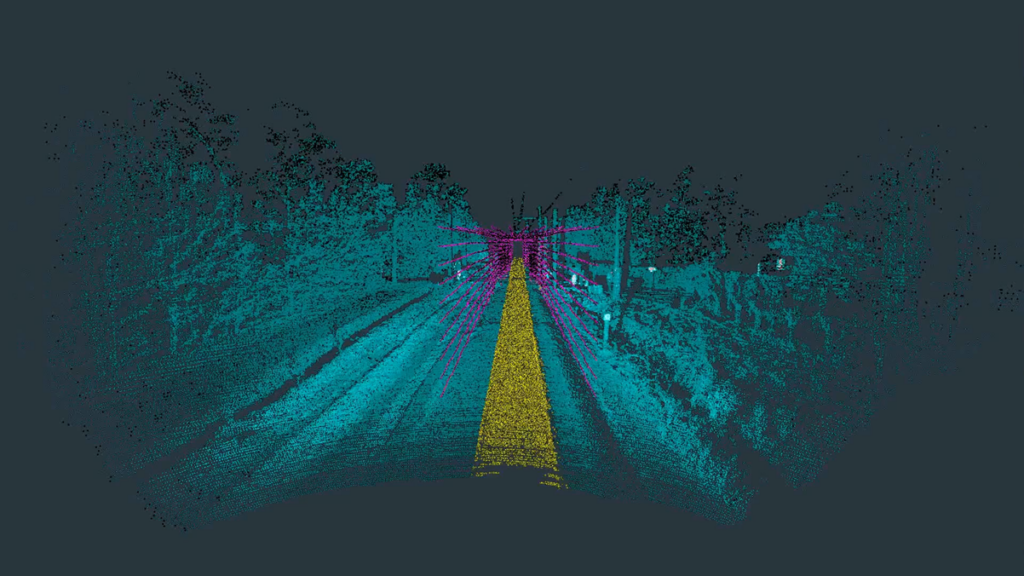
- FUTURAIL Driver: A comprehensive autonomy software stack that enables fully autonomous train operations, including long-range obstacle detection (up to 400m), high-precision localization (up to 10cm accuracy), and intelligent train control encompassing speed management, emergency braking, and remote operations capabilities, operational in all weather conditions at speeds up to 160km/h.
- FUTURAIL Integrate: A hardware integration solution encompassing sensor selection, system design, data storage, and mechanical integration for new or existing trains, delivering an EN50155-certified multi-sensor system tailored for assisted or fully autonomous operations.
A timely solution for Europe’s rail ambitions
Europe is doubling down on rail. With ambitious targets to expand the Trans-European Transport Network (TEN-T), including significant a plan to accelerate the development of high-speed rail corridors, substantial investment flowing into cross-border connectivity, and high-level policy such as the Green Deal explicitly promoting modal shift, rail is positioned as the backbone of sustainable, EU-wide mobility.
Yet infrastructure investment alone cannot unlock rail’s full potential. Operational constraints, like driver shortages, limit the service frequency and reliability needed to make rail a truly competitive and attractive mode of transport for both passengers and freight. This is where autonomy becomes a strategic enabler. Solutions like Futurail’s can support more consistent operations and higher service levels with existing assets, while being developed within Europe’s rigorous rail safety and certification requirements.
Looking ahead
EIT Urban Mobility recognises Futurail as a strategic enabler of rail system performance, helping operators deliver more frequent and reliable services within a network shaped by high fixed costs, constrained capacity, and long planning cycles. As the EU works to expand cross-border and regional rail connectivity, solutions that unlock capacity and boost efficiency without compromising safety will be essential.
We look forward to supporting Futurail as it advances certified autonomy from pilots to scaled deployment, helping rail expand its reach and deliver a more resilient, lower-carbon transport network.
Do you want to know more about Futurail mission and its solutions?
Visit the company website and LinkedIn.
This article is part of Why we invested? Series presenting EIT Urban Mobility equity portfolio.