As cities across Europe adopt stringent air quality regulations and set net-zero emissions targets, hydrogen mobility is emerging as a crucial pillar for decarbonising intensive transport modes. The Auvergne-Rhône-Alpes (AURA) region in France is one of the areas at the forefront of this movement, where the deployment of hydrogen infrastructure is transforming mobility planning.
“Hydrogen can help address two significant challenges of transport, which are A: air pollution, and B: climate change,” said Laurence Grand-Clement, Co-founder and CEO of Hyggle. “Poor air quality generally leads to premature birth, respiratory diseases, cancer… so cities are implementing or expanding low-emission zones (LEZs) or ultra-low-emission zones (ULEZs) to reduce pollution from vehicles.”
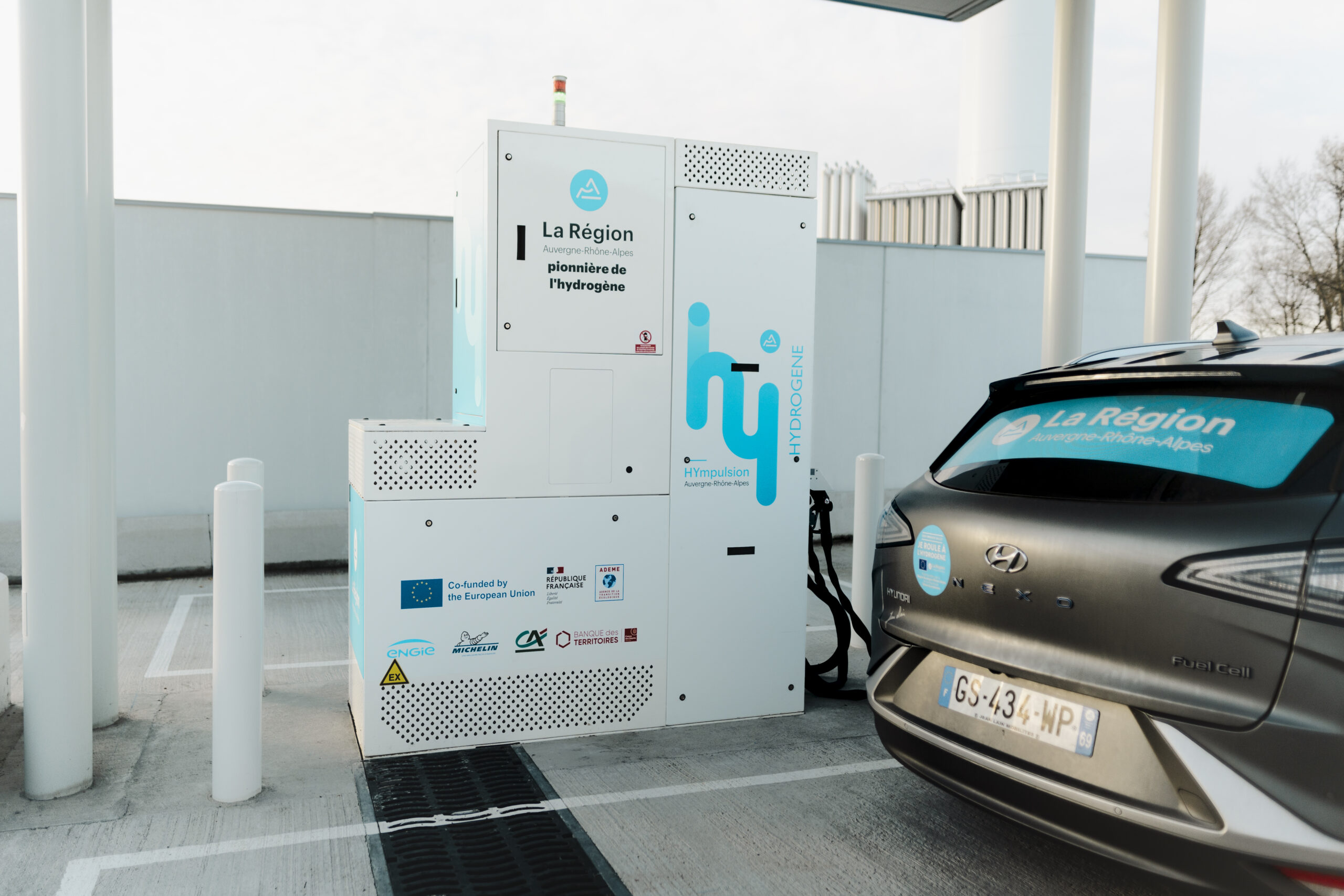
Hympulsion, a public-private venture between the Auvergne-Rhône-Alpes Region, Engie, Michelin, CDC and Crédit Agricole, is spearheading the regional rollout through its Zero Emission Valley (ZEV) initiative. The project aimed to establish a complete hydrogen ecosystem — including production, transport, and refuelling — enabling zero-emission vehicle operations at scale.
Infrastructure growth demands smarter logistics
Initially, the ZEV initiative envisioned decentralised hydrogen production co-located with refuelling stations. But as the project matured, this model proved unsustainable. Thus, between 2020 and 2024, Hympulsion transitioned to a centralised production strategy, creating logistical complexity.
“The model proposed by Hympulsion evolved between 2020 and 2024, from a project where the production units were at the distribution stations, to a centralised project with large production units and delocalised distribution stations,” explained Jean-Christophe Beaumont, Executive Director of Hympulsion. “The main challenge was to transport the hydrogen molecule from the production unit to the distribution centres, to ensure logistics with security, reliability, and optimisation.”
This shift required a new approach to managing hydrogen delivery across a growing network of stations — an approach that anticipates demand, schedules deliveries, and optimises resource use.
The creation of a logistics algorithm built for scale
Hyggle responded to this challenge with a software-driven logistics optimisation tool designed for hydrogen mobility networks. Their industrial IT platform integrates data acquisition and algorithmic scheduling to manage the flow of mobile hydrogen storage between centralised production units and decentralised refuelling sites.
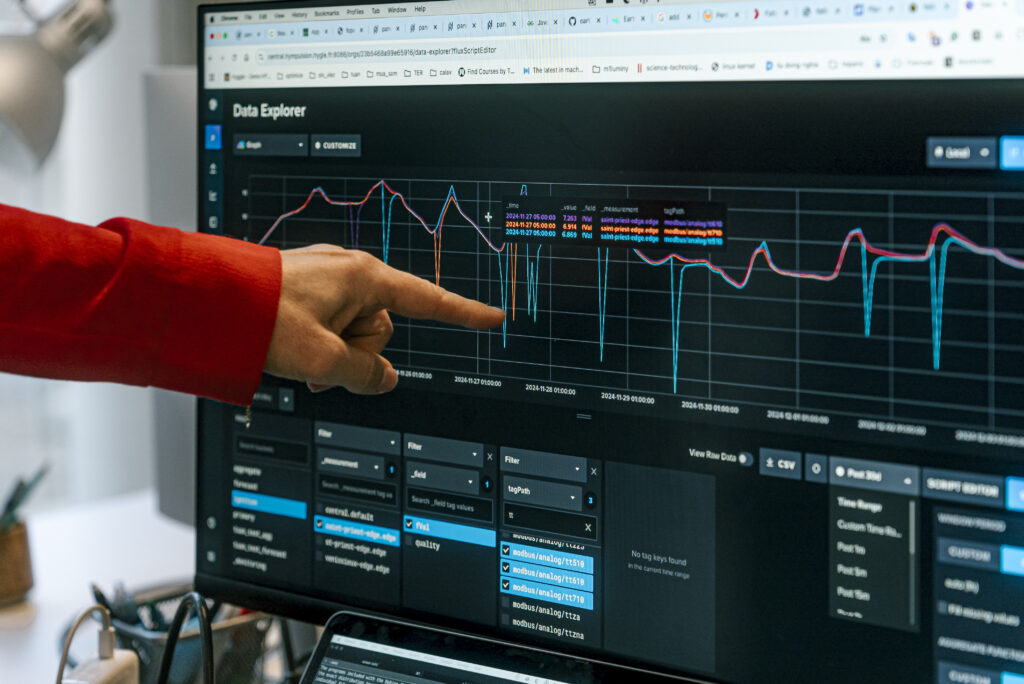
“We built an industrial IT solution that is meant for hydrogen infrastructure operators to manage their infrastructure, maximising green content at minimum cost,” said Grand-Clement.
The project, supported by EIT Urban Mobility’s SME Market Expansion Call, enabled Hyggle to move beyond lab testing and validate the solution in a live urban setting. Hympulsion’s real-world operations provided the testbed for this transition.
“We have been working on an algorithm that helps plan, schedule, how you organise the rotation of the mobile storages,” Grand-Clement explained.
Operational efficiency with urban scalability
The pilot yielded measurable results. By moving from reactive replenishment based on low thresholds to predictive scheduling, Hympulsion would be able to significantly reduce both logistics costs and gaps in service coverage. “We proved that we can achieve up to 40% gain in cost and 40% gain in coverage of the demand when we move away from a simplistic approach and adopting an optimised algorithm,” said Grand-Clement. This holds true when the network scales and demand expands.
“The Hyggle project makes it possible to set up an algorithm with logistical efficiency to optimise and ensure the transport of trailers between the mother stations and the daughter stations,” Beaumont confirmed. “And this project was born thanks to the European Union and the EIT Urban Mobility projects.”
Importantly, the partnership helped Hympulsion prepare for future demand growth, not just in Auvergne-Rhône-Alpes, but in regions across Europe.
“The region Auvergne-Rhône-Alpes is a pioneering region in France, even in Europe,” said Beaumont. “The model is also developing in the Parisian regions, other neighbouring regions, and other territories of Europe.”
The collaboration between Hyggle and Hympulsion marks a critical milestone in making hydrogen mobility viable at scale. By embedding predictive logistics and data intelligence into infrastructure operations, the project has not only increased efficiency but also ensured resilience as demand grows.
As Europe accelerates towards a decarbonised transport future, such solutions will be central to replicating success in other urban and regional contexts. Hyggle and Hympulsion’s work demonstrates how innovation rooted in real-world needs can unlock the full potential of hydrogen as a pillar of sustainable mobility.