For residents of European cities, the negative side effects of the prevalence of traditional internal-combustion engine vehicles are a daily reality. Whether it’s living next to constant traffic noise, arriving late to work after being stuck in a long commute or receiving mobile push notifications about high air pollution levels, the growing challenges posed by fossil-fuel-consuming cars affect the health and wellbeing of millions.
The statistics reflect the extent of this issue: the European Commission has recognised that around one quarter of the EU’s total CO₂ emissions come from transport, with air pollution cited as Europe’s largest environmental health risk. Thus, it is no surprise that critical pressure is being put on the European transport sector to decarbonise and electrify.
Despite the numerous compelling reasons to move towards climate neutrality, change within the transport sector has been slow. The process for both individuals and companies to switch to electric vehicles is complex, halting a wider societal shift. For residents, it’s not easy to know how to choose the right electric vehicle (EV) model, understand how charging infrastructure works or to get past the jargon of EV technology. Companies encounter all of these challenges, and more, when tackling fleet management, addressing employee resistance, and implementing at scale.
Simplifying the transition
French startup Beev saw these challenges and realised that multiple solutions were needed to cover the complexities of transitioning to e-vehicles. Thus, the startup team developed a suite of services, all powered by a digital platform, that aim to make the transition to electric mobility seamless.
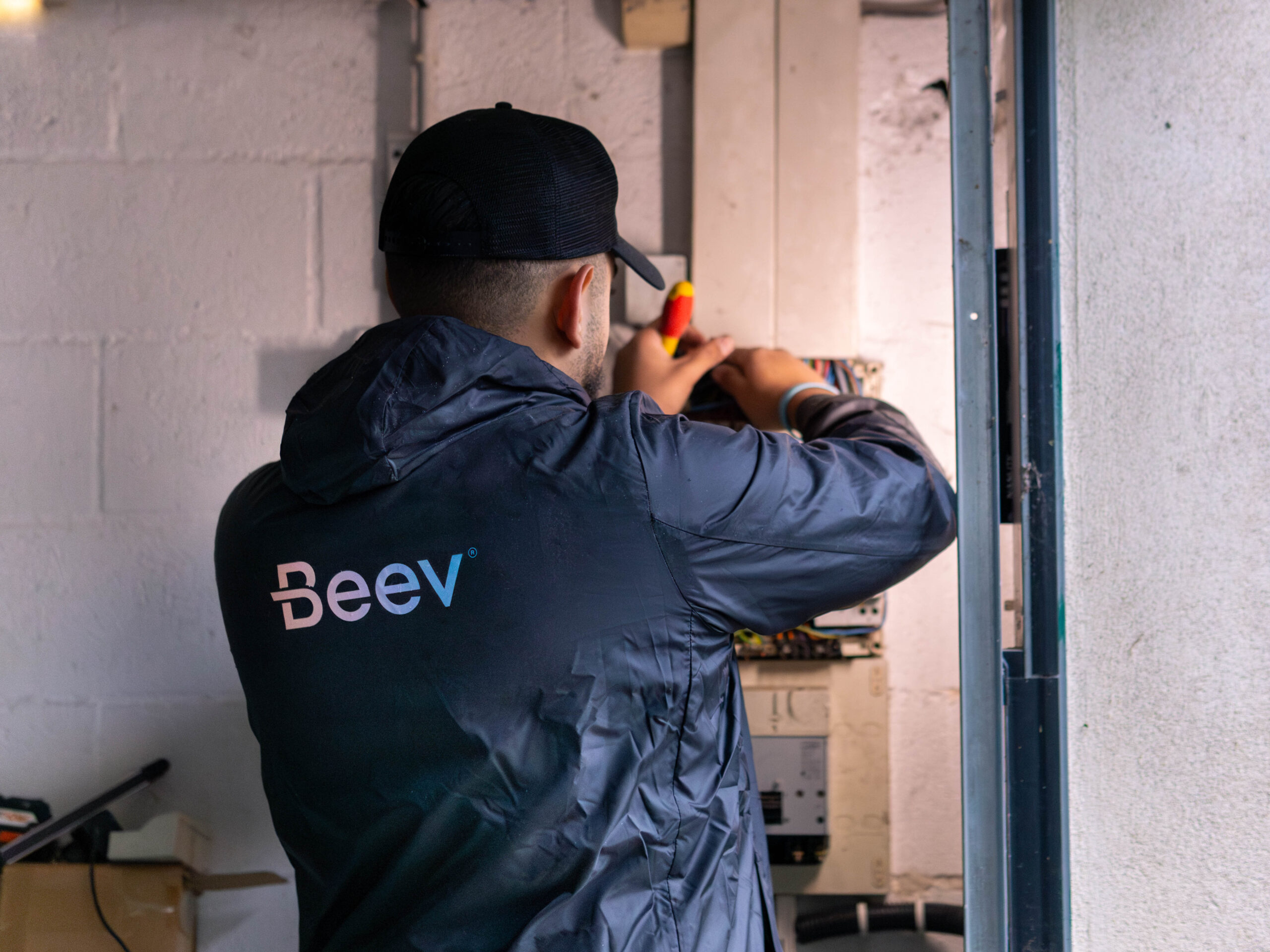
Their cutting-edge platform simplifies the process of choosing the right e-vehicle, with tailored solutions for self-employed professionals, small businesses, large companies and local authorities. Backed by a trusted partner network and an asset-light model, the platform compares all offers on the market and offers advantageous prices. Furthermore, Beev’s brokerage service handles the complexities of leasing and includes the option to install charging terminals at home.
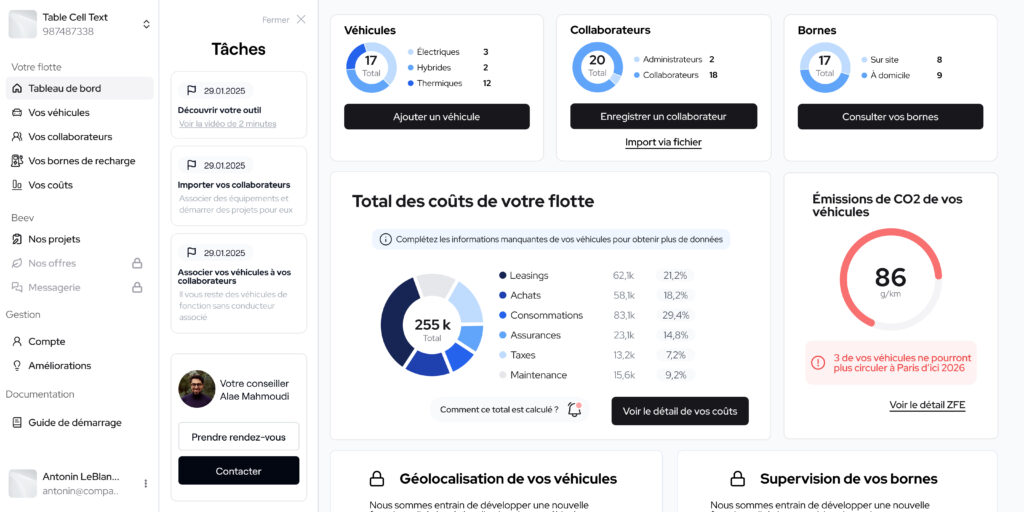
Additionally, for companies and local governments, Beev offers an AI-powered, all-in-one vehicle and terminal control solution. This solution includes real-time tracking of vehicle usage and energy consumption, total cost of ownership monitoring, expertise and more. While these features help businesses and governments manage their fleets, they are also essential for reporting on carbon emissions to be complaint with ESG reporting and the Corporate Sustainability Reporting Directive.
Sparking an e-vehicle revolution
The results speak for themselves; to date, Beev has helped to save 188,000 tonnes of CO₂, a number equivalent to the average annual emissions of over 21,000 people. Given that road transport-related air pollution costs the EU up to €80 billion annually (European Public Health Alliance), cutting CO₂ emissions at this scale is a win for both people and the environment.
In addition to the environmental benefits, Beev is also capitalising upon a multi-billion-euro market opportunity. According to data compiled by Statista, the European e-vehicle market is projected to reach $334 billion (roughly €288 billion) by 2030. A recent study by mm customer strategy and Volkswagen found that over half of all Europeans would like to own an electric car, and Beev’s data shows that private companies account for 60% of new vehicle purchases.
Backed by EIT Urban Mobility
Beev’s success has come with support from EIT Urban Mobility, pushing the team’s development to the next level when they needed it most.
Firstly, the startup qualified for the Supernovas Rocket-up programme in 2022, a three-to-six-month internationalisation programme designed to help women-led tech startups. Led by female COO Chanez Djoudi, the startup was given access to mentoring, peer learning, business sessions and targeted market entry support. Djoudi, a founding member of Beev, explained: “I couldn’t recommend the programme enough. It gave us the opportunity to be introduced to relevant experts and to start putting together a strategy to go abroad.”
In the same year, Beev was selected to join Moove Lab, a leading French accelerator for mobility startups, co-founded by Via ID and EIT Urban Mobility. Located at Station F, the largest startup campus in Paris, the programme offered Beev expert mentorship and opportunities to partner with mobility giants, such as BMW Group France, Bridgestone and Cofidis.
EIT Urban Mobility’s support has extended into financial investment. Keren Beit-Cohen, Head of Strategic Alliances at EIT Urban Mobility, explained “Beev is already showing a promising growth rate and is highly valued by its users. Its services clearly enable a faster transition to vehicle electrification. Operating in a growing market that we urgently need to support, Beev has a significant financial, social and environmental impact and we are proud to be part of its development.”
Beev has also become a certified B Corp. Obtaining this sustainability classification is no easy feat, signifying that the fast-growing startup meets the highest standards of performance, transparency and accountability, and underpinning their long-term commitment to a shared sustainable future.
A bright future
As one of the first digital platforms in Europe offering an integrated solution for both EV and charging station management, Beev is leading not only France’s, but also Europe’s, transition to e-vehicles.
In the next 10 years, Beev aims to have assisted every company across Europe, no matter their size, in the transition to electrify their fleet through both their digital platform and charging infrastructure. Furthermore, the team intends to begin offering second-life and reconditioned electric vehicles, extending their lifespan and making electric mobility accessible to more people in the near future.