It’s easy to take our cities for granted, as if homes, shops, roads, parks and workplaces just appeared out of thin air or have always existed. In reality, every neighbourhood has at some point been designed for a certain purpose, which may or may not still be relevant today. What may have worked decades ago could now, instead, divide communities. From busy roads that cut between public services to residential areas disconnected from green spaces, urban planning defines how city dwellers move around and come together.
Part of the reason for this is that local authorities often see the urban planning process as something to be handled by a small group of experts, while city transport is commonly framed as a functional A-to-B transition. Similarly, outdated research methods conducted by local governments in the past have directly or indirectly excluded overlooked groups and ignored the complexity of construction realities.
Hannah Hook, Assistant Professor of Sustainable Land Use and Transport Planning at Aalto University in Finland, understands the complexity of big picture of city planning and knows we can do better. Through her firsthand, educational and research experience, Hook has seen how urban sustainability and social justice are linked, and how inclusive planning can make cities better for everyone.
Hook’s research has found that urban mobility is not always just functional. However, people move around cities for a myriad reasons, including wellbeing (from walking for reflection, to cycling for pleasure, to being outdoors for social interaction) and that too often minority groups’ needs are not included in the city planning conversation. Focused on educating authorities on these concepts, Hook has developed a pioneering hands-on workshop activity that invites underrepresented residents to construct their ideal street spaces. The results simultaneously inform local governments of the importance of holistic-led planning and give a voice to diverse residents.
Building our cities together
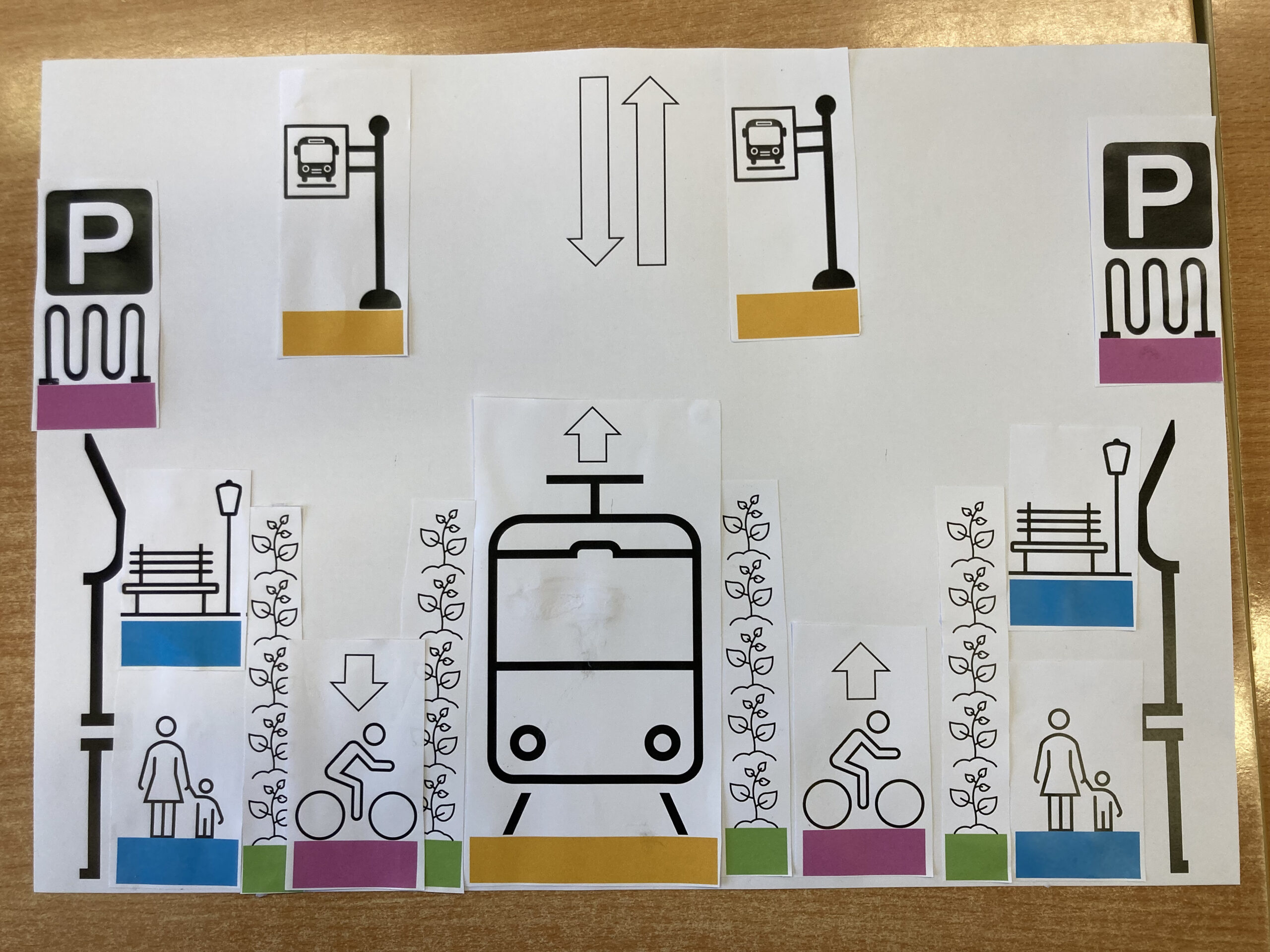
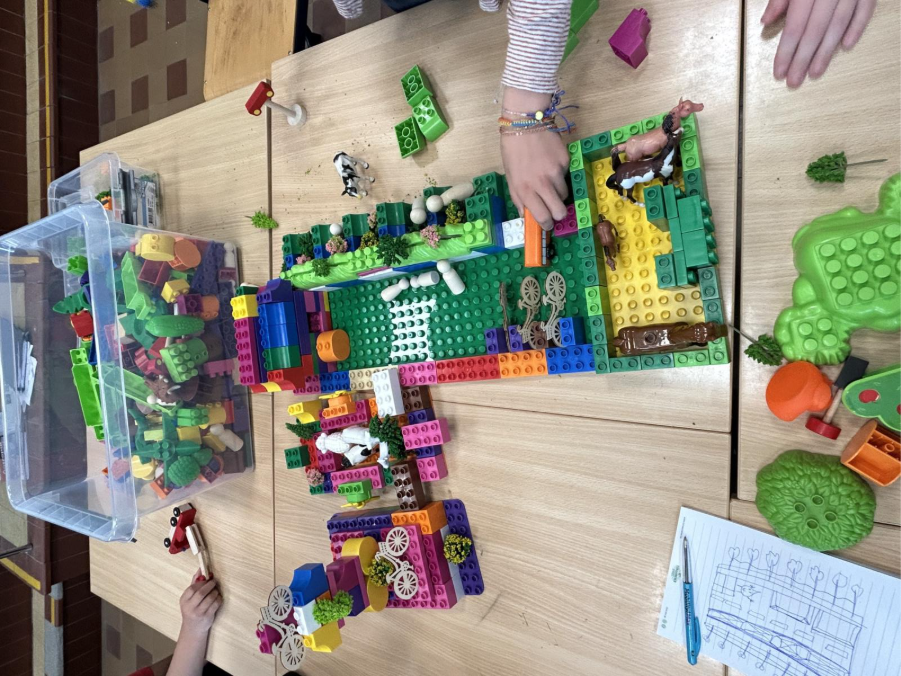
Hook developed her workshop activity through extensive literature review, participant feedback loops and guidance from the EIT Urban Mobility community. Using paper models or building blocks, participants are invited to physically construct their ideal street spaces (green areas, benches, bike and car lanes, etc.), while keeping in mind the real-life constraints of a certain area. Thinking beyond purely functional transport, the focus is shifted to holistic values like safety, comfort, autonomy and play, taking both collective and individual needs into consideration.
A standout feature of the workshop is its flexibility for use with different groups, in multiple contexts, allowing the collection of rich qualitative data. So far, the activity has been piloted with around 50 young people from marginalised backgrounds, alongside community organisation TAJO (Talentatelier voor Jongeren) in Belgium. The workshop will also soon incorporate tech-enabled mapping tools for adults, enabling further scalability across Europe.
Hook’s final goal is to provide an open-access workshop toolkit for use by municipalities, schools and advocacy groups across Europe, available online to increase accessibility. This digitalisation will allow multiple institutions to hear and engage with the voices of diverse groups, across any urban context.
Real-life impact
Hook’s research is already making waves. Within the EIT Community, the study has supported the 2023-2025 curriculum development for EIT Urban Mobility’s Inclusive Mobility Summer School. Similarly, among EIT Urban Mobility’s Doctoral Training Network, where PhD candidates connect with international peers, the workshop has informed qualitative research training. In wider circles, the research is also sparking discussions about how workshop tools can be used in hackathons, courses and public engagement across the EIT education and innovation ecosystem. The results have informed a Ghent University Doctoral School course on Inclusive Mobility[VC1] [CT2] [HH3] , educating the next generation of city planners. The study has also been included in the Journal of Urban Mobility[CT4] [HH5] , and has encouraged dialogue with local authorities on citizen engagement in planning.
The impact of Hook’s workshop, at such an early stage of her project, is just the beginning — it demonstrates how academic research can be translated into practical methods to support community learning, collaborative governance and innovation in practice.
Supporting, and supported by, EIT Urban Mobility
Hook’s academic and professional journeys have been supported and shaped by the EIT Urban Mobility ecosystem, almost from the very beginning. With undergraduate and graduate studies under her belt, Hook completed a PhD in Social and Economic Geography as part of the EIT Urban Mobility Doctoral Training Network (DTN), focusing her work on transport justice, accessibility and wellbeing.
From this first connection with EIT Urban Mobility, Hook has both given support to, and received support from, the EIT Urban Mobility community. She credits her city planning workshop as being made possible thanks to the peer exchange, mentorship and feedback from the EIT Urban Mobility DTN. Furthermore, Hannah’s role as Board Member of the EIT Urban Mobility Alumni Network has run in parallel to her postdoctoral work on wellbeing and travel behaviour at Ghent University in Belgium.
Hook explains: “Being part of the EIT Urban Mobility community has shaped who I am as a researcher and a changemaker, and I am proud to help grow that community for others. Through this project and beyond, I hope to show that social impact and academic excellence are not mutually exclusive.”
Building a sense of belonging
Hook aims to empower those often left out of planning decisions and inspire other early-career researchers to do the same. Her street planning workshop offers a practical way to engage often-overlooked residents (such as children, low-income communities, migrants, women or people with disabilities), ensuring their voices are included in decision-making. While the qualitative data generated from her study is valuable for spatial planners, it is the act of participation itself, through a hands-on, visual and collaborative activity, that fosters a sense of belonging. In doing so, Hook’s work demonstrates how inclusive design can help cities across Europe become fairer, healthier and more connected for everyone.