Greater Manchester made history recently as the first area to bring bus services back under local control – the first region to do so in 40 years.
The pioneering Bee Network is the first truly integrated public transport system outside London and is Greater Manchester’s vision for a joined up, integrated system – making it easier for people to get around by bus, tram, train, walking, wheeling or cycling. All local bus and tram services are now part of the Bee Network, with local rail joining in phases from December 2026.
Amid rapid growth and historic reform in its public transport landscape, Greater Manchester wanted to find innovative ways to improve passenger journeys, making Bee Network services more reliable and better joined up than the services they replaced. That called for a better understanding of real-world passenger behaviours and network disruptions, as well as how technology could be used to enable better decision making.
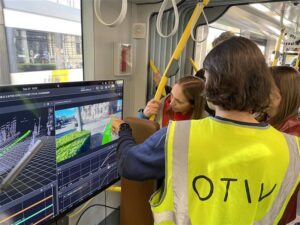
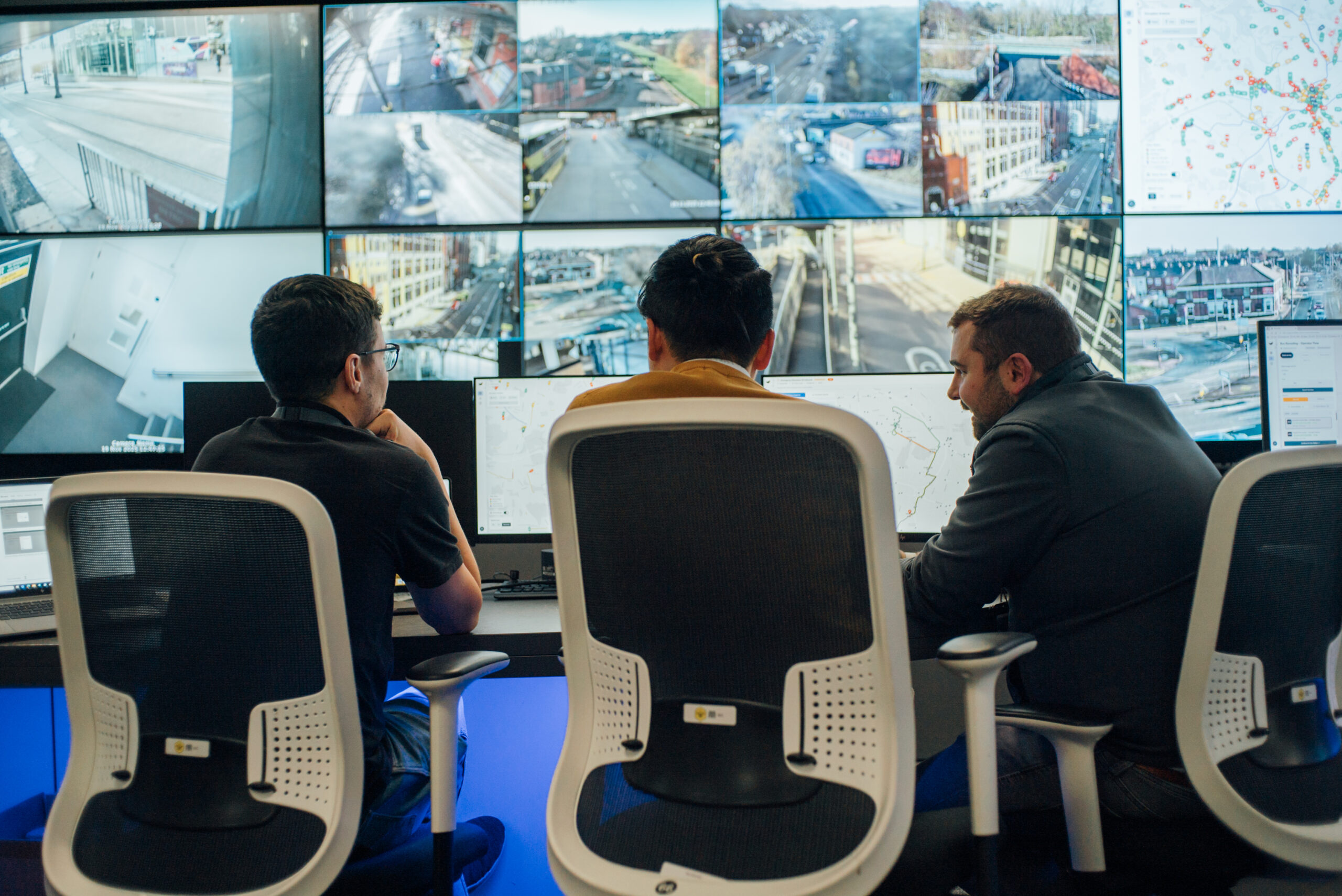
To help meet these challenges, Transport for Greater Manchester (TfGM) piloted GreenRipple, a multimodal digital twin (a digital version of a system that uses data to reflect its real-world counterpart’s behavior, performance and conditions) for monitoring and reducing travel disruption. Developed by London-based startup Moonbility and supported by EIT Urban Mobility’s RAPTOR programme, the platform enables more efficient responses to disruption.
Ben Cookson, Senior Control Centre Manager at TfGM, said: “Moonbility creates a multimodal interface all on one system, allowing us to very quickly analyse the impact on buses, trams and general road traffic in far greater detail – which is massively impactful.”
Making public transport viable
Public transport and connectivity are vital for this fast-growing region of around three million residents. With a fleet of some 1,600 buses running across 577 routes, the network is responsible for more than 160 million trips per year.
With a new, joined up transport network, TfGM wanted to minimise any disruption to passenger journeys, making sure the Bee Network became a one-stop-shop for all local journeys.
“In the very short period of time that we’ve had access to the Moonbility platform, we’ve been able to really quickly identify disruption hotspots that are affecting multiple modes and it allows us to respond even faster.” Cookson reported
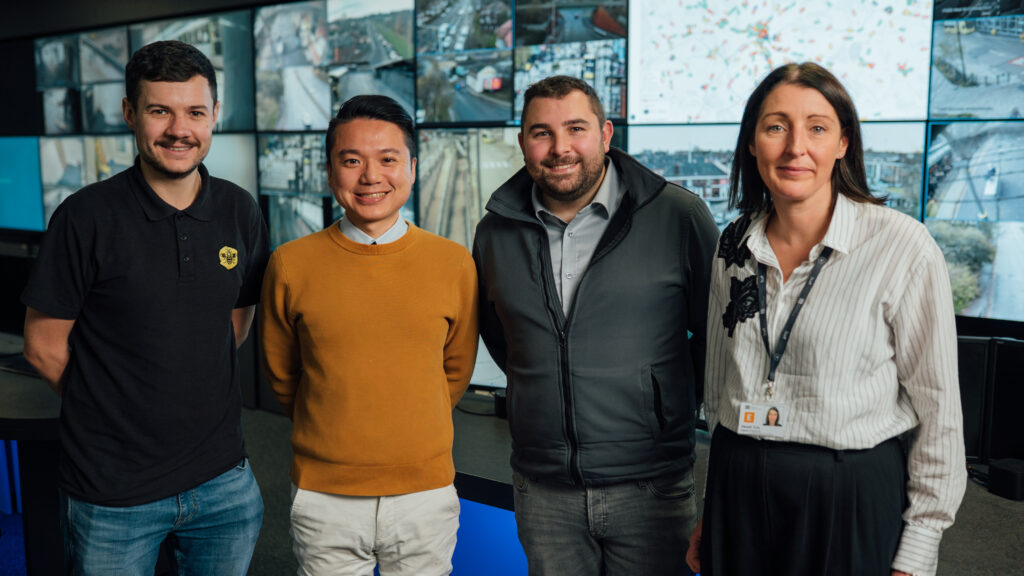
For TfGM, taking part in EIT Urban Mobility’s RAPTOR programme was also about understanding what innovations were available that could support the delivery and operation of this expanding network.
“We wanted to build a wider partnership with EIT Urban Mobility and the SMEs that it supports to give them a shopfront to showcase to the rest of the world what technology and culture and behaviour change can achieve,” TfGM Senior Innovation Officer Sam Li shared.
Cutting through noise
With increasingly complex transport networks becoming a feature in modern, everyday life, EIT Urban Mobility identified an innovative solution through the use of data, helping operators cut through the noise and reduce mental load on their staff.
“In the control room today, teams are dealing with information sourced from separate systems. It is very challenging for any human being to deal with them in an efficient way,” explained Moonbility Co-Founder and CEO Andre Wang.
“The controllers in the control room still need to rely on a lot of manual judgments and switching between screens to understand what’s going on. That leads to slower decisions and inconsistent responses,” he added. By improving decision making in this way, Moonbility’s platform directly benefits passengers.
If operators like TfGM need to close a road or divert a bus, the platform can simulate in a few clicks which trips, services or passengers will be impacted, including the potential impact on revenue. It can highlight where pockets of congestion are, for example, allowing TfGM to respond faster and reduce delays in the network.
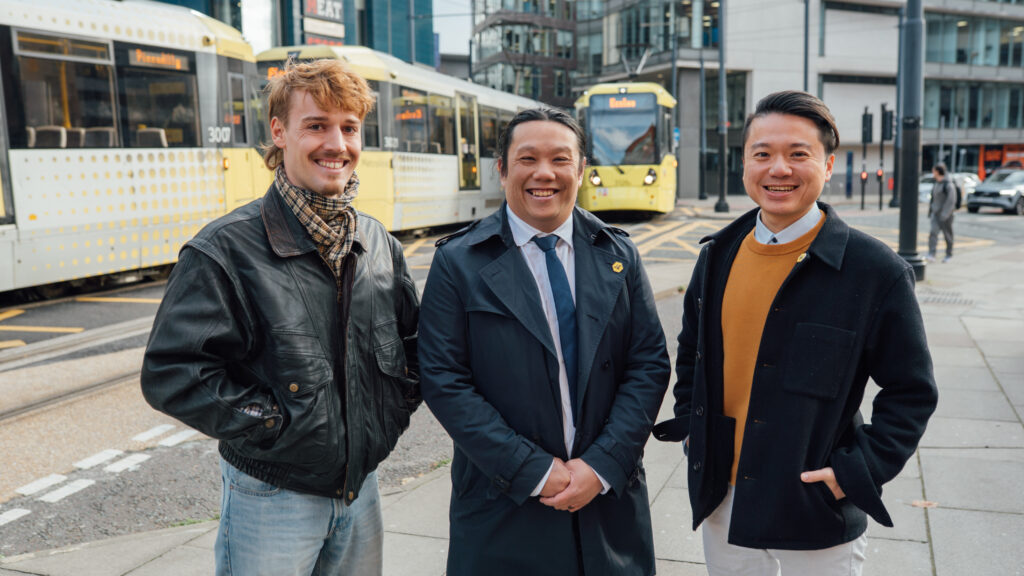
“That insight allows our operational colleagues in the control room to change bus route timings, to provide information to the public, to better move around during disruption, and spread out the demand across our city region,” Li noted.
Sustainable shift
“The future for public transport in Greater Manchester is massively exciting,” Cookson emphasised.
After bringing buses back into public ownership, TfGM is now working towards integrating trains into the Bee Network to create a true multimodal transport system, making it easier to pay with contactless tap and go now available across buses and trams.
“Public transport is a massive enabler for growth across the city region and enables commuters and residents to get where they need to go across any mode of transport seamlessly. Reducing those delays and enabling connectivity across multiple modes is key to making this a success,” Cookson pointed out.
“EIT Urban Mobility has allowed us to test different solutions without having to go and procure a big system that we would be beholden to. By allowing us to test different solutions means that we can be more agile, so that we are best prepared in the disruption management space.”