While trams might have a decades-long lifespan, the flip side of their impressive longevity is that fleets acquired thirty years ago may no longer boast state-of-the-art tech. As a result, many cities are operating trams that lag behind today’s technological possibilities.
OTIV.TWO supports cities and operators in modernising their fleets up to date with its advanced driver assistance system (ADAS). It uses AI and machine learning to help tram drivers avoid accidents, with the potential to cut accidents by as much as 20%.
Delivered through the ARISE project, the system proved its value in recent pilots in Antwerp, Belgium; Lisbon, Portugal; and Zaragoza, Spain; supported by EIT Urban Mobility.
“There is strong conviction within De Lijn that this system is effective. It provides valuable support to drivers by increasing their level of alertness and, as a result, contributes to a reduction in the number of accidents,” said Johan Clé, Expert in Vehicle Management and Innovation with Flemish public bus and tram operator De Lijn.
“We organised a press event which resulted in nationwide media coverage across radio, television and print media. This level of attention clearly demonstrates the societal relevance and importance of this topic,” Clé highlighted.
Shared benefits
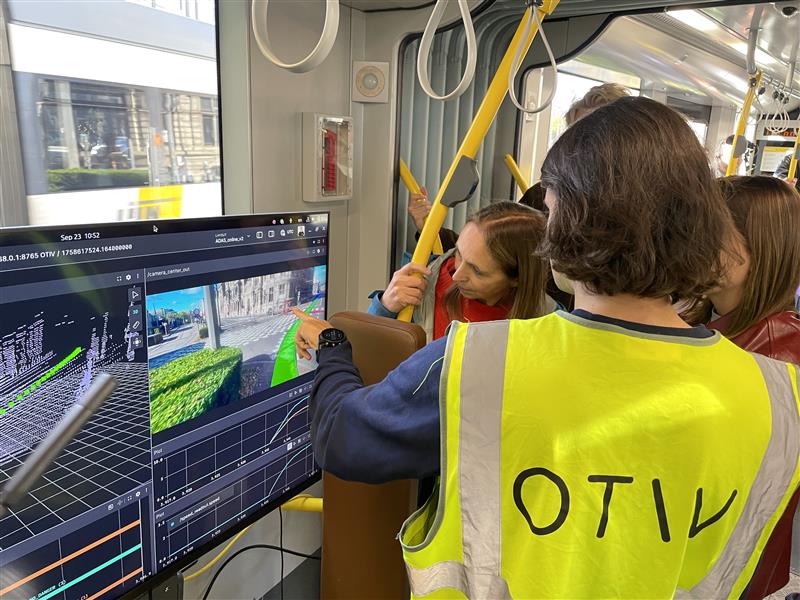
OTIV.TWO works through a combination of LiDAR, a computer unit, cameras and connectivity modules, which perceive the vehicle’s immediate surroundings in real time. A driver machine interface (DMI) then provides the clear and timely alerts, enabling drivers to respond if a hazard appears in front of the tram.
As a retrofit-friendly system OTIV.TWO allows transport operators to upgrade their existing fleets without digging deep for heavy capital investment in brand new vehicles.
On a human level, helping drivers avoid accidents means avoiding psychological and health impacts accidents can have. Fewer accidents also mean fewer staff absences, which in turn leads to fewer service interruptions for passengers.
“A collision between a tram and a pedestrian or cyclist can result in severe injuries and considerable emotional stress. Each accident also places a heavy mental burden on our drivers. Even when they are not at fault, such incidents can lead to feelings of guilt and often result in several days of sick leave,” Clé shared.
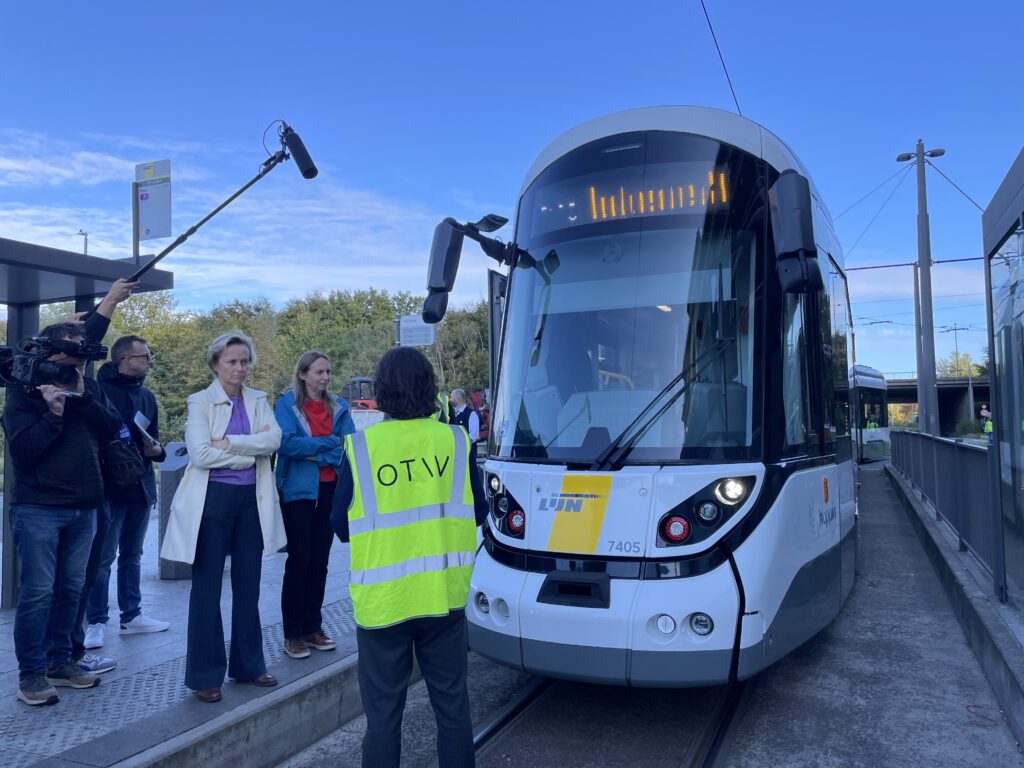
Tram drivers were therefore a central part of the OTIV.TWO pilot. In Zaragoza, for instance, the worker’s council and unions were involved, and OTIV took driver feedback as a “leading principle” throughout the system’s development.
Drivers’ subjective feedback on using OTIV.TWO was collected through questionnaires and validated through objective measurements of brain activity and palm sweat levels. The results were overwhelmingly positive. In the Lisbon pilot, nearly 90% of drivers gave the system high ratings.
By making trams safer and more efficient, the system can contribute to improved passenger satisfaction and increased public transport adoption. That shift can support cities to make their urban mobility systems more sustainable, while also improving residents’ health and quality of life by cutting road congestion and the associated CO2 emissions.
“The bigger the trams’ share of riders, the less road you need for cars, and then eventually you can return that public space to what it’s originally intended for, for residents to enjoy,” underlined OTIV’s Business Development and Partnership Manager Luuk Kessels.
European cooperation
Being able to test the device across different cities in different parts of Europe was a key benefit of the pilot’s broad geographic scope.
“Different operators involved in the project contributed to the validation, bringing diverse scenarios and diverse contexts in terms of geography, culture, type of roads, environment, et cetera,” shared Alex Bojeri, Innovation Lifecycle Officer with EIT Urban Mobility.
The strength and scope of the consortium also fostered a platform for peer learning, with members able to share best practices, what worked, or did not work, and how best to implement the solution in their own cities.
“As many operators face similar issues, sharing knowledge and experience can contribute to faster and more effective solutions,” Clé said.
“I think what made this consortium so strong was that everybody had a really positive can-do mindset. The high-level objectives were explicitly accepted by everybody from the beginning onwards. There was continuous support between all parties,” Kessels highlighted.
Drivers involved in the pilot shared with De Lijn that, going forward, they would like to take the system even further by incorporating an automatic braking function.
“This project has shown that the future is coming into reality and it’s closer than we expect. This also showed the operators how much technologies like this can support their operations and tackle their challenges. And that these technologies are ready, in Europe, from European companies,” Bojeri stressed.
In early 2026 a follow-on project, TRACE, was announced to respond directly to growing safety challenges, operational inefficiencies, and staff shortages faced by public transport operators (PTOs) as cities become denser and more multimodal. The TRACE project will conduct pilots in Ghent, Belgium; Karlsruhe, Germany; and Rotterdam, the Netherlands. The pilot will involve 16 trams and more than 400,000 km of operational data. From testing, the project will refine predictive algorithms, ensure compliance with rail standards, and demonstrate measurable performance improvements in relation to obstacle detection accuracy, journey time and collisions.