
Urban logistics keeps cities functioning, moving everything from food and construction materials to retail goods, parcels and essential services. However, freight also contributes significantly to transport emissions, air pollution, noise and pressure on limited urban space. As cities pursue climate neutrality, the challenge is to decarbonise the wider logistics system while keeping essential goods and services moving efficiently.
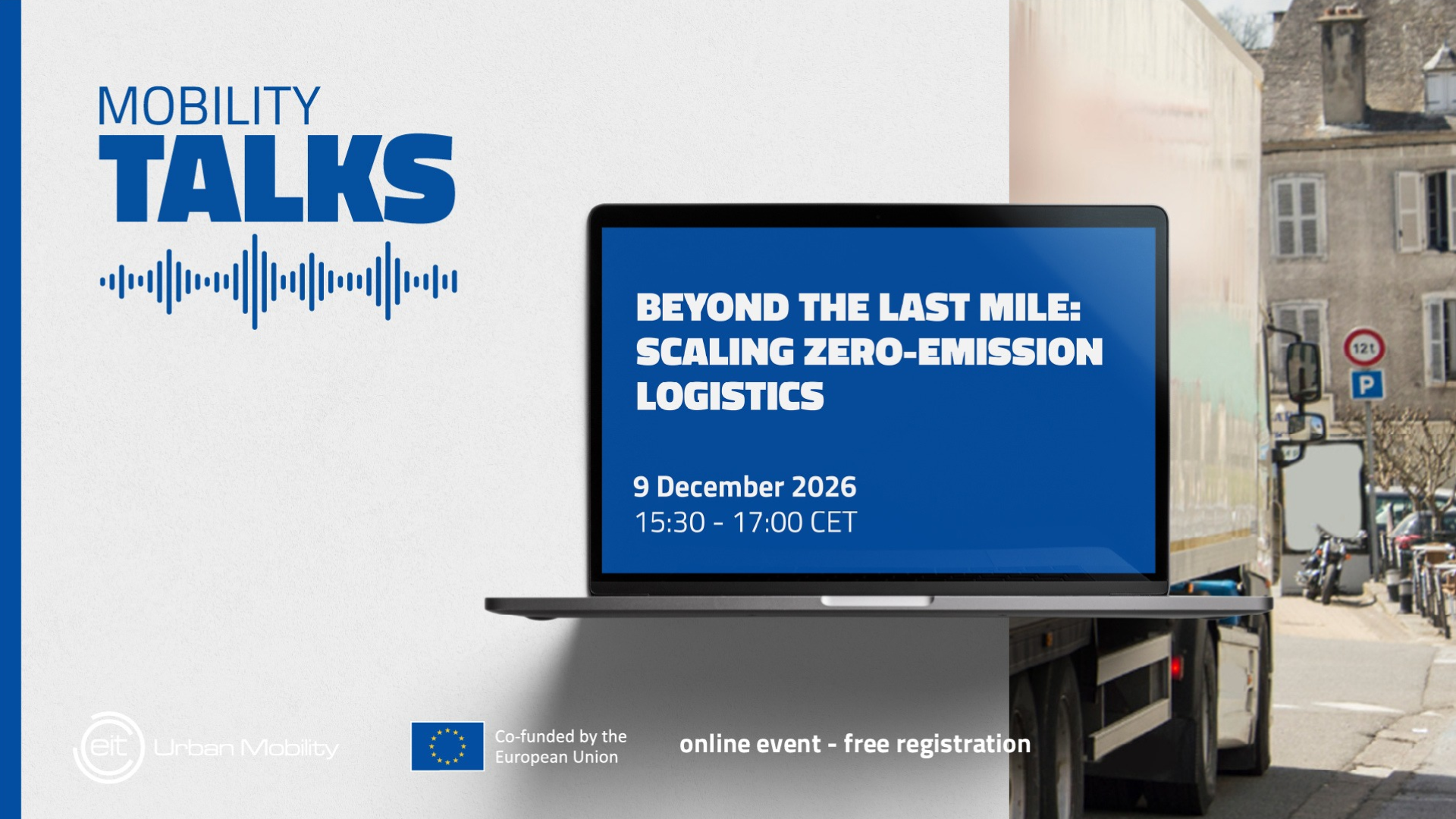
Mobility Talks episode 36 brings together ALICE, Métropole du Grand Paris, NexDash and Embuild to explore how zero-emission logistics can move beyond individual solutions and deployments towards systemic scale.
While discussions often focus on last-mile deliveries, the transition must also address other freight segments, including construction, food, waste and general freight, as well as the wider supply chains connecting cities with logistics hubs, ports and freight corridors.
The discussion will explore emerging solutions, from electric vans and heavy-duty vehicles to cargo bikes, consolidation centres and shared logistics infrastructure. It will also address the main barriers to wider deployment: making new business models commercially viable, ensuring access to reliable charging infrastructure and managing the demand for urban space.
What is already working in practice, where do the main barriers remain, and what can cities, operators, industry and policymakers at local, national and EU level do to accelerate deployment? These questions will guide the discussion towards a cleaner, more efficient and resilient urban logistics system.