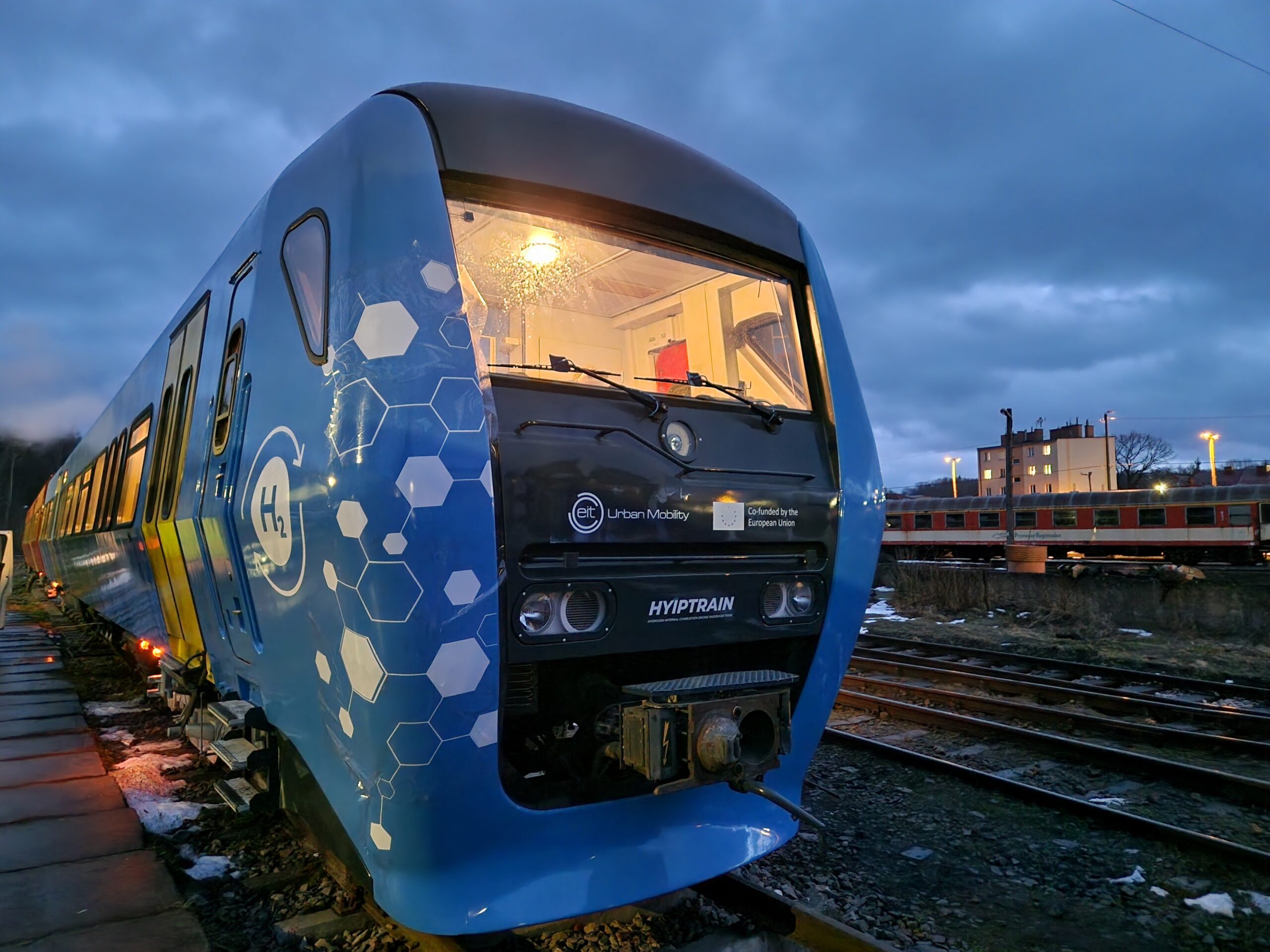
The Hydrogen Engine and Battery Plug-in Hybrid Train (HYBUHTRAIN) project aims to help rail operators decarbonise diesel passenger trains faster and at a lower cost than buying new rolling stock. The project responds to a major gap in Europe’s rail transition: only around 54% of the EU rail network is electrified, and more than 7,200 diesel multiple units are still in operation, many with 10–20 years of service life remaining. These trains continue to emit carbon dioxide and harmful air pollutants in stations and urban corridors where people are most exposed.
To address this, HYBUHTRAIN is developing and demonstrating a practical retrofit solution that can add hydrogen and battery technologies to existing diesel passenger trains. Building on DIGAS’s previous hydrogen retrofit work, the project will integrate a battery pack, electric motor and energy management system into a passenger train that has already been converted to run on hydrogen. This is intended to reduce emissions, improve energy efficiency, recover braking energy and enable cleaner operation in and around stations.
The 18-month project runs from January 2026 to June 2027 and brings together partners from Latvia, Poland and Ukraine: DIGAS, Microluch, Riga Technical University, SKPL and the Municipality of the City of Rzeszów. DIGAS leads the project and market introduction, SKPL provides the train and demonstration environment in Poland, Riga Technical University supports impact assessment, Microluch develops control software, and Rzeszów supports citizen engagement and local outreach. Together, the partners aim to show a scalable pathway for cleaner regional and urban rail services across Europe.