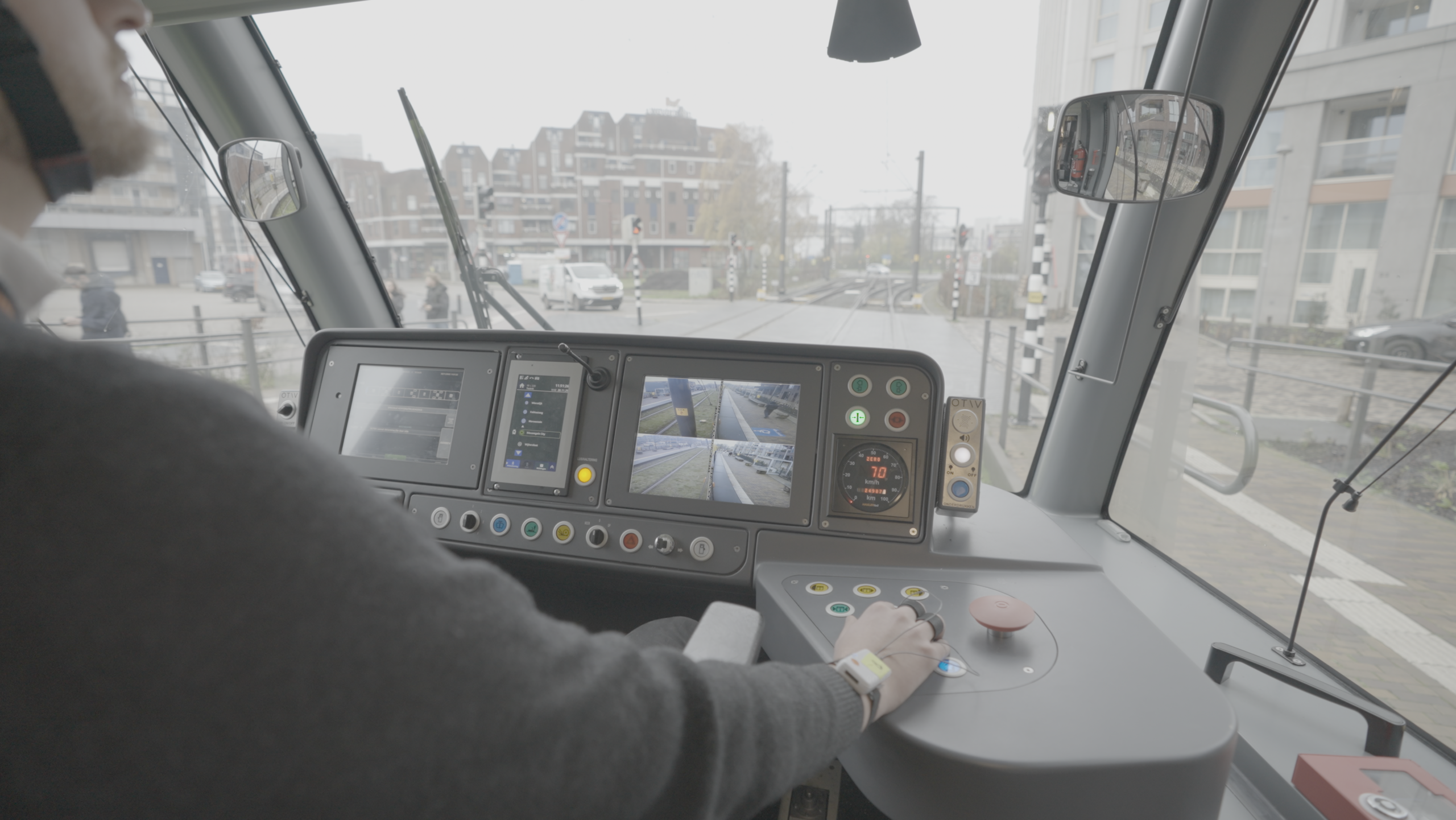
Tram systems are essential to sustainable urban mobility, yet face significant safety risks, operational inefficiencies and growing staff shortages. Current VDV 191-based systems (2019) offer forward collision warnings without the predictive or comprehensive hazard detection that is needed to further reduce collisions and optimise operations.
TRACE builds on the successful ARISE project by introducing next-generation Advanced Driver Assistance System (ADAS) functionalities for urban trams. The enhanced OTIV.TWO system integrates side collision avoidance, predictive collision detection, digital mapping with overspeed protection and a dedicated data platform. These features provide proactive decision support for drivers and operators, enabling safer, more reliable and smoother tram services.
TRACE addresses urgent urban mobility challenges. Trams account for over 40% of rail accidents in Europe. Each incident costs operators between €50,000 and €200,000 in claims, repairs and service disruptions. By shifting from reactive to predictive safety management, TRACE aims to reduce accidents and the associated operational costs.
The system will be validated through real-world pilots in three diverse European cities: Ghent (De Lijn), Karlsruhe (Albtal-Verkehrs-Gesellschaft and its hybrid tram-train network) and Rotterdam (Rotterdamse Elektrische Tram), where it will be installed in 16 trams. The consortium will collect over 400,000 km of operational data to refine predictive algorithms and ensure compliance with the highest safety standards.
The consortium brings together Universitat Politècnica de Catalunya – CARNET (coordination and validation), OTIV (technology development) and three major European public transport operators. In the short term, TRACE enhances safety and operational efficiency. In the medium term, it supports the gradual deployment of autonomous rail vehicles. In the long term, it contributes to greener, smarter and safer cities aligned with European Green Deal objectives, including a 90% reduction in transport-related greenhouse gas emissions by 2050.