
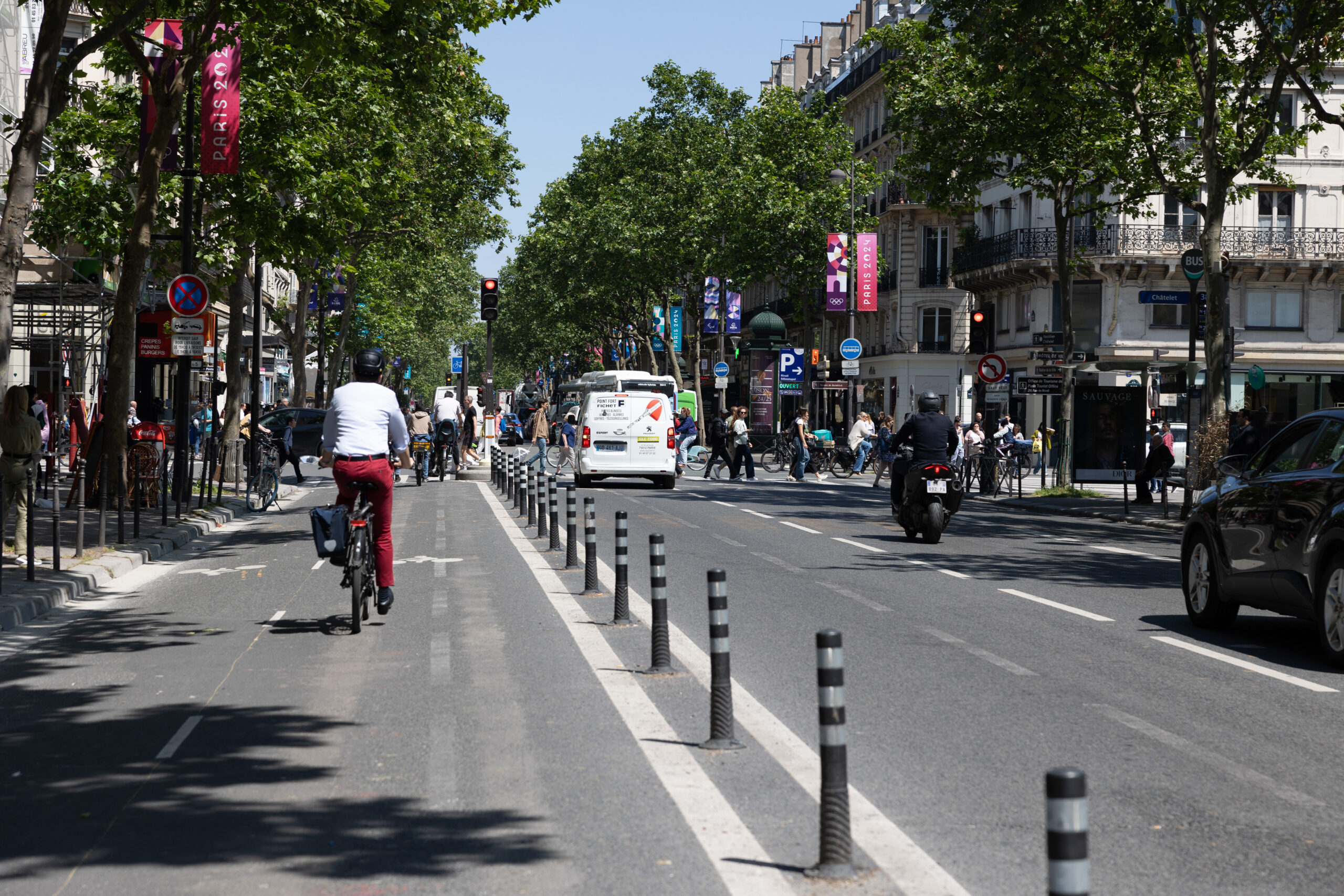
In preparation for the Paris 2024 Olympic and Paralympic Games the city expanded its cycling infrastructure by 60 kilometres, created 10,000 bicycle parking spaces, and added 3,000 Vélib’ shared bikes. Additionally, it planned to complete an additional 68 metro stations by 2030, from an investment of €36.1 billion. These initiatives aimed to ease the strain on the existing transit system while seamlessly and sustainably moving millions of visitors around the city. These efforts show both the enormous task, but also potential, that host cities encounter when organising a global event.
In the United States, host cities for the 2026 FIFA World Cup are receiving $100 million in federal funding to expand transit ahead of the games to meet the demand of increased service around the stadiums. Meanwhile, during the 2026 Milan Winter Olympics, micromobility services like Lime saw a surge in usage, with over 840,000 kilometres travelled by riders, highlighting how different modalities can reduce pressure on public transit systems and decrease congestion from individual car use.
Planning for a massive influx of visitors to a city requires not only financial investment in infrastructure, but also innovative solutions implemented through collaboration between public and private stakeholders.
But how can cities plan for such massive logistical feats? The answer lies in innovation, data, and collaboration. Across Europe, the EIT Urban Mobility initiative has been at the forefront, supporting projects and startups that help cities master mobility during global events. From AI-driven traffic management to micromobility infrastructure and advanced data analytics, these solutions are reshaping how cities prepare for—and benefit from—the world’s biggest gatherings.
Innovative solutions for global event mobility planning
AI-driven traffic optimisation: WISP and the Paris Olympics
During the 2024 Paris Olympics and Paralympics, the city collaborated with start WISP, an AI-powered traffic management platform, to ensure prioritised mobility for athletes and spectators. Implemented at seven intersections and leveraging real-time data from field sensors and connected vehicles WISP was able to optimise traffic light timing, prioritise the 300 shuttles moving daily and reduce congestion. Impacting over 60,000 trips, transporting over 700,000 passengers WISP technology was able to improve the commercial speed of the shuttles by up to 20%.
WISP’s success in Paris followed an EIT Urban Mobility-supported RAPTOR pilot in Košice, Slovakia, where the system was adapted to local regulations and demonstrated its scalability. By using AI to dynamically adjust traffic flows, cities can not only handle the surge in demand during events but also create more efficient and sustainable mobility every day.
Promoting micromobility: LOKIT in Stuttgart
Micromobility plays a crucial role in filling the last mile gap between transit hubs and event venues. In Stuttgart, a 2023 EIT Urban Mobility RAPTOR project enabled partnership with Italian startup LOKIT to install secure, universal micromobility charging stations. These stations, piloted at major events like the Cannstatter Volksfest, provided fast charging and convenient parking, encouraging more people to choose sustainable options for short trips.
The Stuttgart project is part of a shift in how cities transit plan – in which micromobility is regarded as a key part of a holistic and resilient transit ecosystem. By integrating bikes and scooters into the transport network, cities can reduce car dependency, ease congestion and improve air quality—both during events and in the long term.
Data-driven insights: Urban Mobility Flows (UMF)
Understanding how and where people move is the first step in planning effective transit. The Urban Mobility Flows project, another EIT Urban Mobility initiative, uses anonymised telecom data to map journey patterns across multiple transport modes. By visualising these flows on a single dashboard, cities gain a comprehensive view of demand, allowing them to allocate resources more efficiently and identify bottlenecks before they become problems.
While Urban Mobility Flows isn’t event-specific, it could be a valuable tool in mobility planning for cities hosting global events. With real-time insights into where and when people are traveling, planners can adjust bus routes, deploy additional bikes or even reroute traffic to avoid mobility disruptions.
Stadium accessibility: the ‘Stadium Cities’ initiative
EIT Urban Mobility’s ‘Stadium Cities’ initiative, launched in collaboration with the City of Amsterdam and the Johan Cruijff Arena, tackles the unique challenges posed by urban densification and stadium connectivity. As cities grow, stadiums and major venues often face increasing pressure on their transport infrastructure, threatening accessibility and social legitimacy. This collaborative initiative focuses on innovative solutions to optimise road and parking spaces, transform public areas into climate-resilient and people-friendly zones, promote sustainable mobility, and ensure public safety during event days by electrifying vehicle fleets, encouraging active micromobility and integrating Corporate Social Responsibility (CSRD) principles to reduce emissions. The network aims to reimagine how urban spaces and venues interact, setting a new standard for how cities can create more accessible, sustainable and vibrant stadium districts.
Startups enabling smoother mobility
Beyond these projects, EIT Urban Mobility portfolio startups offer unique tools to help cities with transit planning during global events.
- Asistobe uses AI and big data to help transit planners anticipate future demand, shifting from reactive to predictive planning. By aligning services with expected usage, cities can avoid overcrowding at peak moments to ensure that sustainable options are always available.
- Floware combines innovative sensors with intelligent modelling, providing decision-makers with actionable insights into mobility flows. Its tools are particularly useful for simulating the transit impacts of large events and testing scenarios ahead of time.
- Vianova offers a smart platform that turns raw real-time mobility data into intelligence, fostering collaboration between cities and operators. During large-scale events urban administrations could use the tool for better coordination between public transit, ridesharing and micromobility services, to ensure a seamless experience for users.
Planning for people and the planet
When transit systems are overwhelmed, people cannot get places on time, and the experience of a global event is impacted. However, with the right planning cities can transform these challenges into opportunities both during the event and for years to come.
The projects and startups that anticipate demand, make sustainable choices more accessible, and foster collaboration between public and private sectors are poised to lead in transit planning for global events. Ultimately, cities can turn the challenge of transit planning for global events into an opportunity to create more resilient, efficient, accessible and sustainable mobility systems.