Smart, grid-aware EV charging solution built to scale in any city
Europe’s transition to electric mobility hinges on one critical enabler: charging infrastructure. Yet the rollout remains deeply uneven. While battery electric vehicle (EV) sales are growing steadily across the EU, 61% of all public charging points are concentrated in just three countries – the Netherlands, Germany, and France– leaving many European markets significantly underserved. Reaching theEuropean Union’s target of 3.5 million public chargers by 2030will require a significant acceleration in deployment. Beyond the quantity of chargers, their placement needs to be strategic to ensure proper coverage. And they must be able to operate reliably on grids that were not designed for and often cannot properly accommodate the growing energy demand.
Inbalance grid, a Lithuania-based energy-tech company, addresses these grid and deployment challenges through an integrated, systems-level approach. By combining in-house hardware design, proprietary software, and continuous operations into a single platform, the company reduces both deployment friction and grid constraints. Its AI-driven dynamic load management enables more chargers to operate within existing grid capacity, unlocking scalable deployment across offices, retail centres, residential buildings, and public spaces.
Highlights of why we invested in Inbalance grid
- Solving the grid bottleneck: Inbalance grid’s AI-powered dynamic load management allows more charging points to be installed on existing grid connections without costly upgrades, removing one of the biggest barriers to infrastructure rollout.
- A fully integrated solution: Inbalance grid designs, manufactures and operates its own charging hardware and software, giving it full control over quality, cost and deployment pace. A key advantage for scaling across diverse markets.
- Proven at scale in the Baltics, expanding across Central and Eastern Europe (CEE): With over 800 public and semi-public charging points in Lithuania, Latvia and Estonia, Inbalance grid has established the largest private charging network in the region. Building on this foundation, the company is scaling into CEE, including Poland through a partnership with Stokrotka, with further expansion planned across Czechia, Bulgaria, Romania, and Hungary.
- Charging where people already are: Inbalance grid focuses on destination charging at shopping centres, offices and residential buildings, aligning with the shift towards charging at locations drivers visit regularly.
- Strong policy alignment: Inbalance grid’s approach supports the Alternative Fuels Infrastructure Regulation (AFIR) targets for publicly accessible recharging infrastructure. The company has secured Connecting Europe Facility (CEF) funding for deploying chargers along Lithuanian TEN-T roads during in 2025-2026.
EIT Urban Mobility’s mission is to accelerate the transition towards more liveable urban spaces by promoting sustainable mobility. Electrifying urban transport is central to this mission. Inbalance grid’s integrated approach directly addresses the infrastructure bottleneck that slows EV adoption. As Jan Hauser, Investment & Portfolio Manager at EIT Urban Mobility, highlights:
”To make electric mobility viable at scale, charging infrastructure needs to be embedded into the places people already use every day. Inbalance Grid achieves this through an integrated system where Dynamic Load Management unlocks deployment in locations that would otherwise lack the grid capacity to support it, which is essential for delivering accessible and reliable charging in varied urban environments.”
Inbalance grid: an integrated charging ecosystem
Founded in Vilnius by Simonas Stankus, Nerijus Šiaulys and Aurimas Pauga, Inbalance grid is an energy-tech start up that is supporting the electrification of mobility with an approach that goes well beyond simply installing hardware.
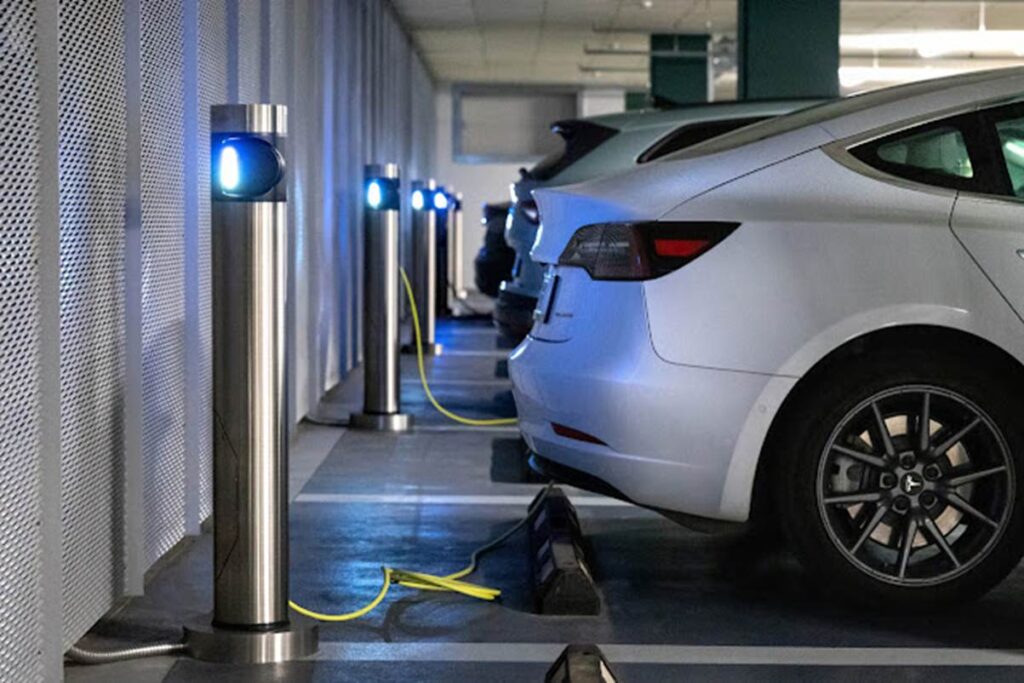
The foundation is hardware engineered for hassle-free deployment. Inbalance grid’s sleek, minimalist EV charger design, that have earned them the Silver A’Design Award, is not purely aesthetic: it is a deliberate technical choice that reduces physical footprint, simplifies installation, and minimizes the need for heavy civil engineering works. It is also important to highlight that Inbalance grid’s EV charging stations are reliable in all weather conditions and are certified to IEC 61851 standards.
Layered on top is commercial flexibility. Inbalance grid offers direct purchase, leasing, and direct-investment models. Whether a property owner wants to acquire the asset outright, preserve capital through an operational-expense arrangement, or simply host a network funded and managed by Inbalance grid itself, there is a business model that fits their needs, enabling a wider range of stakeholders to participate in the EV transition.
Connecting hardware to revenue is a proprietary software package with three components: a cloud-based EV charger operations system, a management system for property owners, and a driver app. The platform includes dynamic pricing adjustment for different client groups and locations, automated transaction management covering payments and invoicing. The platform also includes private or public access controls, allowing location owners to restrict use to specific groups such as employees or guests, or open stations to the public. Predictive maintenance and continuous monitoring support exceptional uptime rates, with 24/7 charger management via the cloud-based system. The system is also prepped for second and third-party integrations, including building or parking management systems, loyalty programmes, and CRM databases.
For drivers, charging points are visible not only in the Inbalance app, which supports charging management, monitoring of price, speed and progress, and in-app card payments, but also across other platforms such as Google Maps, Apple Maps, Plugshare, ABRP, and car multimedia systems. Access is further supported through “roaming” partners including Mobilly, Unipark, CarOne, and Snabb.
Underpinning it all is Dynamic Load Management (DLM). Most existing buildings were never designed to handle the simultaneous high-amperage draw of multiple EVs, and grid upgrades are costly and often slow. DLM addresses this by smartly redistributing available power based on real-time demand across three levels: at the charging cluster, distributing load dynamically based on EV type, battery capacity and demand; at the building level, monitoring overall electricity consumption to prevent outages and maximise uptime; and at the grid level, adjusting loads to balance power at district, city, or national scale. This allows sites to scale their charging capacity within their existing electrical limits.
From the Baltics to broader European markets
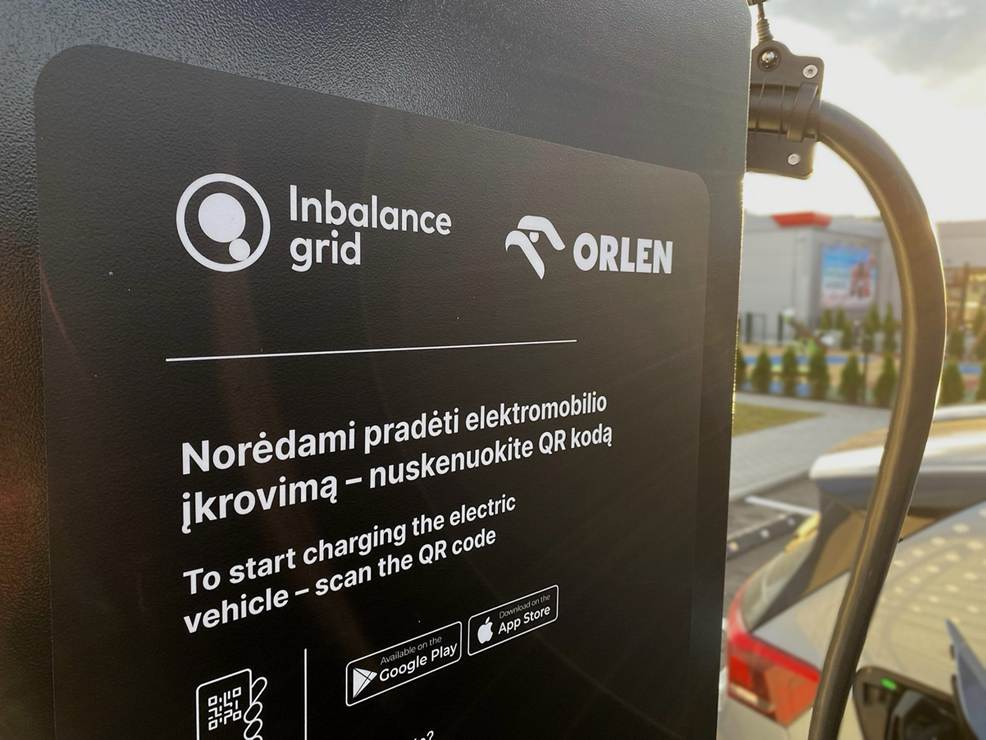
In Lithuania, Inbalance grid operates one of the largest private EV charging networks, partnering with major retailers (IKI, Maxima), real estate developers (Eika, Darnu Group) and financial institutions (SEB). A long-term partnership with ORLEN Baltics Retail will see 174 fast charging points installed across Lithuania by 2027, including 15 charging hubs for trucks and buses.
The expansion into Poland through a partnership with Stokrotka, over 1,000 supermarket locations , marks a significant step into Central-Eastern Europe’s largest market. A recent €1.8 million funding round, with participation from Coinvest Capital and EIT Urban Mobility, supports this continued expansion.
Regulatory context: AFIR and the charging infrastructure imperative
The Alternative Fuels Infrastructure Regulation (AFIR), applicable since April 2024 as part of the “Fit for 55” package, sets binding requirements for recharging infrastructure across the EU, including fast charging stations every 60 km along TEN-T corridors and fleet-based power targets for each Member State.
At the urban scale, policy frameworks such as Sustainable Urban Mobility Plans (SUMPs) and the EU Urban Mobility Framework increasingly position charging infrastructure as part of integrated mobility systems rather than standalone assets. This shift encourages the involvement of a wider set of actors, embedding charging into everyday destinations. Inbalance grid’s flexible business models, combining offers of ownership, leasing, and operator-led deployment, directly supports this broader participation and distributed rollout.
In parallel, theEnergy Performance of Buildings Directive (EPBD) is accelerating the integration of EV infrastructure into buildings by introducing requirements for EV-ready parking spaces in both new developments and renovations. This regulatory push places pressure on existing electrical systems, particularly in older or capacity-constrained buildings. In this context, Inbalance grid’s Dynamic Load Management technology plays a critical role, enabling sites to expand charging capacity within existing grid limits and reducing the need for costly upgrades.
For Central-Eastern Europe, where charging density remains far below Western European levels, meeting these targets requires both rapid deployment and smart grid integration. In markets like Poland, grid infrastructure struggles to accommodate new distributed energy demands. Solutions that unlock more charging capacity from existing grid connections, such as Inbalance grid’s, are therefore critical for both meeting AFIR targets and accelerating EV adoption.
Looking ahead
EIT Urban Mobility’s continued support for Inbalance grid reflects a broader conviction: electrification of mobility systems is central to building net-zero, liveable cities. By combining hassle-free deployment, flexible business models that bring more actors into the transition, and a seamless driver experience, Inbalance grid embodies the kind of systems thinking needed to make sustainable urban mobility a reality across European cities.
Do you want to know more about Inbalance grid mission and its solutions?
Visit the company website and LinkedIn.
This article is part of Why we invested? series presenting EIT Urban Mobility equity portfolio.