Cities want to improve urban mobility for residents and achieve their urgent climate goals, but with a dizzying array of possibilities and local constraints, how can local authorities make sure they invest in solutions that respond to users’ real needs? More than that, how can they respond to residents’ true behaviours, not just their reported ones?
Whether it’s winning public trust in the shift to autonomous transport or supporting local communities to be less dependent on cars, citizen engagement puts local communities at the centre of urban transformation, enabling residents to define their unique needs.
The citizen engagement approach helps cities ensure their urban mobility solutions “address genuine pain points, better match residents’ lived experiences, in a more inclusive way,” explains Carolina Cominotti, Citizen Engagement Officer with EIT Urban Mobility.
It is “an agile way of feeling the temperature on the ground, and bridging the gap between city needs, market-ready solutions and citizens’ real-life experiences,” Cominotti underlined.
Citizen engagement work combines social science, behavioural insights and participatory design with mobility expertise. In real terms, it can cover everything from inviting citizens to take part in workshops and user testing, to carrying out participatory research and co-creation methodologies.
Sustainable alternatives
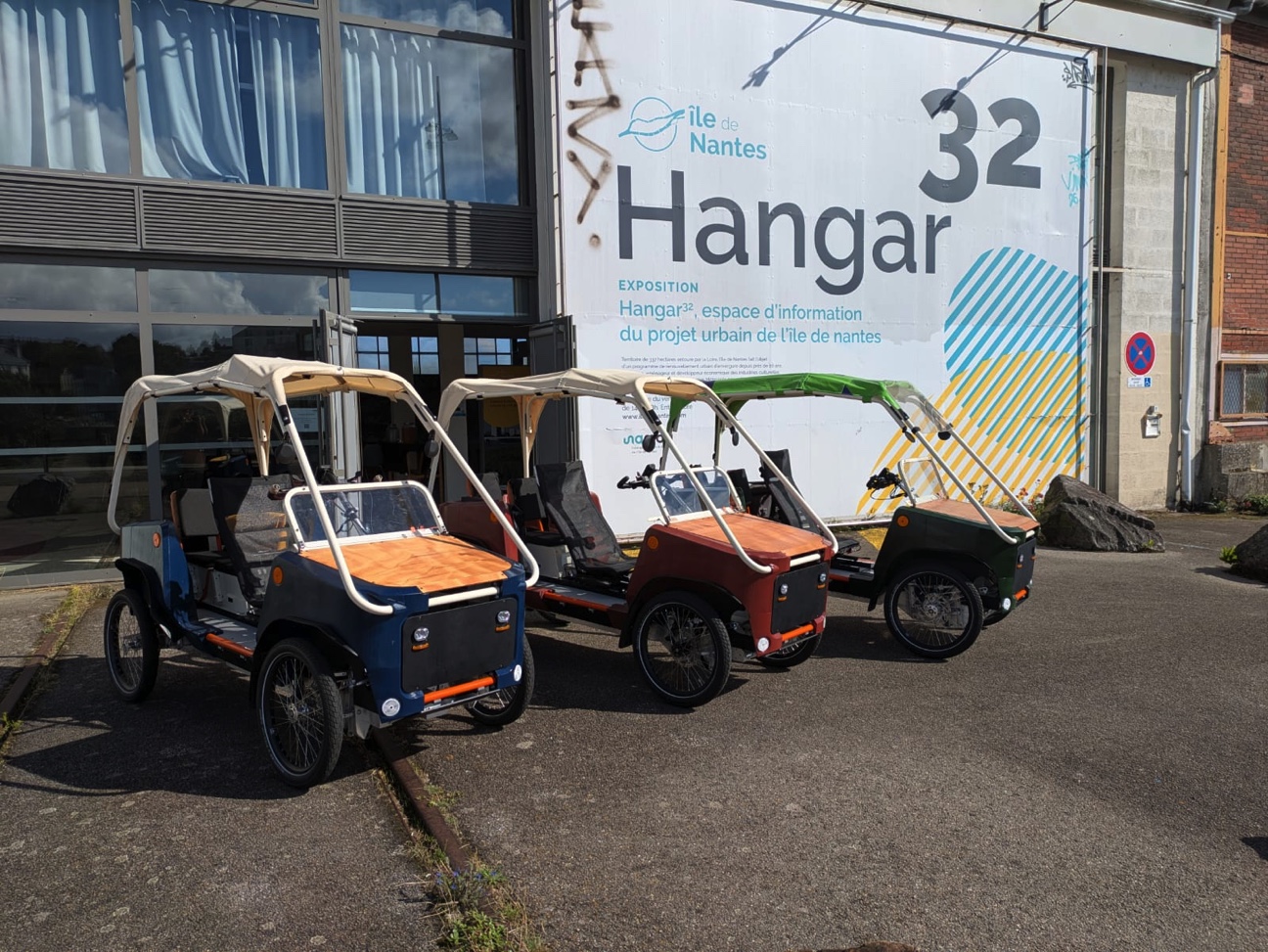
Take the city of Nantes in western France. The city’s urban development agency Samoa wanted to make it easier for people to get around without a car when cycling would not be an option; for those with reduced mobility or in the instances of transporting heavy items, for example.
Supported by EIT Urban Mobility’s RAPTOR programme, Samoa worked with active mobility startup Sanka Cycle to pilot its electric-assisted ‘BOB’ light vehicle to see if and how it could be deployed to replace traditional internal combustion vehicle trips.
In collaboration with urban change agency Humankind, the project deployed citizen engagement tools to better understand how users perceived the light vehicle’s value and what motivators or barriers could influence its acceptance.
Through a mix of field observations with in-depth and flash interviews Samoa and Sanka Cycle were able to gain valuable insights into how people saw the BOB vehicles in comparison to other forms of mobility in order to explore how it might be able to act as a bridge between cars and bicycles.
“It’s more comfortable, accessible and easy to use or learn than a cargo bike, but less costly than a car,” remarked one interviewee. Other interviewees shared unique perspectives on what leasing or ownership model would best meet their needs.
Importantly, the interviews showed that initial concerns about the size of the light vehicle could often be quickly overcome by testing it out. This insight also fed into productive conversations about how to better communicate the ‘BOBs’ real size with uncertain potential users.
Actionable insights
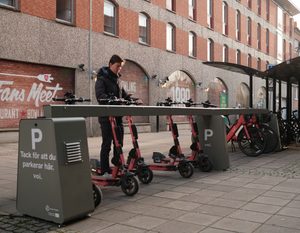
When the Dutch city of Utrecht wanted to improve its park and ride system, it knew it would have to understand why people already did—or did not—use the current system.
As part of EIT Urban Mobility’s RAPTOR programme, and supported by Humankind, Utrecht was able to conduct an online survey, on-site interviews, and field observations to get a holistic understanding of user behaviour.
Users shared their concerns about the system’s perceived consistency and complexity, provoking questions for further discussion and research.
How could non-users be encouraged to try the park and ride at least once? How could other pricing models and discounts be offered? How could loyalty and repeated use be developed?
The work also highlighted actionable tasks that, based on insights gathered, could promise “quick wins”, such as a more precise communications campaign to tackle misconceptions.
Real-world research
In both RAPTOR projects in Nantes and Utrecht, EIT Urban Mobility Master School students had an opportunity to gain hands-on experience in citizen engagement methodologies and practices. By conducting fieldwork and partaking in survey collection under the guidance of Humankind, the students benefited from exposure to real-world innovation pilots and had the opportunity to network with cities and startups.
“It was extremely valuable to understand a new city and mobility form factor through real-world qualitative research, with plentiful learnings,” EIT Urban Mobility Master School student Paul Mates shared on his LinkedIn.
In return, cities and startups found that not only did the students bring extra capacity to the pilots but they also offered fresh analytical mindsets and diverse perspectives.
Local contexts, local perspectives
Citizen engagement is increasingly gaining traction as a key tool in supporting the shift to sustainable urban mobility.
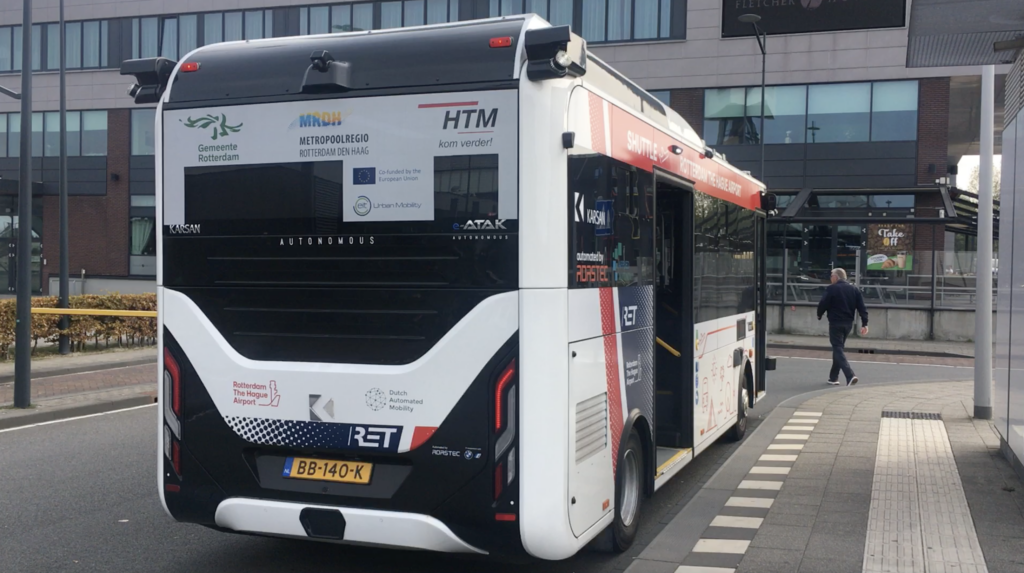
For the Interact project, which developed a Human Machine Interface (eHMI) for automated public transport buses, communication and trust with passengers was central for successful and ethical deployment. The core challenge however was when the safety driver was removed from the buses, the soft skills drivers bring to their role and their communication with passengers would also be removed. Therefore, learning more about how passengers felt about safety and trust was essential for making this new form of sustainable mobility socially acceptable.
Thus, Interact implemented citizen engagement with Humankind through on-site research and guerilla testing, observations and interviews, and a digital survey in the pilot sites of Rotterdam, the Netherlands, and Stavanger, Norway. The activity engaged both passengers and safety drivers through interviews to capture their unique perspectives. Important lessons were also learned about the nuances of how people felt about the technology.
In Stavanger, for instance, passengers raised concerns about how extreme weather would impact the system and brought up past experiences with automated systems failing as temperatures dropped.
Taking participant’s perspectives into account revealed that there were in fact two separate challenges: replacing both the technical task of the driver and replacing the social task of the driver as a human on board.
Findings from the citizen engagement work will contribute compelling user feedback and have a real impact on the final design. The deeply contextual findings will also equip decision makers with actionable recommendations for improvements and help address their stakeholder concerns. Now with the groundwork laid, the cities will be in a stronger position to move towards fully autonomous fleets.
Innovative methods
The practice of citizen engagement is still evolving, and practitioners are seeing exciting new methods emerging such as pop-up experiments, living labs, gamification and digital engagement.
From the past when citizen engagement might have been seen as just a box ticking exercise, these interventions are now increasingly data-driven and insightful, truly impacting the final solutions deployed in cities. While the methods might be increasingly diverse, citizens remain at the core, with tangible benefits for both users and cities.
“We see a shift from informing to co-creating, and more cities want to involve citizens early, not at the end,” Cominotti noted. “There is growing recognition that engagement helps support behaviour change, increase adoption, and improve equity.”